
Uruguay is considered less corrupt than the US and Spain
The Dominican Republic's significant strides in combating corruption.

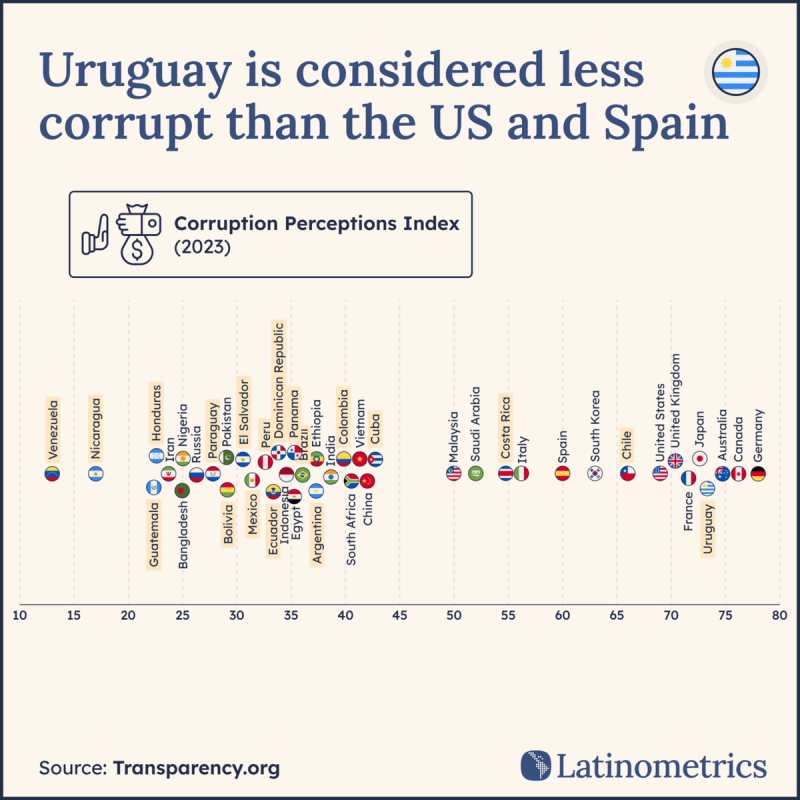
As with any such index, the methodology leaves room for criticism. Many will notice that according to this list, Cuba is our region's fourth least corrupt country. The correct way of interpreting the index is that Cubans consider their country less corrupt than, say, Colombians consider their own. It's a subjective measure.
Latin American countries range from Venezuela, which now ranks second to worst worldwide, to Uruguay, which is tied with Japan and perceived as less corrupt than some of the most developed nations like the US and France.
Here, we have another case of Uruguay leading the region by example. Unlike most countries in Latin America, which have experienced turmoil and drastic changes over the years, Uruguay's corruption score has remained stable. This indicates healthy power transitions and is a testament to Uruguay's trusted democratic and judicial systems.
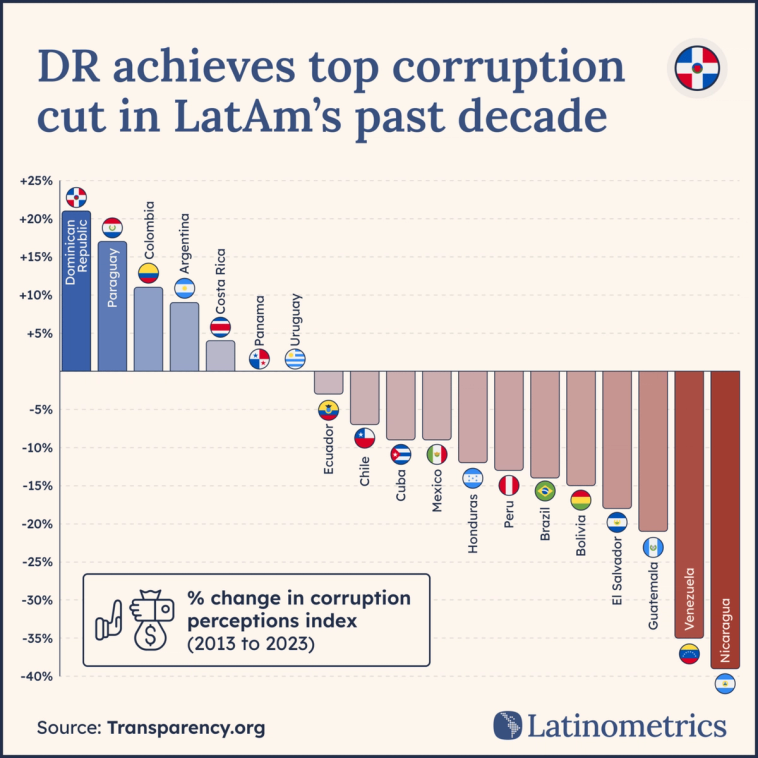
In the early 2010s, the DR was struggling with bribery allegations and a weak and unwilling-to-prosecute judicial system. Just last year, twenty former officials were arrested in the largest anti-corruption probe in the country's history, which uncovered widespread embezzlement in government contracts.
As for the tragedies, you probably guessed them: Venezuela and Nicaragua continued to undermine institutions and concentrate power in the hands of undemocratic leaders.


