
Colombia became LatAm's top migrant destination
Colombia offered millions legal residency to avoid a shadow economy.


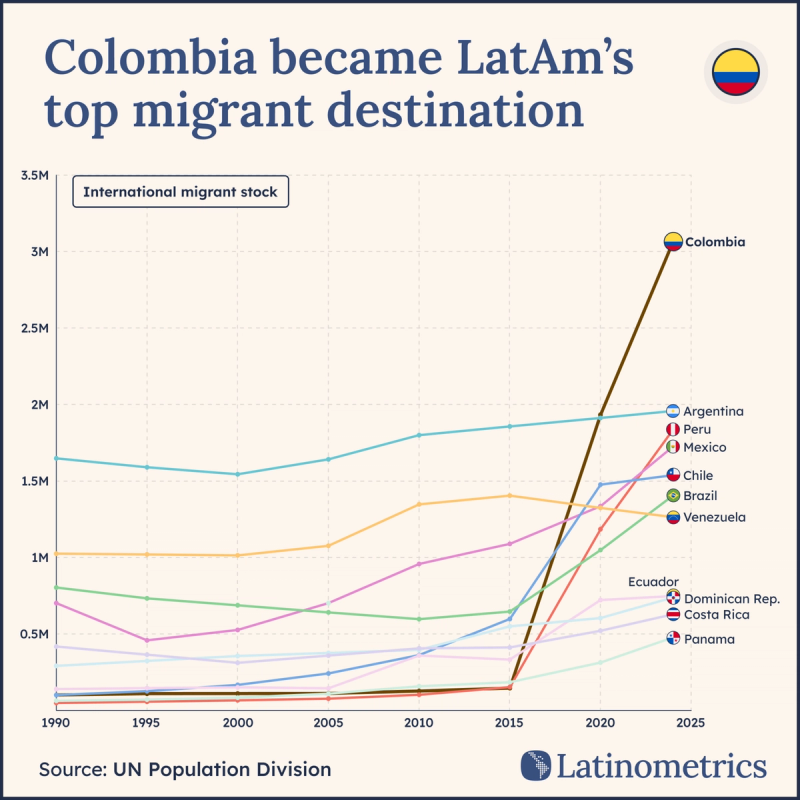
A quarter-century ago, the idea of millions of people moving to Colombia would have certainly raised some eyebrows.
In a tragic twist of irony, the last of these countries changed everything for Colombia, beginning a decade ago. With Venezuela’s descent into economic devastation and government repression under the regime of autocrat Nicolás Maduro, the country has entered the worst migrant crisis in the Americas. Roughly 7M of the Bolivarian Republic’s citizens have fled overseas in search of work, stability, and freedom—a mass exodus largely unparalleled in contemporary peacetime.
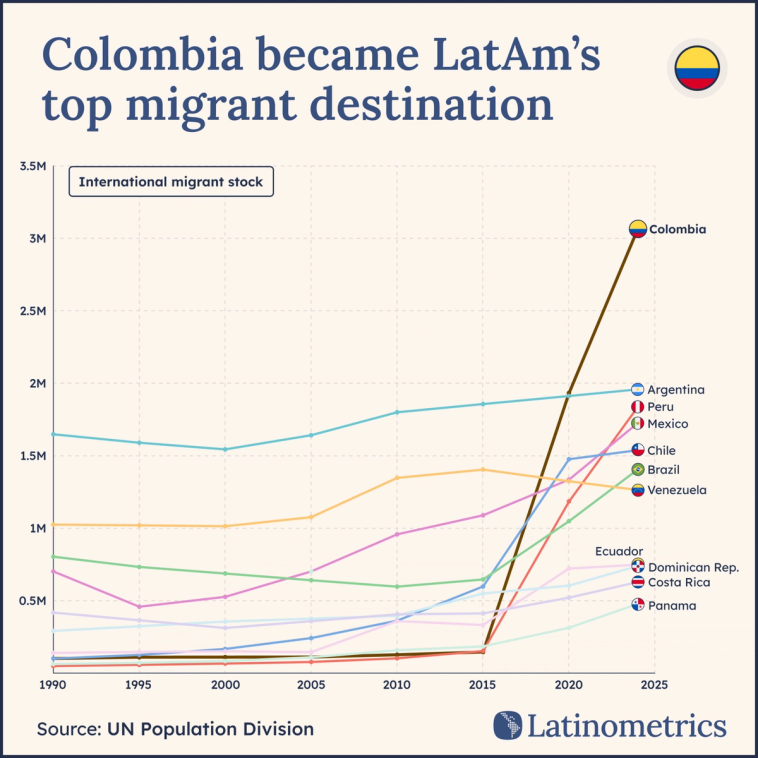
Unsurprisingly, nearly half of these have gone to neighboring Colombia, leading to the country becoming the top destination for migrants in Latin America.
Colombia became LatAm's top migrant destination
So what happens when the exodus suddenly reverses course?
Like most refugees, a majority of Venezuelans would like to return home once they are able to. Yet their current predicament has forced countries around the region to adapt. For Colombia, a country of just 50M people, the millions of new arrivals have meant needing to be proactive.
The Colombian government has set up a program to grant legal residency and formalization for Venezuelan migrants, hoping to avoid the sort of administrative and regulatory problems faced by undocumented immigrants.
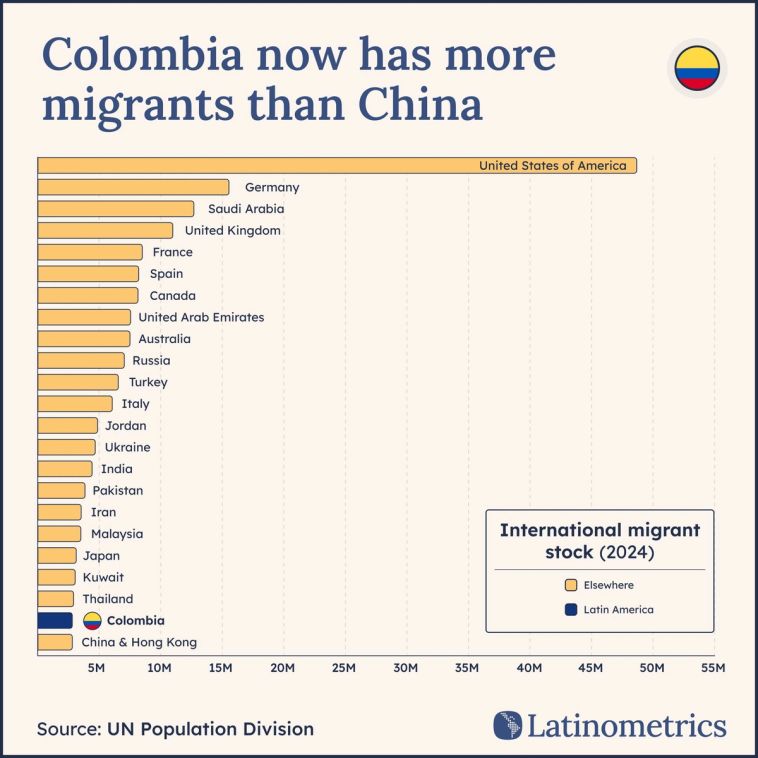
Colombia now has more migrants than China
Due to the escalating violence of Colombia throughout the 1970s-1990s, an estimated 1M citizens moved to Venezuela. By the 1990s, Colombians made up over three-quarters of the foreigners living in Venezuela. In keeping with a proud history of immigration, Venezuelans welcomed their neighbors and helped them assimilate to their new home.
So today we’ve seen a dramatic reversal of the late 20th century. While we applaud the work many Colombians have done in receiving and accepting their Venezuelan counterparts, a developing country cannot be solely responsible for housing more immigrants than far larger countries like China and India or far wealthier countries like France and Germany.
Until Venezuela’s crisis has ended, the entire region will play a part in assisting the country’s people. After all, today they may face the challenges of government repression and economic catastrophe—but for all we know, in a few decades they could be the ones once more opening the door when Latin Americans of all stripes come knocking.
How will Venezuelan migration reshape Colombia’s economy in 10 years?


