
Finance and media: Mexico's 5x growth sectors
Finance and media soar +400%, reshaping Mexico as nearshoring makes it the US's top supplier.

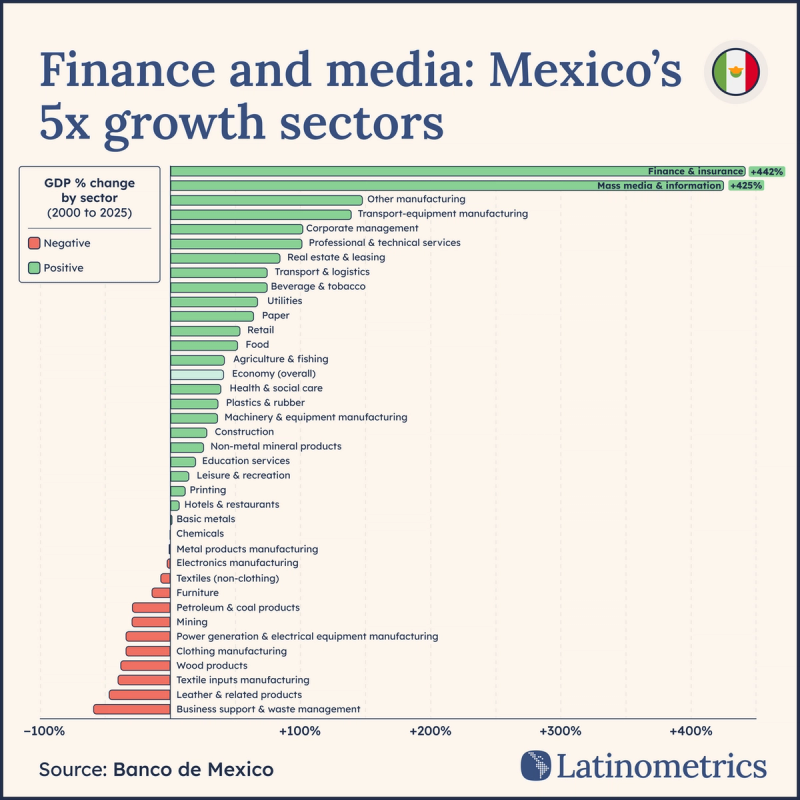
A 5× surge, a collapse, and a new map of Mexico’s economy.
Twenty-five years ago Mexico stepped into the new century brimming with promise. NAFTA had just wiped away most tariff walls, foreign banks were buying into a once-shaken financial system, and mobile phones were still a luxury. GDP grew 5%, but few imagined how the economic map would be redrawn by 2025.
Today two sectors dominate that transformation. Finance and Insurance has soared by +442%, riding a wave of foreign ownership, fintech adoption, and a 2014 reform that opened credit lines to millions. Mass Media & Information—driven mainly by telecom—has increased by 425% after the 2013-14 competition overhaul slashed mobile data prices by more than 70%.
Mexico is now a country where nearly 9 in 10 citizens go online daily, and mobile payments zip from Oaxaca markets to Monterrey boardrooms.
Manufacturing has upgraded. Cheap T-shirts and low-end furniture retreated, yet high-value “transport equipment” and “other manufacturing” surged. Automakers, aerospace giants, and appliance makers reshaped the northern border and the Bajío into the world’s 7th-largest vehicle platform and a top-10 aerospace cluster. Nearshoring is amplifying this trend: by 2024, Mexico had surpassed China to become the United States’ largest goods supplier, fueling record demand for industrial parks from Tijuana to Querétaro.
Business support and waste-management services eroded, hit by automation and reclassification, while oil-linked refining dimmed after crude output peaked in 2004.
With a young workforce, locked-in USMCA access, and a fresh wave of AI-ready factories, the next quarter-century hinges on whether Mexico can innovate fast enough for its 130M connected consumers and keep the south from falling further behind.


