
Visualizing the 3K+ fintechs in Latin America
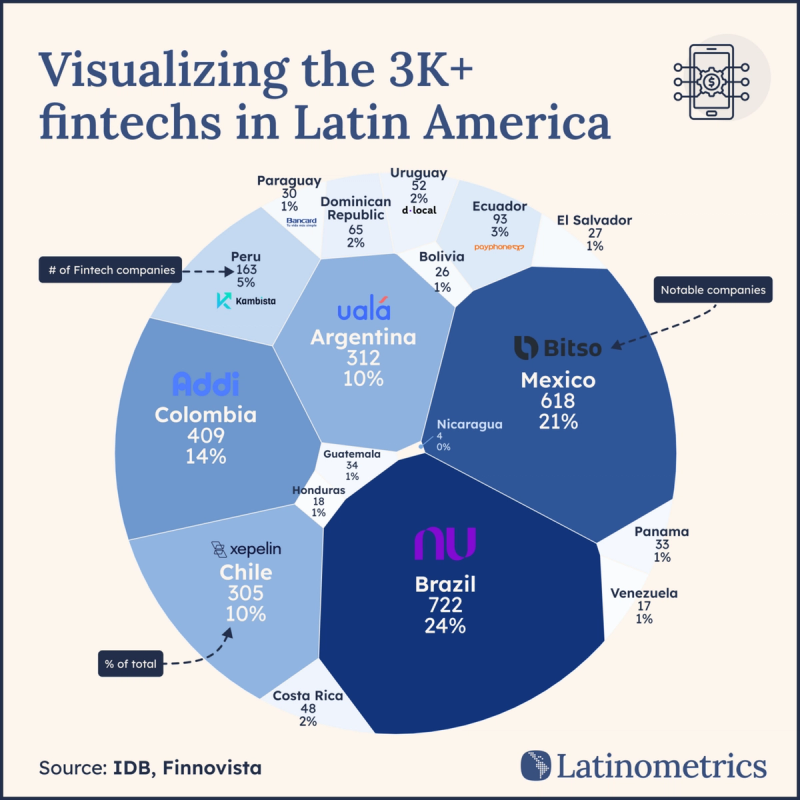
Latin America has over 3K modern companies coming to eat banks' lunch.

Like when Uber began disrupting the traditional taxi model, or when Airbnb began giving hotels a run for their money. Or, to use a Latin American context, when people started banking and paying their bills and saving all from their homes, without needing to jump through a dozen hoops—all thanks to fintechs.
Fintech is short for financial technology. The term refers to firms which use technology to facilitate and modernize personal finance (and beyond).
What sort of services, you may ask? And should you even trust these newer tech firms, given your family has been banking with BBVA since before the Cold War?
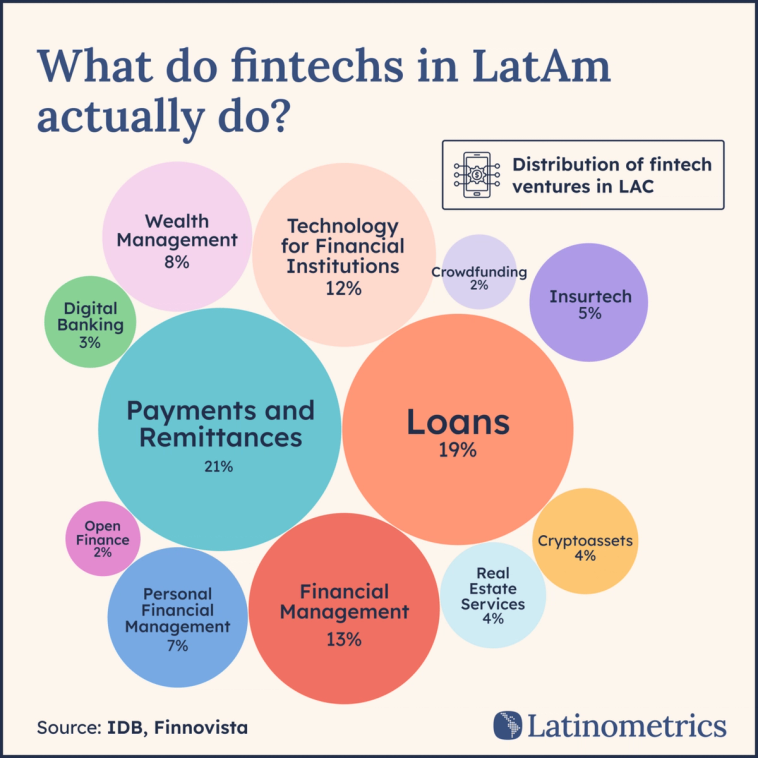
Well, far be it from us to tell you what to do with your money, but fintechs are involved in a number of services which might interest you. They offer digital payment solutions and facilitate remittances, provide loans and financing, and can even assist with more complex tasks like financial management or insurance.
These fintechs are rapidly reshaping the Latin American financial industry, and part of the reason is owing to their high attractiveness to prospective investors. Even as venture capital (VC) numbers dropped by half between 2021 and 2022, the fintech sector attracted over 40% of all investment, well ahead of the competition.
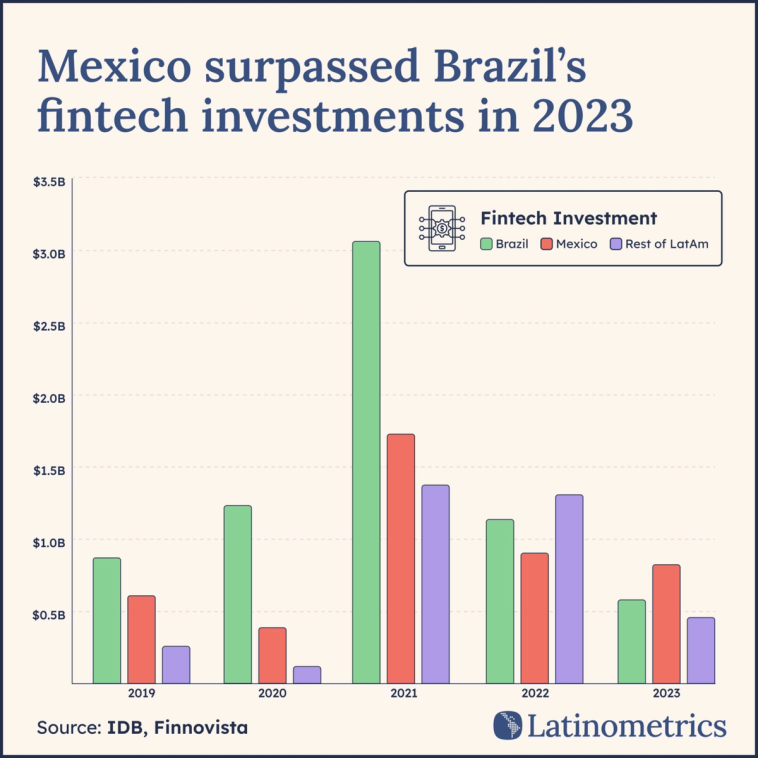
Brazil, long the primary hub for fintech success stories, has seen its dominant VC position drop since the pandemic, with 2023 being notable as the year Mexico saw higher industry investment than its South American peer.
While we don’t expect Brazil to just dry up on funding for new hit companies in the near future, it’s clear that Mexico has emerged as a worthy competitor, with a dynamic, diversified VC market for investments in the fintech solutions for tomorrow’s world.


