
📰 Free Press
Mexico is the world's most dangerous country for journalists, while the DR and Costa Rica lead LatAm in press freedom.


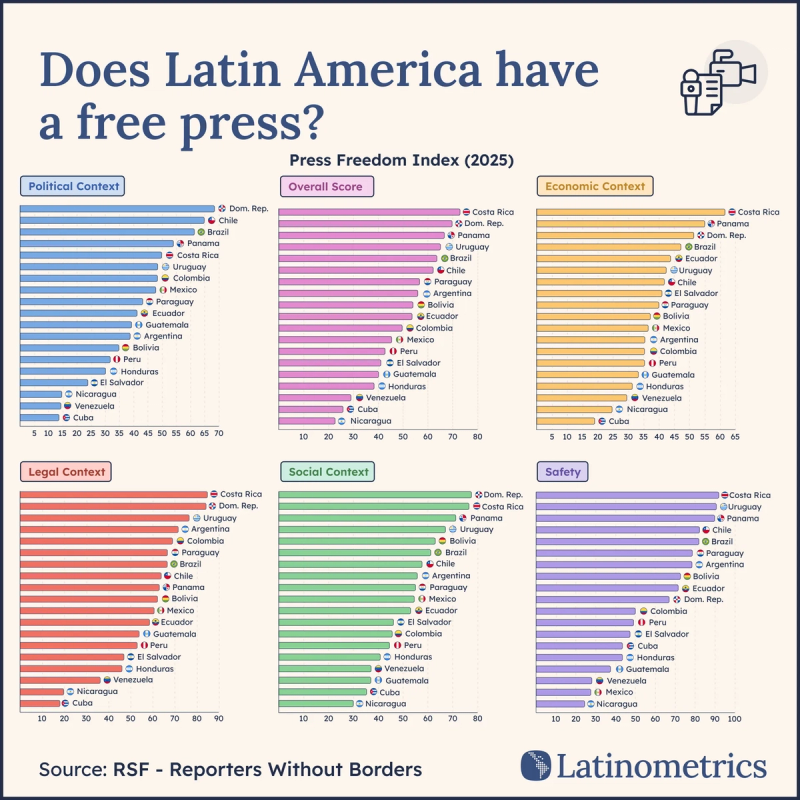
The Dominican Republic rises on legal and social shields for the press.
Since February 2017, the official tagline for The Washington Post, a DC-based newspaper with over 2.5M readers worldwide, has been Democracy Dies in Darkness. A bit ironic, perhaps, given the last few years’ developments, but the Post makes a valid point: a free press is essential to the proper functioning of any democracy.
At their best, journalists hold governments and institutions accountable, investigating misdeeds and informing the public about critical developments involving politicians, businesses, and society.
But just how free is the press in Latin America and what elements are considered to call a press “free”?
Does Latin America have free press?
Two countries lead the region in every single metric compiled by our friends at Reporters Without Borders.
These small yet robust democracies, Costa Rica and the Dominican Republic, have reported on key political developments, economic trends, and security challenges, though not without challenges: Costa Rican journalists in particular have faced headwinds from their country’s embattled head of state, President Rodrigo Chaves.
On the flip side, few would be surprised by the low overall placements of Latin America’s autocracies and backsliding democracies, including Cuba, Nicaragua, Venezuela, and increasingly El Salvador.
What’s more noticeable would be Mexico’s disappointingly low position with regards to journalist safety, ahead only of the dictatorship in Nicaragua. Mexico is actually the world’s most dangerous country for journalists (outside of active warzones such as Ukraine or Gaza), as embedded corruption and cartel violence have made the profession incredibly precarious.
Legal shields pay dividends; countries with higher legal and social scores convert those into better overall rankings and resilience.


