
Argentina tightens its belt while Brazil loosens it
The diverging fiscal paths of Latin America's biggest economies.


No doubt you’ve got nothing on your mind these days besides Latin American fiscal policy, right? Well, today let’s set aside the noise and the rhetoric and actually dive into the local governments which are spending within their means—or not.
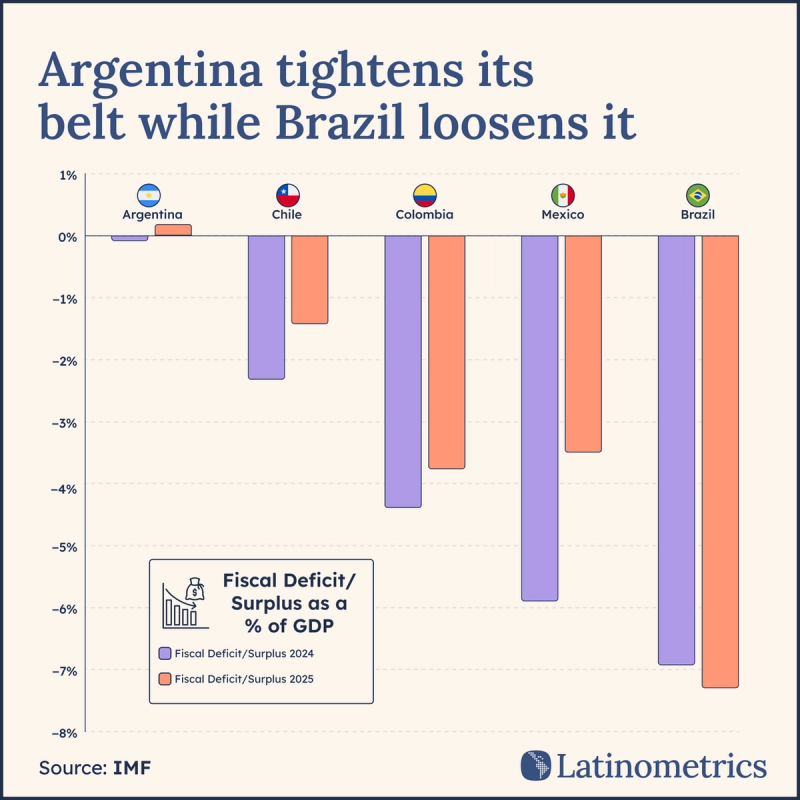
The first thing to know is that all of these countries have run a fiscal deficit this year, meaning they spent more than they collected in taxes and other revenue. Secondly, 80% of them will do the same next year.
Argentina is the clear exception here. President Javier Milei declared in September to a joint session of the country’s legislature that he would do whatever it takes to get to a zero-deficit budget for the upcoming fiscal year.
The severe austerity needed to do so will be crippling to much of the country’s social services and human capital, but it also comes as welcome news to many, given the government has not run a fiscal surplus since the commodity-boom days of 2008.
If Milei is tightening the purse strings for 2025, his Brazilian counterpart is doing precisely the opposite.
President Lula da Silva’s administration has repeatedly failed to meet its zero-deficit target thus far, meaning that national debt is growing even as the country is exceeding economic expectations.
After over a decade out of power, Lula has returned to the Planalto with a major focus on using social programs and infrastructure to help reduce poverty and curb hunger, as he did in his first term. At current spending, though, Brazil’s debt is expected to reach 100% of GDP within a decade.
The rest of the region’s countries fall somewhere in the middle. Colombia is struggling to rein in spending amidst sluggish revenues and overdue reforms. At the same time, Chile’s 2025 budget should successfully halve the overall deficit even as it boosts spending on public security and social programs.
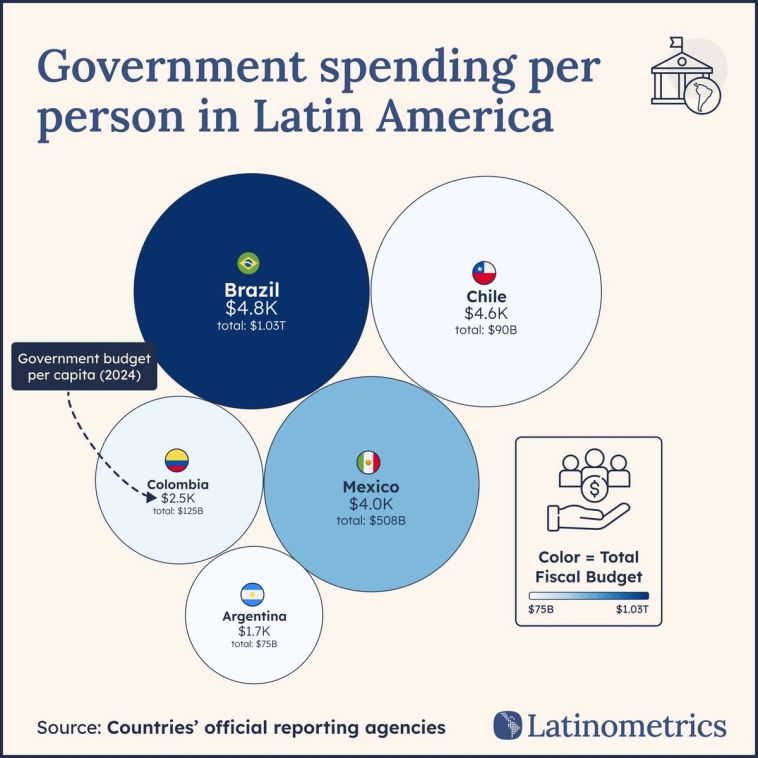
Then there’s Mexico, which is taking advantage of consistent economic growth to slash its own deficit by a third. Newly-inaugurated President Claudia Sheinbaum has vowed responsible spending following years of growing post-pandemic public investment, meaning fewer massive infrastructure projects that characterized her predecessor’s budgets.
But as always, the numbers only tell half the story. A government spending billions on cash transfers and subsidies to buy votes? Not ideal for long-term financial health. But smart, targeted investments in needed infrastructure, paired with involvement by businesses and investors, can contribute to longer-term growth (which in turn can help pay down deficits).
As cases such as Venezuela or Argentina demonstrate, it’s just essential that spending is done with an eye on both overall growth trends and long-term sustainability.


