
Mexico is the US' Favorite Destination for Vacation Homes
Mexico's vacation home market thrives, but Turks and Caicos interest soared 75% in 2023.

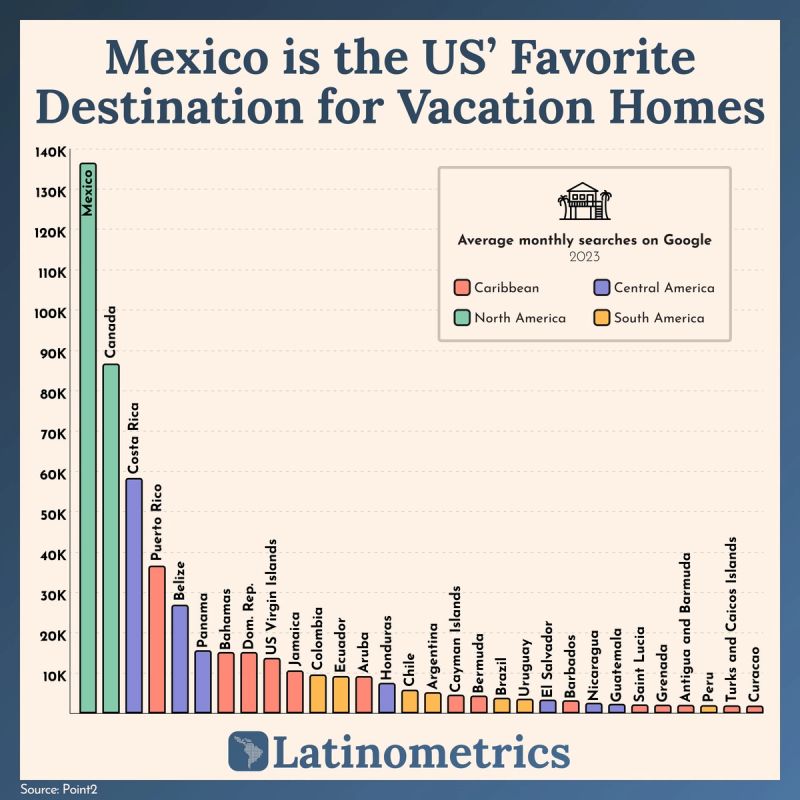
What are the top destinations for US buyers in the Americas, and which are the up-and-coming ones?
It's no secret that the US has long looked at Mexico for vacationing. The country has approximately 9,300 Km or 5,800 miles of coastline, much of which is warm year-round. Considering its affordability and proximity to the US, as well as its spectacular food scene, Mexico is a prominent vacation choice.
It gets really interesting for Mexico in its opportunity to offer real estate to comparatively wealthy neighbors. Buying a home in the United States (at least in a prime location), let alone a vacation home, has become increasingly hard.
Only about 6% of 30 to 49-year-olds in the US own a second home. A much higher percentage likely wishes it could, and that's where the real estate market outside the US comes in. According to INEGI, $25B+ was invested in Mexico's real estate market in 2022. To put it into perspective, that investment alone equals one-third of Uruguay's entire GDP.
Using Google searches as a proxy, Mexico is the most exciting place for US residents to buy a vacation home by a long shot. Canada, which holds second place and shares the English language with the US, gets about 63% of the interest that Mexico does. Costa Rica holds an impressive 3rd place, given its size.
But what if we look at growth in interest?
Well, it turns out that Turks and Caicos takes the cake there. Interest grew by 75% in 2023 compared to the previous year. Growth is way more impressive when the number in question is already large, which makes Canada's 50% growth in interest last year worth highlighting.
Regarding other Latin American destinations, it appears that US residents are increasingly looking much farther south — Ecuador, Argentina, Brazil, and Colombia saw the most significant jump in search volume last year.
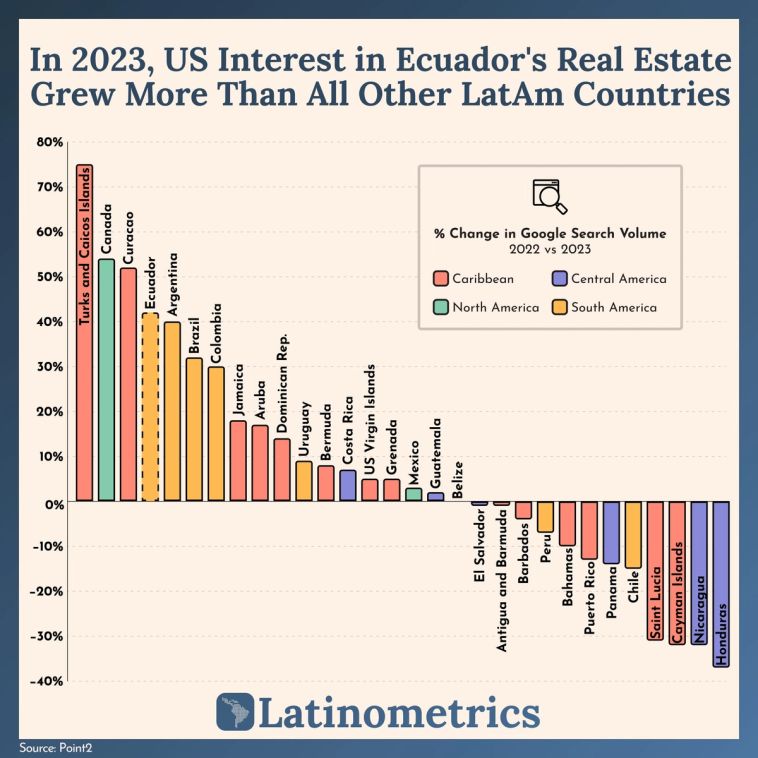
Each of these destinations offers a compelling case to purchase a vacation home, not to mention that the seasons are flipped: In most of South America, it's summer from December to March, so it makes for a perfect escape from the cold without having to move timezones.
Affordability is likely the critical factor as foreigners turn to South America. Welcoming their investment and residence is sometimes uncomfortable due to rising living costs in some areas. Still, overall, it creates new opportunities: economic growth, job creation, and knowledge transfer.


