
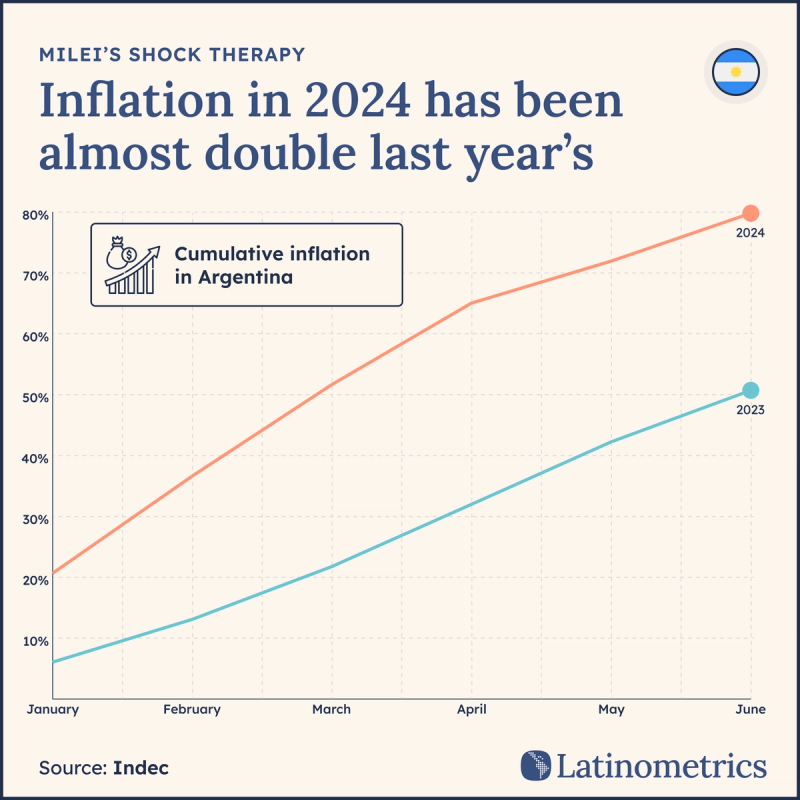
Inflation in 2024 has been almost double last year’s
Milei's "shock therapy" leads to 80% cumulative inflation, but a budget surplus emerges after 15 years.


When Javier Milei assumed the Argentinean presidency in December, he was without a doubt the most polarizing figure in the country’s recent history not named Kirchner.
The libertarian economist won last year’s presidential election on promises to take a chainsaw to the state and restore some semblance of economic normalcy to his country, which has long been plagued by boom-and-bust cycles and hyperinflation.
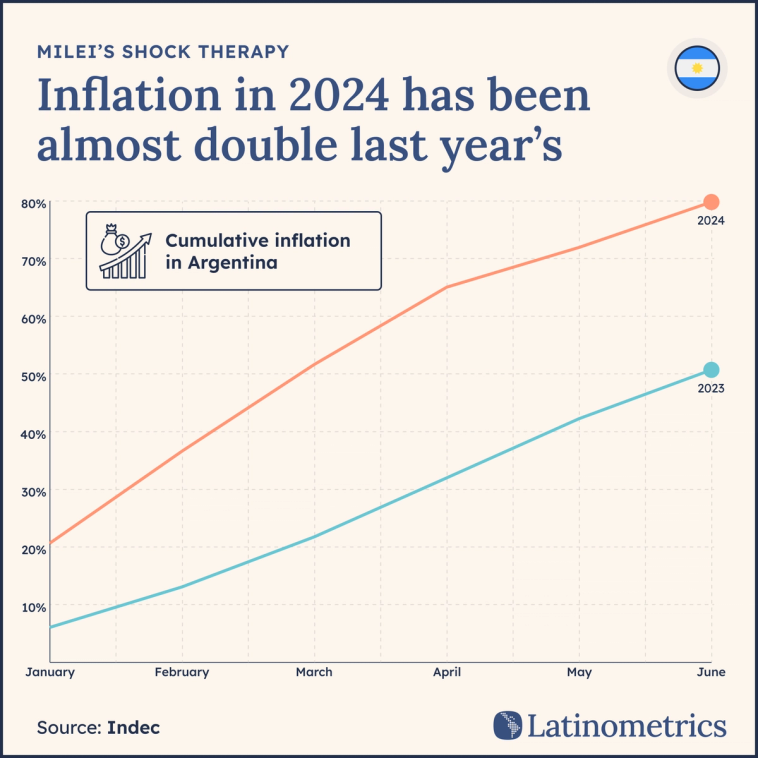
Cumulative inflation is still on the rise, sitting at roughly 80% at the end of June. This figure, well higher than where this time last year, means that investors will keep their money in other, more stable currencies, while Argentines’ purchasing power is greatly diminished. Despite – and in part owing to – Milei’s “shock therapy” liberalization policies of austerity, subsidy cuts, and state firm privatizations, the country’s citizens are in dire economic straits, with over half of them living in poverty.
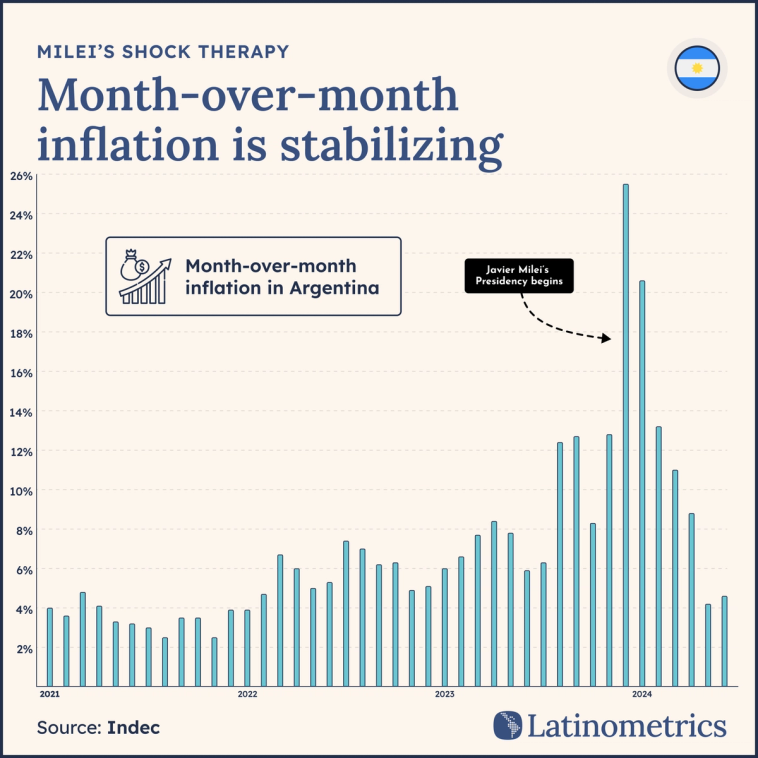
Accompanying this dropping monthly inflation rate are slashes to Argentina’s interest rates: in April, the country’s central bank cut the benchmark interest rate to 40%, the lowest figure seen since June 2022.
Interest rates are the traditional tool governments use to fight inflation, but they’re not the only one. One key way Milei has sought to stabilize Argentina’s economy is through widespread cuts to everything from subsidies to public spending.
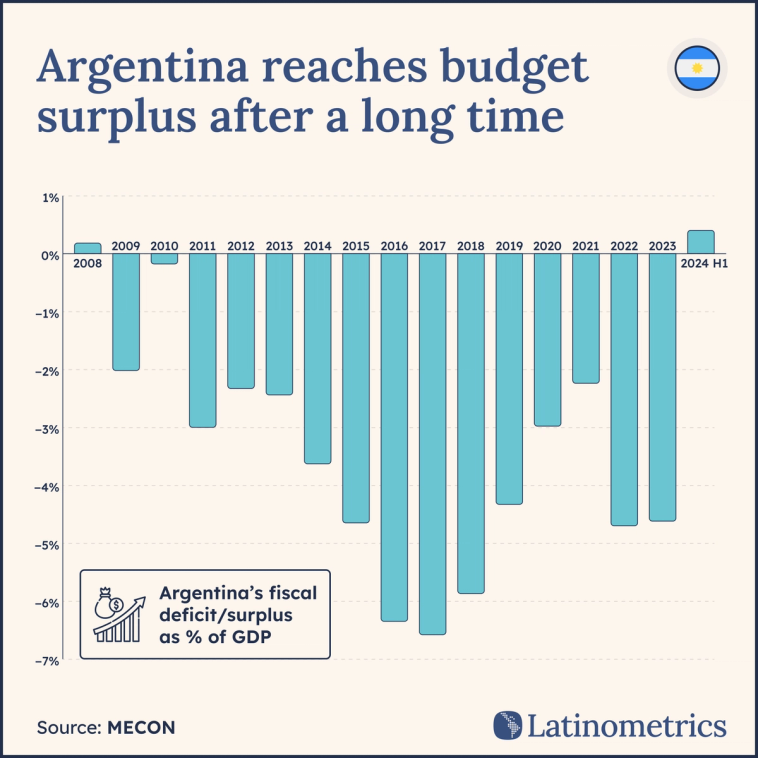
This year saw the first budget surplus in over 15 years, reflecting a concrete victory given the dangers of running long-term fiscal deficits. While it remains to be seen if the Milei administration can maintain this level of fiscal discipline for the rest of the year, particularly given challenges from both the country’s legislature and prominent province governors.
We can’t tell you whether Milei will be able to fix Argentina’s long-running structural economic and financial woes. But you can count on us to keep an eye on his government and check back in from time to time to see how this important economy is progressing.


