
Latin American Countries are Approaching Full Literacy
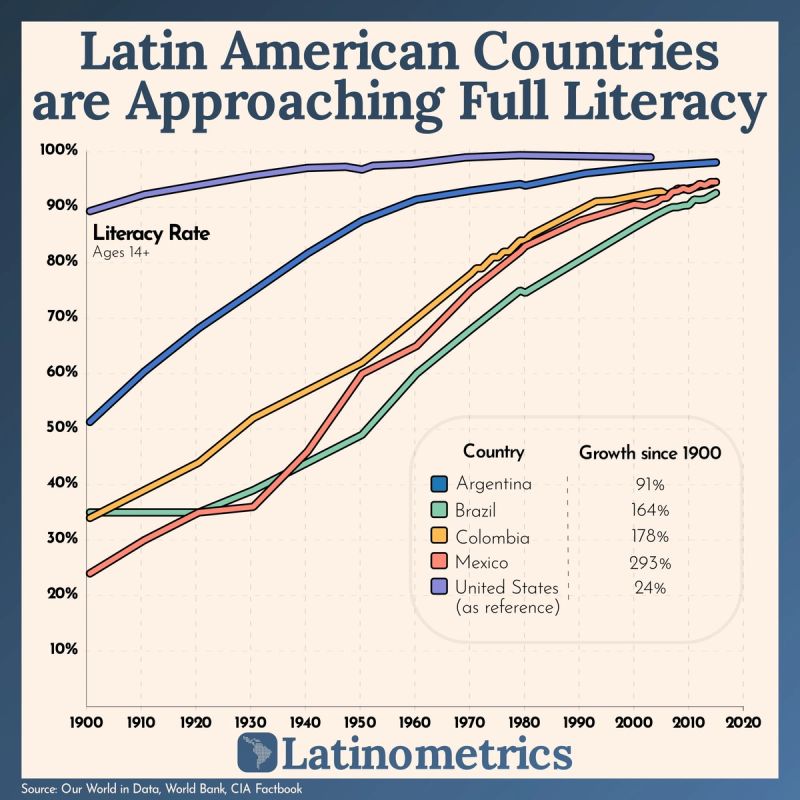
Latin America's literacy rates have surged, almost tripling in some nations since the 1900s.

It’s estimated that over 800M people over 15 are illiterate, and out of the 1.6B who live impoverished—more than half cannot read. Around 35M Latin Americans over 15 cannot read or write.
However, those numbers are optimistic when viewed through the lens of history. The percentage of people who can read and write has skyrocketed in the last few centuries. In 1820, only 12% of the world's population could read and write. Today, that figure has reversed: less than 14% remain illiterate. Over the last 65 years, literacy rates have increased by 4% globally every 5 years on average. And in the last century, Latin America has made impressive gains in its quest for literacy.
In the 20th century, global literacy rates began to rise sharply once basic education became a priority for many countries. It's important to note the head start that the US had in the Americas — it wasn't until the 1990s that Latin America began to catch up with the 90%+ literacy rate that the US had since 1900! Much of this head start can be attributed to early laws prioritizing education for all humans in the 1600s.
Our chart shows that some LatAm nations have doubled and almost tripled their literacy rates during this period. Although there is still some educational progress to be made before every child in the region can read, it's clear that Latin America has made substantial progress toward becoming a region of literate citizens, bringing a new promising era of prosperity. And as both leaders and educators become more committed to education and improve educational strategies, this momentum will continue.


