🇲🇽 Mexico's Budget
Mexico's economy just had its worst year since the pandemic, and now Sheinbaum has to divide $566 billion for 2026.
Table of contents
We create custom data stories for global companies that want to reach Latin America's business community — the same kind of content you're about to read below, but built around your industry expertise and distributed to our 300K+ audience. If that sounds interesting (for you or someone you know), let's talk to see if we're a good fit. [Schedule 15 minutes →]
Mexico's economy posted its weakest year since the pandemic. Growth clocked in at just 0.8% in 2025 (the fourth consecutive year of deceleration) and now President Claudia Sheinbaum has to steer a $566B federal budget through the turbulence.
Her spending plan, approved by lawmakers just a few months ago, is the first fully drafted under her administration and arguably her most consequential policy document yet. It attempts something that sounds almost contradictory: maintain the country's sprawling social safety net while chiseling away at a deficit she inherited north of 5% of GDP.
She has to do it all with a USMCA trade review looming in July that could reshape the rules of the world’s largest trade relationship.
So how does a G20 economy actually structure a half-trillion-dollar budget under these conditions?
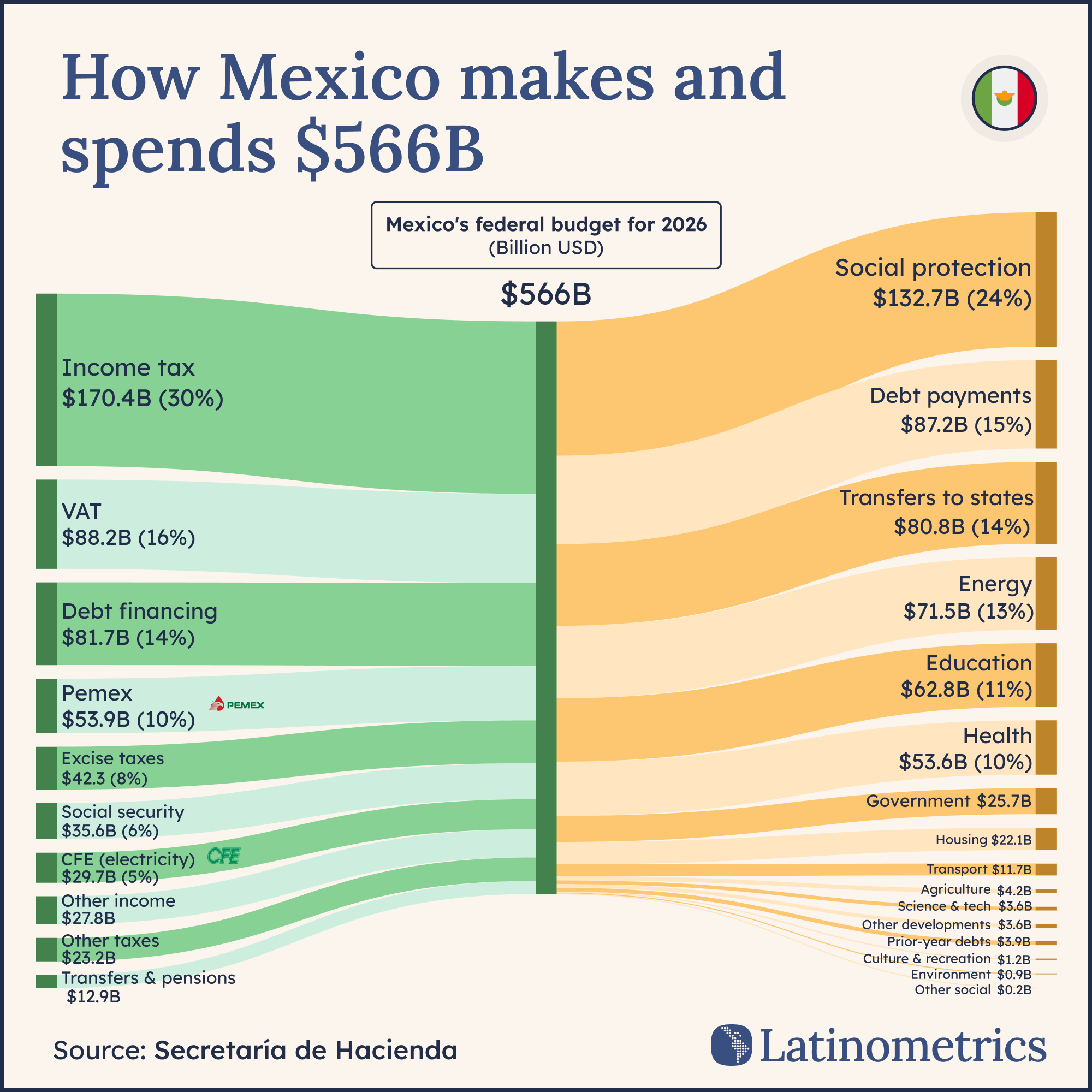
First, where she gets most of the money: Good old income taxes account for 30% of her revenue, while value added tax (VAT) and income from financing represent another third. Is that a lot? Not really; Mexico taxes at about half the tax-to-GDP ratio of OECD countries.about half the tax-to-GDP ratio of OECD countries.
How Mexico makes and spends $566B
The budget she's built from these revenues has one overriding target: get the fiscal deficit down to 4.1% of GDP. That’s a meaningful cut from the 5.7% hole she inherited, but still well above the long-term target of 2.5%.
According to the think tank México Evalúa, 75 cents of every peso in government revenue are already locked into obligations the president can't touch: pensions, transfers to states, and interest on the debt. It means every fight over Mexico's budget — more for schools, more for hospitals, more for roads — is really a fight over the remaining 25 cents.
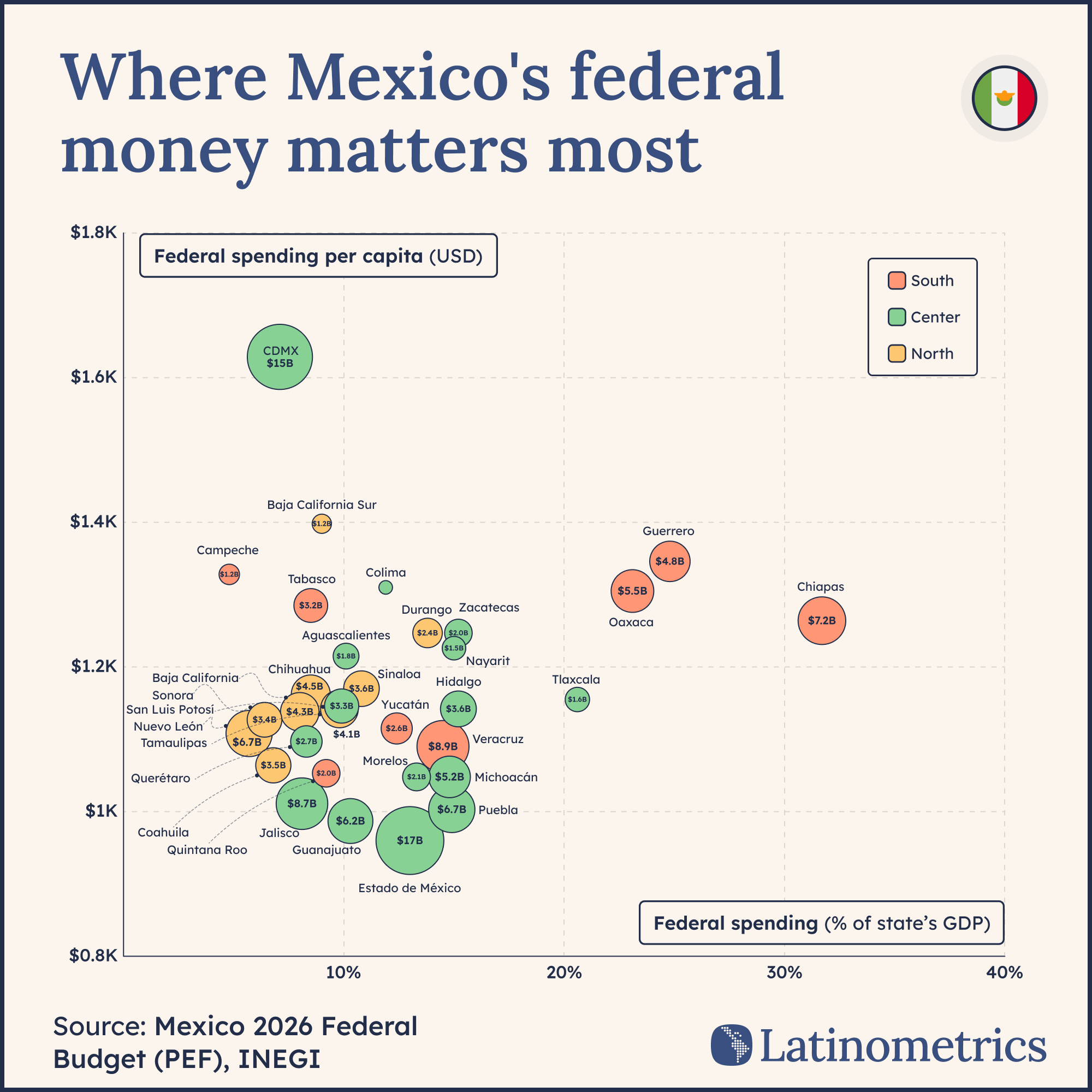
Speaking of transfers to states, many Mexicans have heard some version of the saying: "The north produces, the center administers, and the south spends." In other words, the industrialized border states generate the wealth, Mexico City shuffles the paperwork, and the poorer south absorbs the handouts. But the budget tells a more complicated story.
Where Mexico’s federal money matters most
Over $130B of Mexico’s budget is dedicated to social protection, the largest such category. This spending encompasses public policies and programs designed to reduce poverty and ensure income security and access to services.
Here’s where Sheinbaum’s party, Morena deserves its due: 13.4M Mexicans exited poverty between 2018 and 2024, bringing the poverty rate to a historic low of 29.6%, driven largely by a tripling of the minimum wage rather than the transfers themselves).
This sort of spending is concentrated in the country’s south, where it makes up a substantial component of most states’ GDP.
However, per-capita federal spending spikes in Mexico City, the capital. While part of this is tied to social protection, another component is tied to the clear public investment in projects across the city.
That includes over $1B in World Cup infrastructure — from the renovation of Mexico City International Airport's two terminals to transit upgrades around the newly renamed Estadio Banorte. There are also ongoing megaprojects like the Mexico City–Querétaro passenger rail line, a high-speed corridor designed to cut the trip between the two cities to under two hours.
Sheinbaum’s 2026 budget attempts to keep in place these protections while also chiseling away at the national debt—a national debt which, mind you, costs her country in over $80B in interest for this year so far.
Comment of the week 🗣️
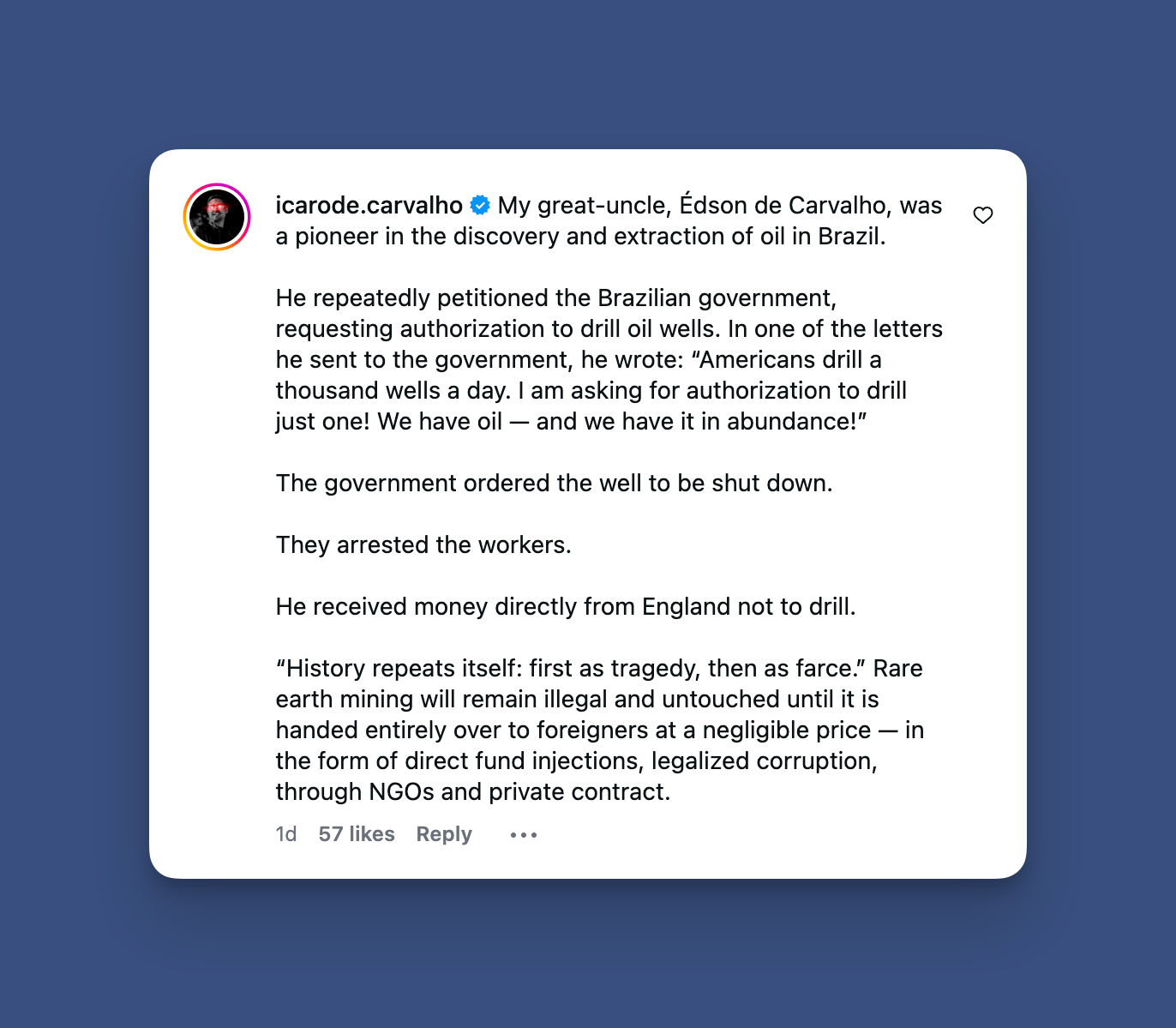
An Instagram commenter on our chart about Brazil’s untapped mineral wealth claims
“Rare earth mining will remain illegal…until it is handed over to foreigners at a negligible price.”
Feedback or chart suggestions? Reply to this email, and let us know!