
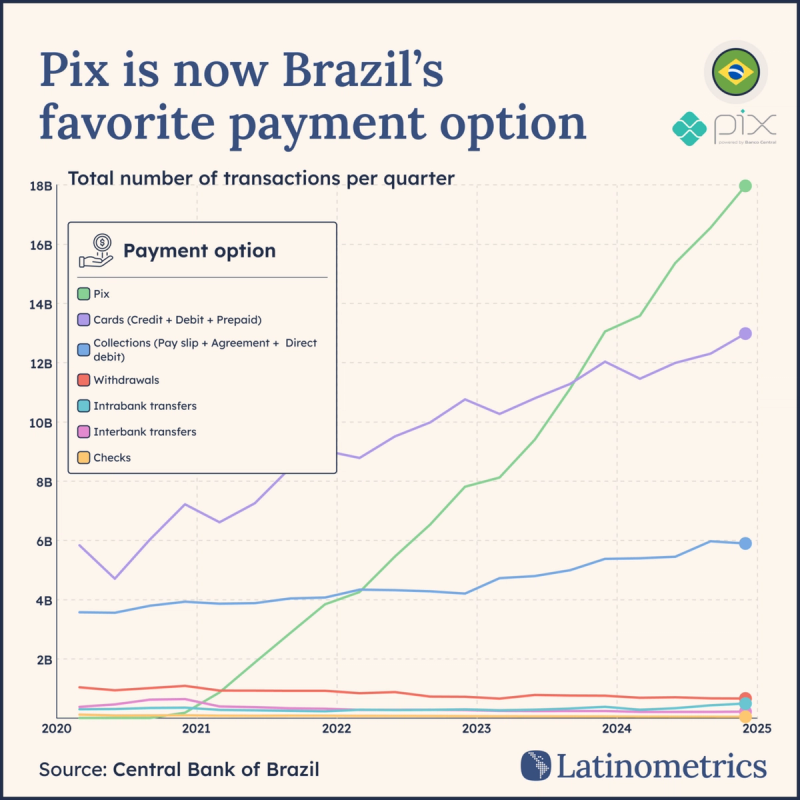
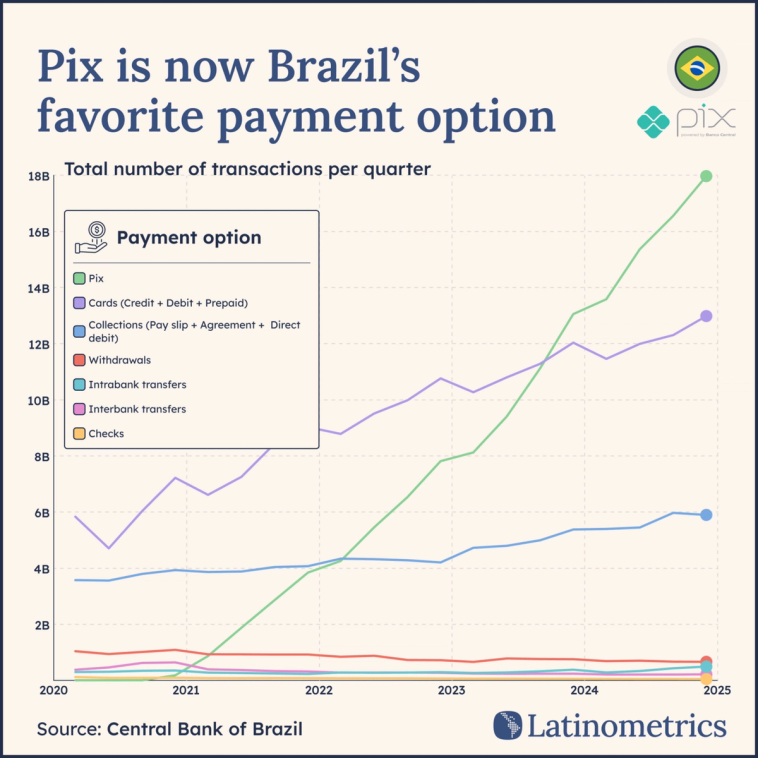
Pix is now Brazil’s favorite payment option
Brazil's national payment service is a roaring success.

Okay, so you’re lucky enough to live in the one and only Rio de Janeiro. Brazil’s Cidade Maravilhosa.
You get a haircut. You buy some Biscoito Globo and matte limão from a beach vendor. Your friend and you buy tickets to watch Flamengo get absolutely thrashed by Vasco da Gama (hopefully) in the famed Maracanã stadium. What do all these things in common? Chances are, you almost certainly used Pix in all three transactions.
Pix works with just about every national bank account, from established giants like Bradesco and Santander to the newer players like C6 and Nubank. It streamlines the payment system, making it easier for individuals and businesses to send or receive money instantly, freely, and securely. Firms can pay invoices with it, and the government accepts it. Even some homeless Brazilians will accept Pix donations.
Within the first year of operations, Pix was responsible for over 6B transactions, a number which rose to 42B in 2023. Last year, over 63B Pix payments were sent, demonstrating the inexorable rise of arguably Latin America’s greatest public-policy rollout of the past decade.
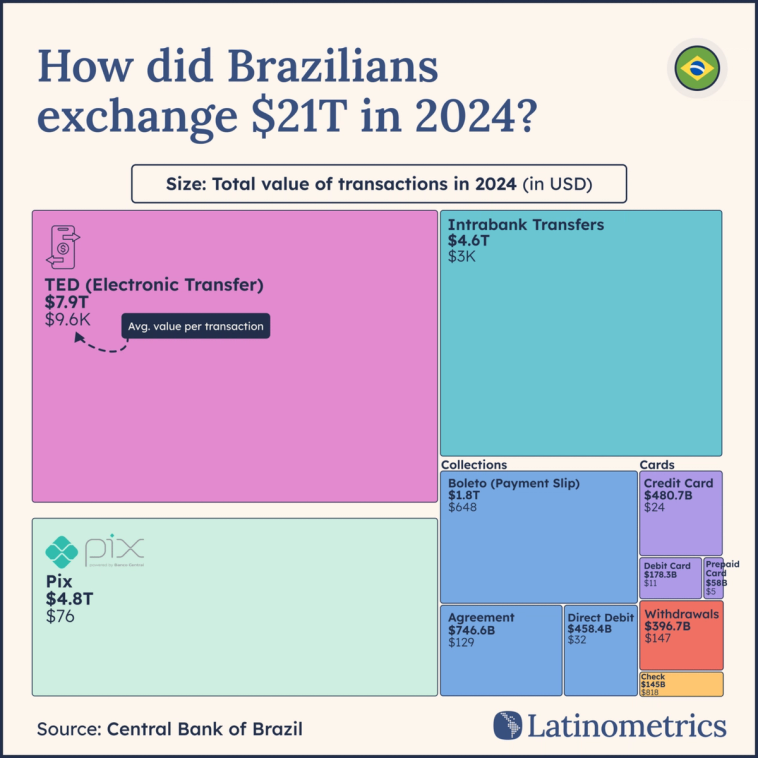
Notably, electronic bank transfers through the national TED system remain the chief payment method by value, in large part due to their use in commercial and real estate transactions. While the average Pix is of just $76, the average e-transfer rather runs around the $10K range.
How did Brazilians exchange $21T in 2024?
But take it from us: Pix is coming for the crown. More and more tenants are paying their rent with Pix, and businesses are turning to the government-backed option as an easy way to root out credit cards with their pesky processing fees.
The Central Bank of Brazil counts over 158M individuals, and nearly 16M companies, utilizing Pix today—in a country of just 212M people. Let that be a lesson for policymakers everywhere: if you build it, and it does what citizens and businesses need, they will come.
Will the rest of the world catch on and at last abandon ridiculous decentralized ideas like Venmo or Zelle? Who knows—but as of last year, Italy is officially weighing an adoption of the Pix system.


