
Argentina and Costa Rica Have the Most Psychologists Worldwide
Argentina has 64x more psychologists than Mexico, defying Latin American norms.

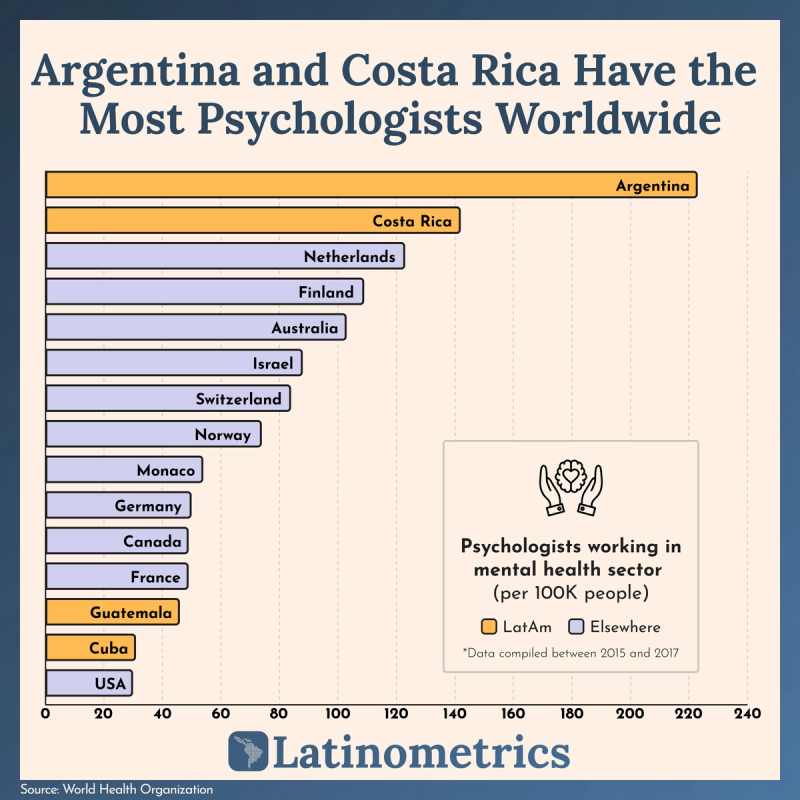
Argentines have embraced talking to psychologists. Other Latin Americans...not so much.
When’s the last time you considered seeing somebody for a psychological issue you were facing? When’s the last time you brought up the subject to a friend, or heard them share their experience with therapy?
If you just answer Pshh…never, you’re not alone. Mental illness or health issues remain taboo in many cultures, only discussed when something terrible happens.
But that isn’t the case everywhere. In fact, Argentines prioritize mental health like no other people.
According to the World Health Organization, there are 223 practicing psychologists per 100K people in Argentina, well ahead of the global average.
In second place worldwide is another Latin American country, Costa Rica. What makes these numbers doubly surprising is the extent to which both countries deviate from the regional norm.
Experts believe that Argentina's high concentration of psychologists is due to its open culture, which makes no distinction between physical and mental health. Unlike in many societies, Argentines generally do not stigmatize therapy. And thanks to solid demand, psychologists don't struggle to find employment; about 84% secure a job within their first year after graduation—something we’re sure drives many other industries jealous.
Compare that to another extreme, Mexico, which has only 3 psychologists per 100K people. In other words, the average Argentinian has 64x more psychologists available than the average Mexican. Stigma surrounding mental health continues to plague Mexican society, making it harder for everyday people to address the problems they face in a healthy, sustainable manner.
Mexico isn’t along in walking this difficult road—Brazil and most of Central America also have their own challenges in advancing the social well being of their citizens. But mental health is important, and for each of these countries it’s worth recalling just how much quality access to care can change patients’ lives.


