
Tequila slows down for the first time in 15 years
Why Mexico's national spirit isn't losing its charm, despite what headlines suggest.

Today we have a perfect example of why it is worth always taking a step back before interpreting a news story in the worst possible way.
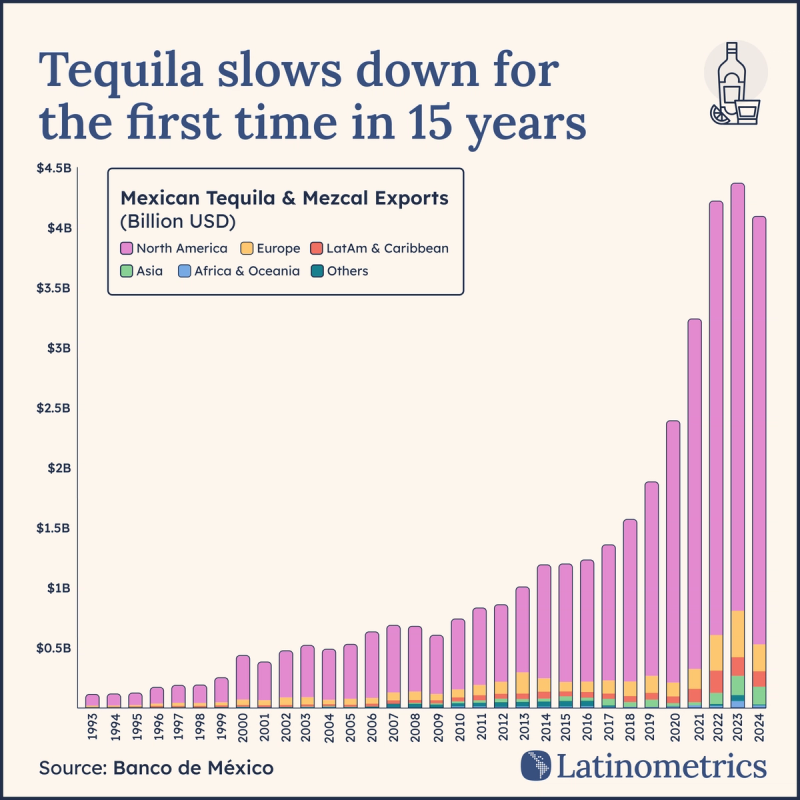
For the first time since the global financial crisis of 2009, exports of tequila and mezcal declined last year. Taken at face value, this might suggest that the industry is struggling; in fact, several media outlets have already jumped to that conclusion.
This is where Latinometrics comes in. Looking at the period since the pandemic, the industry hasn’t just done well—it’s done extraordinarily well. Between 2020 and 2023, its value nearly doubled.
Our friends to the north, especially in the United States and Canada, have bought almost every bottle exported from our beloved Jalisco, a full 87% of total export value. In the United States, only vodka currently outsells tequila and mezcal.
So what has been happening in the rest of the world?
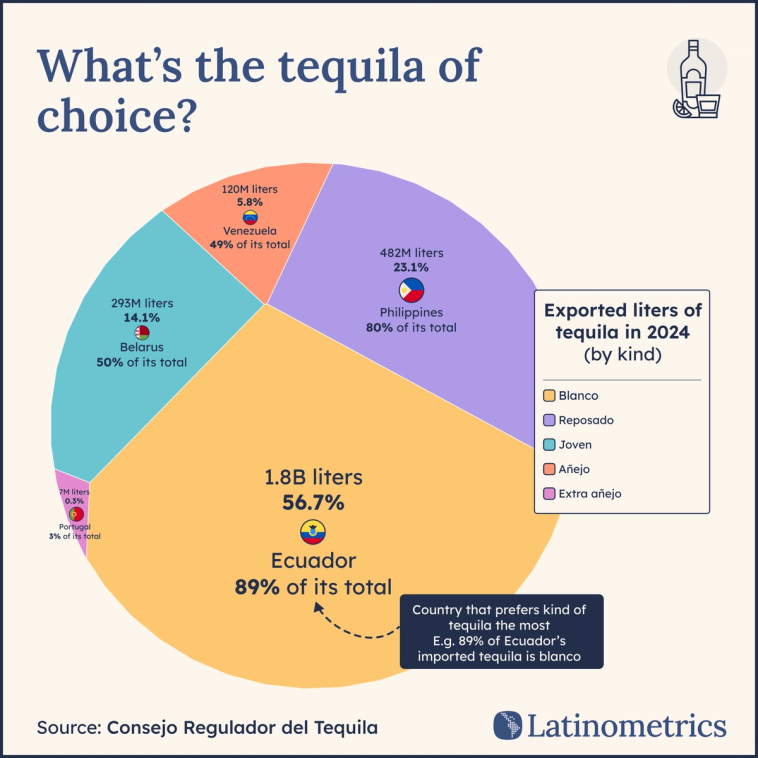
First, tequila preferences vary widely by market. Blanco is by far the most consumed globally, but every category finds a home somewhere. For example, 80% of the tequila imported by the Philippines is reposado, around 681K liters. Venezuela prefers añejo, buying 18K liters last year, with this figure representing 49% of its total tequila imports.
If you are still not convinced that opportunities remain plentiful, consider the markets that have grown the most since the pandemic, excluding those that purchase under 100K liters per year.
First on the list is Ghana, a country you probably recognize from World Cup matches. Its tequila imports have increased nearly ninefold since 2019, reaching 193K liters annually.
There are countries experiencing a steep rise in consumption on almost every continent. The Dominican Republic has grown fivefold, Indonesia fourfold, and Sweden sevenfold in the last five years.
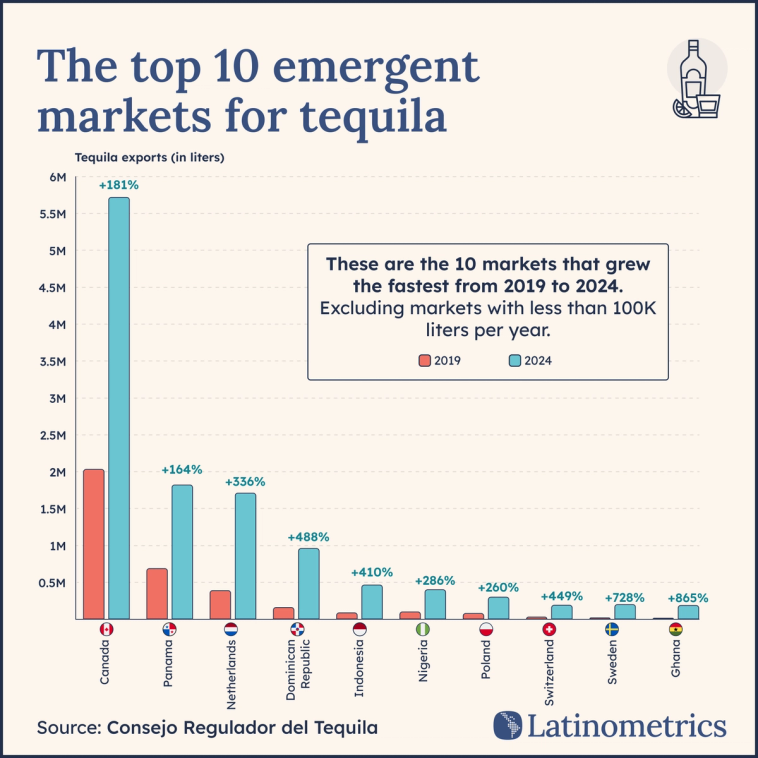
Among the ten fastest growing markets, the largest increase in volume comes from Canada. It now imports almost 6M liters annually, although this remains very small compared with the United States.
At the same time, some parts of the world are reassessing their relationship with alcohol. It is unclear whether this shift is temporary, but major producers such as Diageo and AB InBev have seen their market capitalization fall by 27% and 15% respectively in the past year.
Even so, it’s important to stay grounded. The average Mexican over age 15 consumes almost five liters of pure alcohol per year, a figure similar to the global average. The market is changing, but tequila is still well positioned to continue taking share from rum, whiskey, and vodka as the world’s favorite spirit.


