
How dependent is LatAm trade to the USA?
How vulnerable is Latin America?

The word "tariff" has exploded into the world's collective consciousness in the past few weeks. Emboldened by the start of a 2nd US presidency and a base that is stronger than ever, Donald Trump has sought to re-balance what he describes as unfair trade relationships with much of the world.
His primary tool for this crusade is enacting tariffs (taxes) on US-imported goods worth $3.2T+ annually. He has shown us how he plans to use them — or the threat of them — as a powerful negotiating tactic.
His first threat of tariffs was directed at Colombia after President Gustavo Petro initially refused to accept deported migrants. Petro, amidst intense pressure, had to cede and accept planes full of migrants back into his country.
Trump then moved to Mexico and Canada, his closest trade allies, and signaled that even they were not safe, threatening to impose 25% on all their goods. Again, both countries offered some concessions around stricter enforcement at their borders in exchange for a 1-month tariff delay.
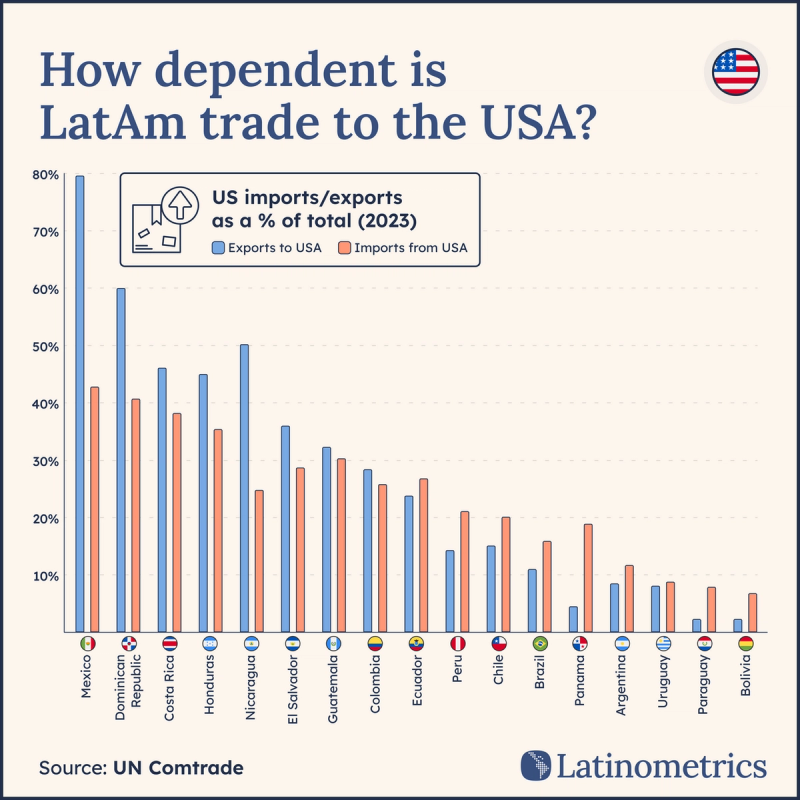
Mexico is the most dependent country, with nearly 80% of all its exported goods purchased by the US. The Dominican Republic and Nicaragua are also highly dependent, with more than half of their exports going north.
Mexico's entire economy has become increasingly trade-oriented. Before the original free trade agreement of NAFTA with the US and Canada, trade represented 10% of Mexico's economy.
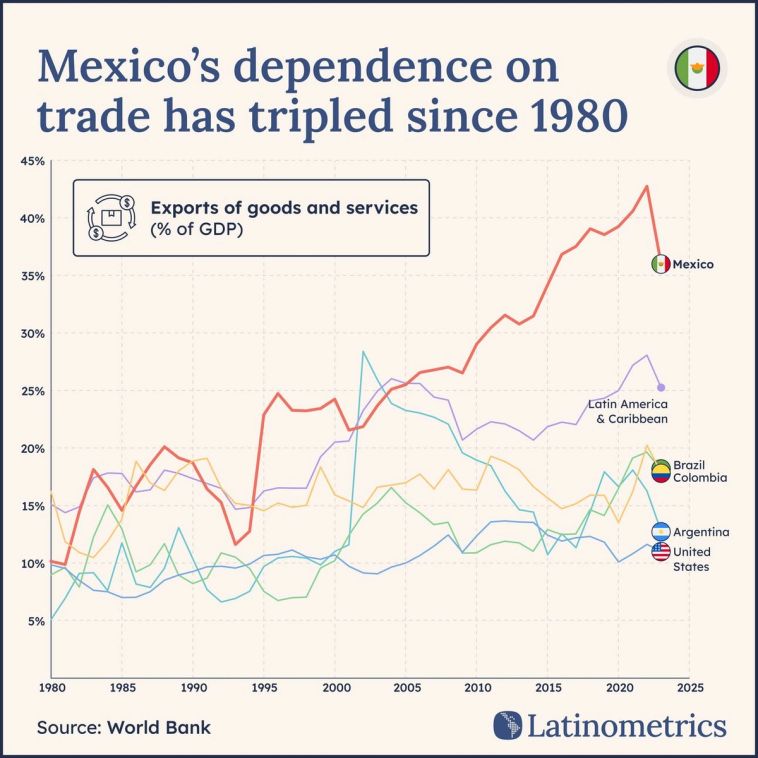
Today, that number has surpassed 35%, making the country especially vulnerable to disruptions in global trade, much more so than its regional peers like Brazil, Argentina, and Colombia, whose trade represents less than 20% of their economies.
Logically, this has sent Mexicans into a worrying spiral. But for now, President Claudia Sheinbaum has been praised for her pragmatic approach to these tough negotiations with the world's most powerful country.


