
What will AI make better or worse?
The countries with the most to gain from automation are the ones cheering it on.

In case you hadn't realized we lived in a new world yet, go log onto social media right now. Chances are you'll come across some pseudo-intellectual, pseudo-inpirational LinkedIn or X post, some fake animal video that'll tug at your mother's heartstrings, some abuse of the poor em-dash and its longtime fans.
We're living in the world of AI, for better or worse.
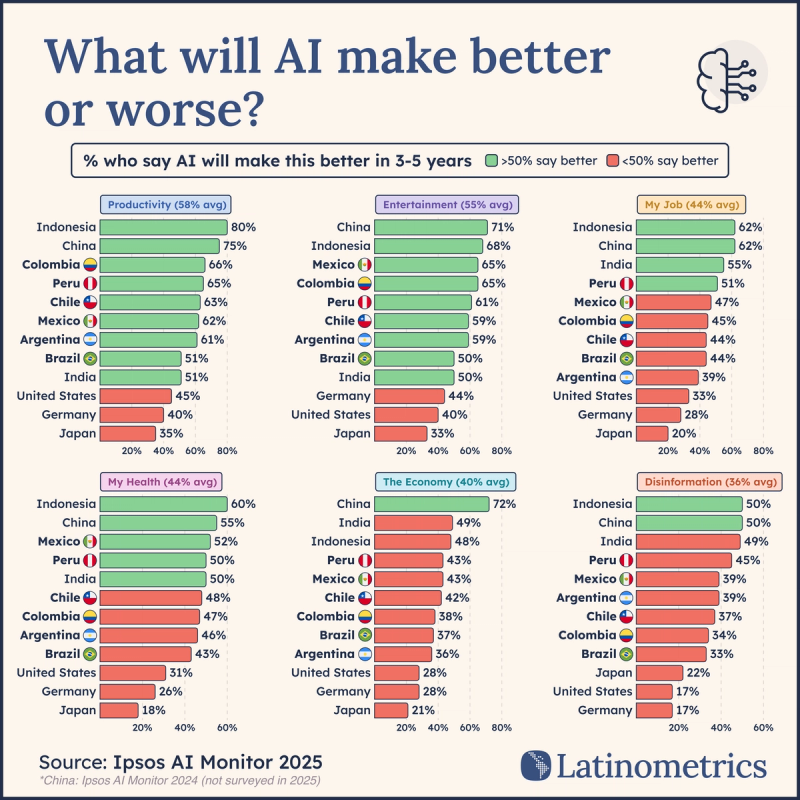
And as it changes the way we interact with each other and with the digital world, Latin Americans tend to be largely open to the new possibilities for labor productivity (58% optimism) or entertainment (55%), but largely wary otherwise — only 36% trust it not to make disinformation worse, and just 40% see it helping the economy.
Addressing Latin America's productivity gap would be a godsend, but people's concerns with AI are understandable in a global context. Growing productivity at the cost of the job you trained for is a Faustian bargain, and leaving health outcomes in the hands of systems with documented problems feels dangerous.
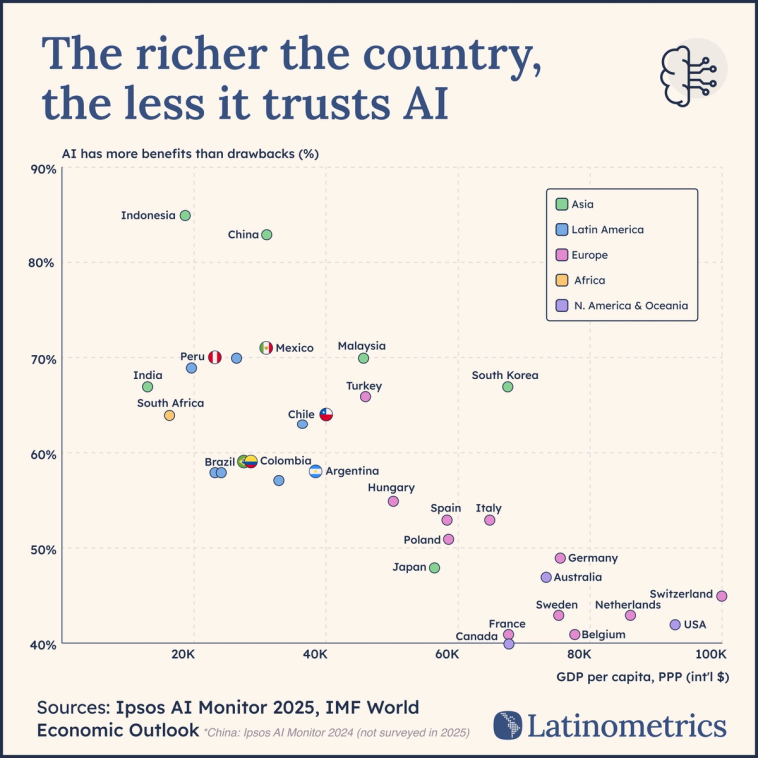
Especially given that the relationship between AI and development is murky. Many more developed countries, like Germany or Japan, are far more cautious — only 20% of Japanese workers think AI will help their job.
Meanwhile, large developing democracies like India, Indonesia, and South Africa are home to some of the most AI-friendly people in the world — 62% of Indonesians and 55% of Indians expect AI to make their job better, with thousands turning their online skills into tangible income.
None of which is to say that Latin America, or any other developing region, can truly sit out the AI revolution.
This moment presents an opportunity to harness powerful new technologies to optimize sectors like healthcare, finance, and hospitality.
From small businesses spinning up their own websites to scholars unearthing buried research, every corner of Latin America has something to gain. The tools are here; what we do with them is the part that matters.


