
Ups and Downs: The Most Significant Moves in LatAm's Suicide Rates
Venezuela's suicide rate plunged 70% since 2000, yet Paraguay saw a devastating 70% rise.

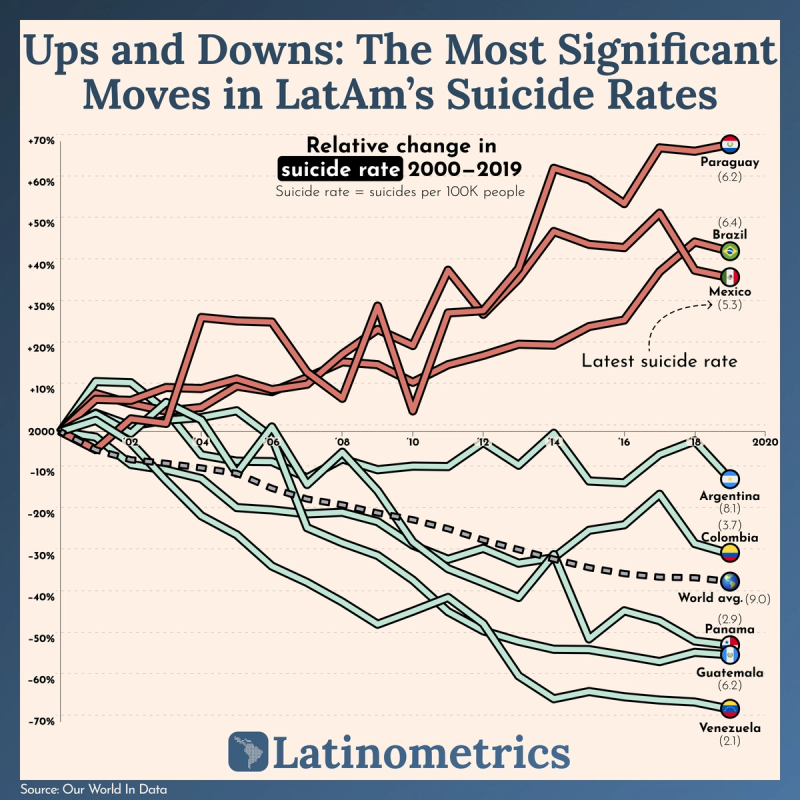
Each week, we try to focus on either positive or underreported stories from around Latin America. This chart falls clearly into the latter group.
Since 2000, a look at suicide rates across the region brings back a mixed bag.
To be clear, there have been large drops worth celebrating. Guatemala and Panama have both seen their suicide rates plunge by about half, falling ahead of the global average of roughly 9 suicides per 100k people. The only two LatAm countries above the world’s average are Cuba and Uruguay.
Surprisingly, the country that sees the largest drop is Venezuela, where the latest rate appears at just around 2 victims per 100K—a decrease of roughly 70% from 2000. This seems particularly surprising given the country’s protracted crisis and chaos over the last decade. However, it is worth noting that discussing mental illness and reporting suicide remains taboo and stigmatized in many countries, and this leads to official figures being underreported.
More grimly, both Argentina and Colombia have had struggles in reducing the number of suicides year after year, even if today their official rates are between 10-35% lower. Both countries have struggled with immense social and economic turmoil over the same period, which have been shown to be factors contributing to worsening mental health and increased tendencies for self-harm.
Finally, there are countries where the rate has increased since 2000. Paraguay has seen a devastating 70% rise in suicides in the 21st century, even if the final amount remains lower than in its neighbors. It’s also worth noting the large increases in both Brazil and Mexico. For their part, Latin America’s giants have seen increases of 43% and 37%, respectively, in their suicide rates—doubly tragic when considering how many more victims this reflects.
It’s also expected across the board that the COVID-19 pandemic and subsequent global recession have devastated mental health and led to increases in suicide since 2020. Meaning that if our chart looks grim, the situation since then is by all counts likely worse.
A reminder to all our readers that there is help available if needed**—please find your country’s hotline and emergency number at this link.**


