
Whirlpool's Sales in LatAm Peaked in 2011. Can it Bounce Back?
After 2011's peak, currency devaluations and trade wars hit sales, but new $172M factory investments signal renewed faith.

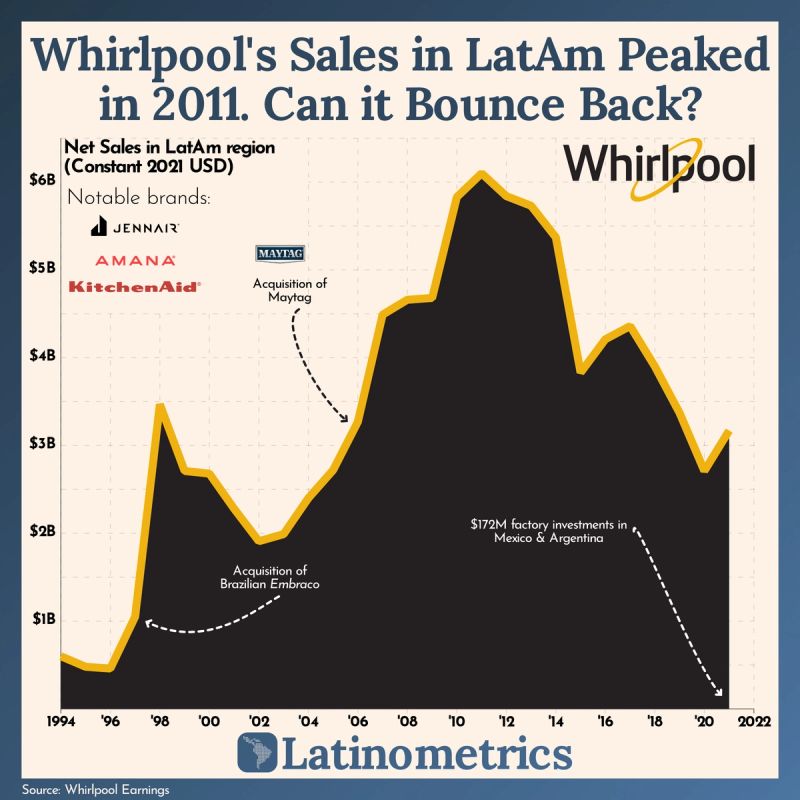
Whirlpool started over 100 years ago when an insurance salesman from Michigan acquired a manual washing machine patent and worked with his uncle to add a motor to it. In 2006, it became the world's largest home appliance maker after acquiring Maytag.
Before that happened, the company expanded aggressively to international markets, and Latin America was no exception. Through acquisitions of national brands like Brazil's Brasmotor and Multibras, constant innovation, and new product lines, Whirlpool secured dominance over the region and grew 13x in 15 years (from 96 to its 2011 peak).
Since its peak, the company has faced various challenges that have been eating away at its yearly revenues. In 2013, it faced severe currency devaluations in Venezuela and Argentina that triggered a ~30% markup on its products. Four years later, spokespersons cited lower-priced competitors for its declining sales. Then in 2018, the Trump administration engaged in a global trade war that inflated the price of its raw materials.
Last year, however, the company reported the first revenue growth in a while, largely thanks to consumers stuck at home deciding to invest more in their kitchens and washers. This year's quarterly data indicates the boost was short-lived. Nevertheless, Whirlpool opened a $52M factory last month in Buenos Aires and announced a $120M investment for one in Ramos Arizpe, Mexico last year. The moves mark Whirlpool's continued faith in the region as a vital production hub — 90% of the production from the Mexican factory will go to the US and Canada.


