
From oil riches to 75% in extreme poverty
From 1990s poverty to Chavismo to 70% poverty today; Maduro's forced removal starts a new, uncertain chapter.

Even in a region as turbulent and volatile as Latin America, the overnight capture of Venezuela’s autocratic ruler Nicolás Maduro by US military forces earlier this month was by far the most stunning development in recent history.
Many of us with normal sleep schedules went to bed with Maduro still holding the office he’s held since 2013. When we awoke, he was on a US battleship heading to prison in New York City, facing charges on drug trafficking.
While the evidence of Maduro’s actual involvement with drug trafficking into the US is murky at best, the reaction by most Venezuelans to the operation has shown this to be a moot point.
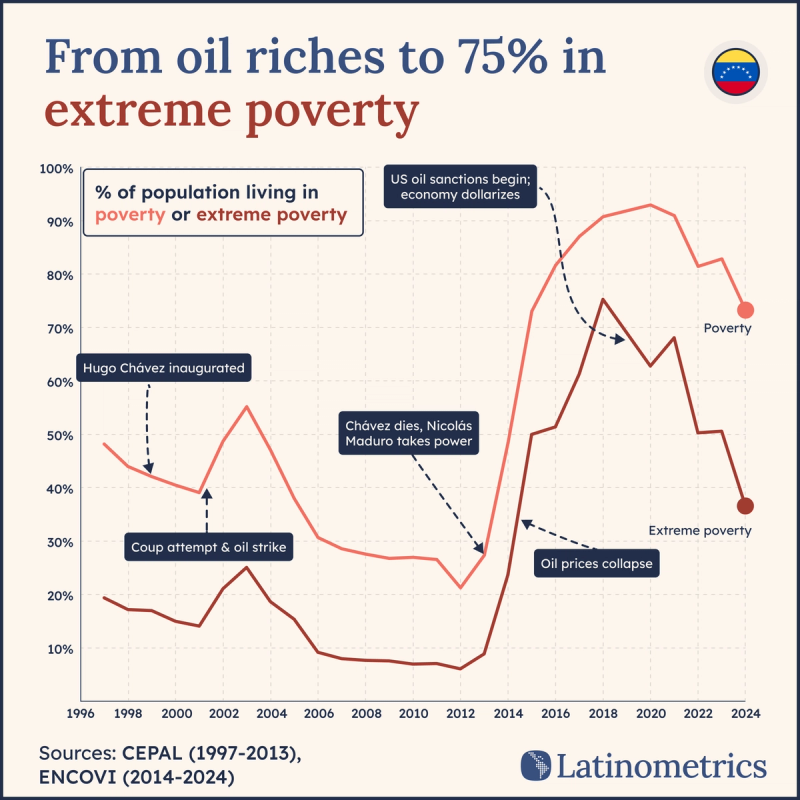
Quite simply: preside over the worst collapse in the hemisphere’s recent history, and people are bound to accept whatever gets you out of power. After all, per the most recent available figures over 70% of Venezuelans live in poverty today.
To give you an idea, this is over 20% higher than the poverty levels seen in the late 1990s, a time which saw an untenable socioeconomic situation that eventually led desperate people to first turn to Maduro’s predecessor, socialist firebrand Hugo Chávez.
Even more troubling is the level of extreme poverty, in which a third of Venezuela’s population falls today, and up to as high as 75% in 2018. Extreme poverty is defined by the United Nations as surviving on less than $3 a day—a complete inability to access needed services like food, clean water, or housing.
But this much poverty, in a country widely touted as having the largest oil reserves in the world? This is where the mismanagement and incompetence of the Chavista regime is truly demonstrated.
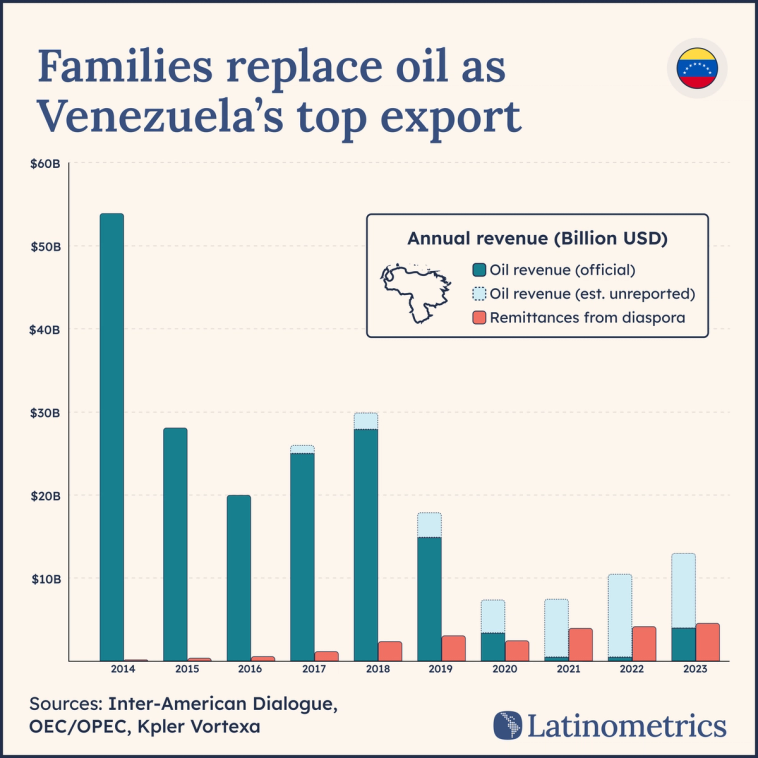
Production has cratered over the last decade, and oil revenues have been all but wiped out as facilities have fallen into disrepair. By one estimate, repairs and renovations would cost upwards of $100B—all while official oil revenues now bring in fewer dollars than remittances from Venezuelans abroad.
Venezuela's National Assembly recently passed a new hydrocarbons law that cuts royalties from 30% to as low as 15% and reinstates international arbitration rights to attract Western investment. Meanwhile, Houston's oil industry is buzzing with excitement as executives and major firms like Halliburton scramble to position themselves for a potential Venezuela oil rush.
It’s much too early to know where the US–Venezuelan relationship will lead. The interim president, Delcy Rodríguez, has maintained an ambiguous relationship with the Trump administration, balancing her criticisms with CIA meetings and pro-business oil reforms.
Will the Chavista regime she now leads stay in power? Will there be some sort of negotiated transition towards democracy—or is the Trump administration fine keeping in power this repressive state apparatus so long as the oil supermajors get their cut?


