
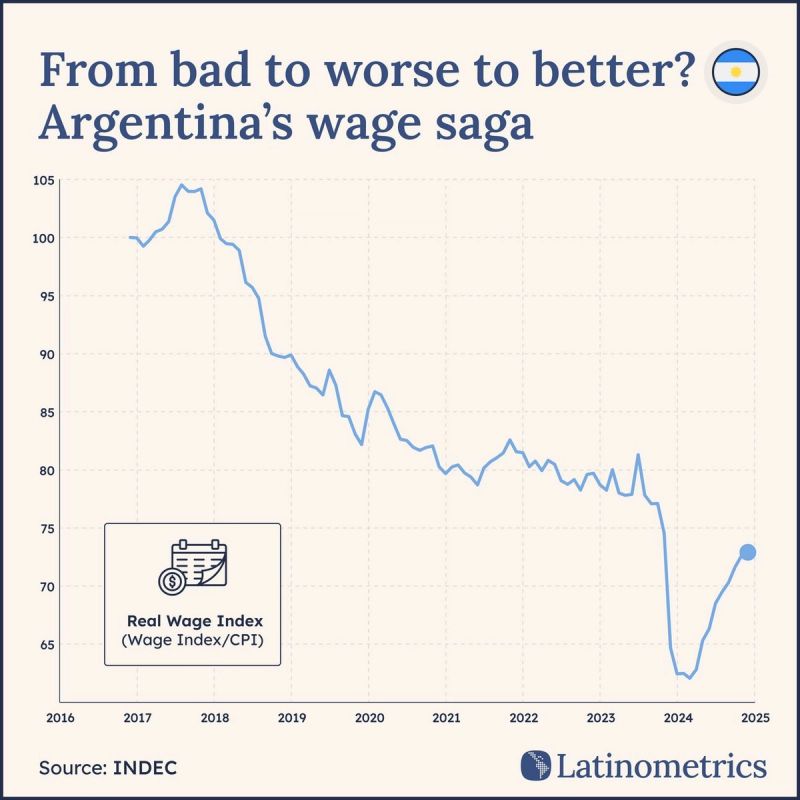
From bad to worse to better? Argentina's wage saga
How are Argentinian wages holding up?

If you’re anything like us, you’ve been hearing a lot about egg prices in recent months.
For what it’s worth, this makes sense: most domestic politics are shaped by everyday concerns such as cost-of-living indicators. Whether it be the price of gasoline in the US or the price of coffee in Brazil, day-to-day economic worries are often front-and-center in citizens’ minds.
Which brings us to Argentina, sometimes (lovingly?) referred to as Latin America’s basket case. A history of boom-and-bust cycles dating back a century have made stamping down stubborn inflation core to the priorities of any half-decent elected leaders.
Enter: Javier Milei. The right-wing firebrand President of Argentina has been in office for over a year now, and by all accounts he’s successfully achieving his primary objective by slashing inflation. January’s monthly inflation rate was merely 2.2%, the lowest recorded rate seen since July 2020.
Wages vs. inflation in Argentina since Milei
Perhaps even more importantly, wages have been outpacing inflation all year.
This cuts to something incredibly basic yet essential: even with massive cuts to social subsidies and other government expenditure, many Argentines are seeing their purchasing power recover after years of hemorrhage.
This might help explain why the ever-controversial Milei, who recently faced a scandal over a crypto fiasco, has managed to maintain approval ratings of about 50 percent.
After all, this is just the most recent chapter of Argentina’s long battle with economic crisis. Inflation has cut into wage growth for years now, while Milei’s arrival into office coincided with a nearly 20% collapse of real wages.
Will we see Argentines’ living standards recover to the level of the late 2000s or, as is often cited, the glory of the early twentieth century?
There’s certainly no way to know yet—but you can count on us to keep you updated.


