
From South to North: LatAm's Population Transfers to the US
Analyzing migration patterns reveals surprising origin countries and their dramatic population impacts post-pandemic

For our readers in the United States, it may seem at times that migration dominates all discussion of Latin America. This month was no exception, as the Biden administration lifted Title 42, a controversial policy in place since March 2020 which turned away people crossing the US southern border without allowing them to apply for asylum.
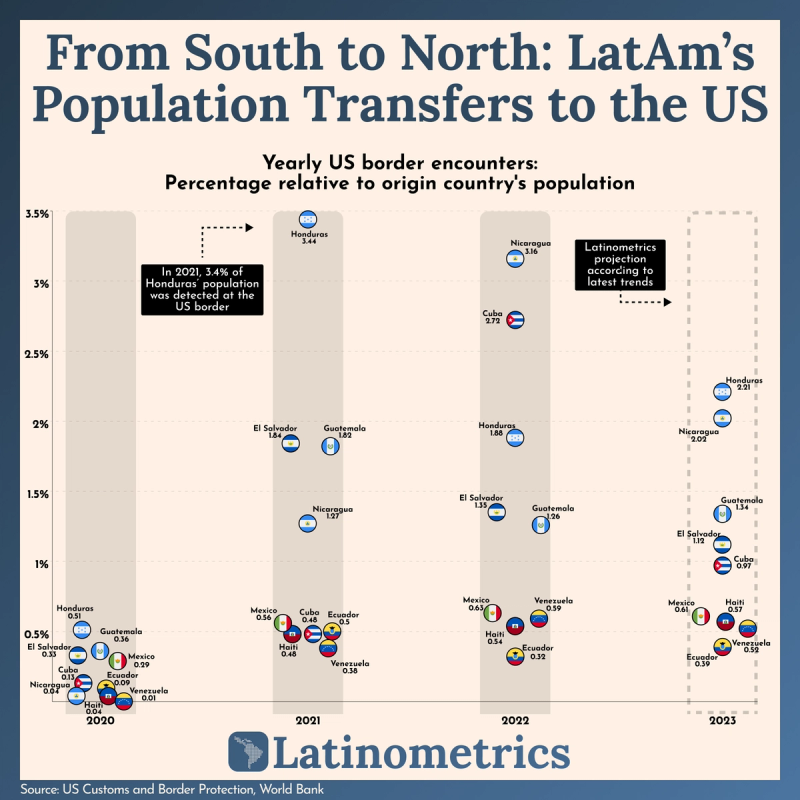
The US has served for decades as the final destination for Latin Americans who have tried to seek asylum or find a better life. In the above chart, we’ve decided to take a look at from where exactly people arriving to the border are coming, and what this looks like given the size of their home countries. Some results are staggering, especially as pandemic conditions eased and the numbers seen following 2020’s dip surged.
The countries of the Northern Triangle, with their small sizes and poor economic conditions, feature among the highest source countries when considering total populations: over 3% of Honduras’ and nearly 2% of Guatemala and El Salvador’s total populations crossed the border in 2021.
Then, between 2.5 and 3.5% of Nicaraguans and Cubans attempted to enter the US, following fraudulent elections and government crackdowns in the two dictatorships. In a similar vein, Venezuela saw roughly half a percent of its population arrive to the US border following a long, perilous trek that includes crossing the notorious Darien Gap in Panama.
Going off current figures from US Customs and Border Protection, we project that this will continue to be a dire situation following the end of Title 42. An explosion of crime in Ecuador and pure chaos in Haiti will likely see larger numbers of those countries’ citizens fleeing north, while as always thousands of Mexicans will arrive to the border seeking either asylum and safety, to rejoin their families, or to pursue economic opportunity.
Whether fleeing autocratic governments, political instability, or economic woes, people will continue to journey north in the years to come. There may not exist a perfect immigration policy—we hope only to see the countries of our shared hemisphere working together to take care of its people and address common challenges.


