
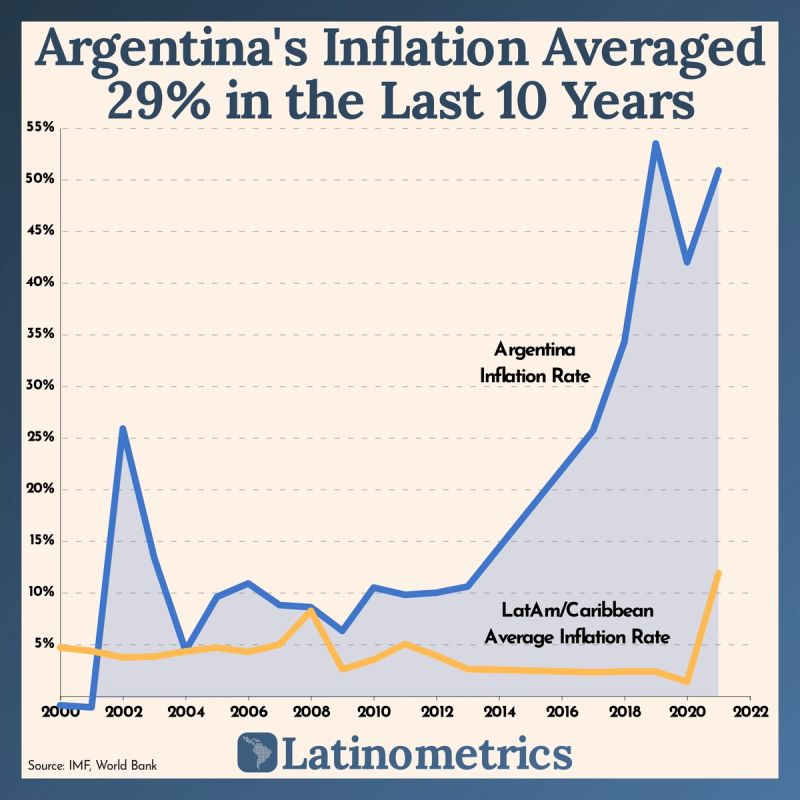
Argentina's Inflation Averaged 29% in the Last 10 Years
Argentina's peso lost 96% of its value in 10 years, averaging 29% inflation annually.

About a month ago, Argentina and the International Monetary Fund (IMF) reached an agreement to extend the repayment timeline of a debt of more than $40B that Argentina owes the IMF. Argentina is the IMF’s largest borrower. Under the new agreement, Argentina will get a four-and-a-half grace period to pay back. At the same time, it promised to attempt to fix its balance sheet of government spending back home.
Historically, Argentina has struggled with populist governments spending more than the economy can generate — leading to money printing and thus inflation — for decades. In the last 60 years, the country has only had a 6-year period in which spending was less than its income; from 2003 to 2008. International raw material prices were at a record high during that period and generated significant returns. However, it’s been dealing with an outrageous 29.6% average inflation per year for the last decade. A dollar was worth 4 Argentinian pesos 10 years ago; today it’s worth 107.
To stabilize the situation, last October, secretary of internal trade, Roberto Feletti, issued a decree fixing the prices of 1,432 products. However, that’s not a sustainable solution since price-fixing causes industries to suffer lower margins, reducing incentives to do business.


