
Argentina's Real Interest Rates Keep Declining Despite Regional Trends
Argentina slashes interest rates as region hikes, defying economic orthodoxy with 100%+ inflation.

Let's be honest: Latin America doesn't exactly have the best history with inflation.
There's the so-called Década Perdida, or "lost decade," which saw many of the region's countries grappling with sky-high inflation and massive external debts throughout the 1980s. There are the various inflationary pressures faced by Mexico, Colombia, and Brazil in the 1990s. And then, of course, there are infamous cases such as Argentina's 2001 meltdown or Venezuela reaching a whopping 1M% of hyperinflation a few years back.
All of which makes the region's current status fairly...surprising?
Don't get us wrong, Venezuela remains a world leader with roughly 435% inflation, while Argentina recently topped 100% and has thus been introducing new peso bills of higher and higher denominations. But many of their peers are actually emerging from the pandemic with a decent lid on inflation, surprising many an international observer. In fact, countries like Brazil and Colombia today have lower inflation rates than even economic heavyweights such as France, the US, and the UK.
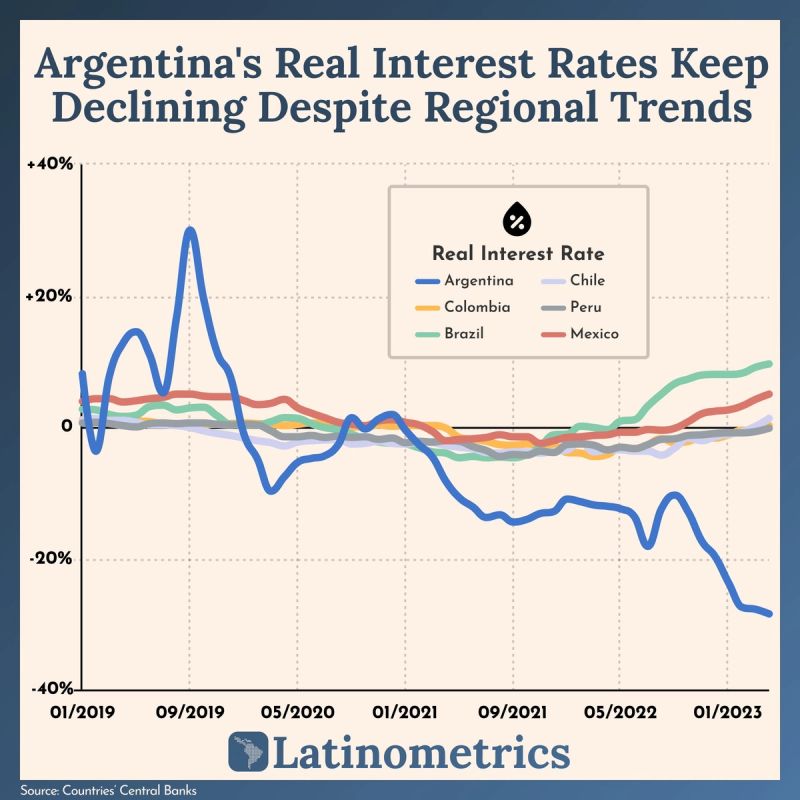
What's the secret? Orthodox macroeconomic policy says that the secret to stemming the tide of inflation comes through hikes in interest rates to discourage borrowing and spending. Regional central banks have followed suit, each taking the last year to raise interest rates to prevent inflation from rising as high as it has in the developed world—some to a startling degree, as Brazil's central bank has controversially kept its rate at over 12%.
Then, economic chaos theory is being put into practice in Argentina. The country's sky-high inflation is proving to be stubborn. It's coming at a time when foreign reserves are dwindling, and severe drought is blocking much-needed soy exports. The central bank has been slashing interest rates without pause since the fall, but so far, the economic outlook for South America's 2nd-largest economy continues to look grim. And all this as Argentines gear up for an election season.
We won't pretend to know better than central bankers—we just run a newsletter and occasionally get in trouble on Twitter for our correct opinions.
But in a year where Europe and the United States have felt the pinch of inflation and scrambled to respond accordingly, we appreciate seeing cooler heads prevail in Latin America's big central banks. After all, keeping inflation in the single digits can significantly impact everyday citizens and their purchasing power.


