
As China Rejects JS Plastic Waste, LatAm Welcomes It
As China's plastic imports plummet 74%, LatAm's rise masks a 11M-ton ocean waste crisis.

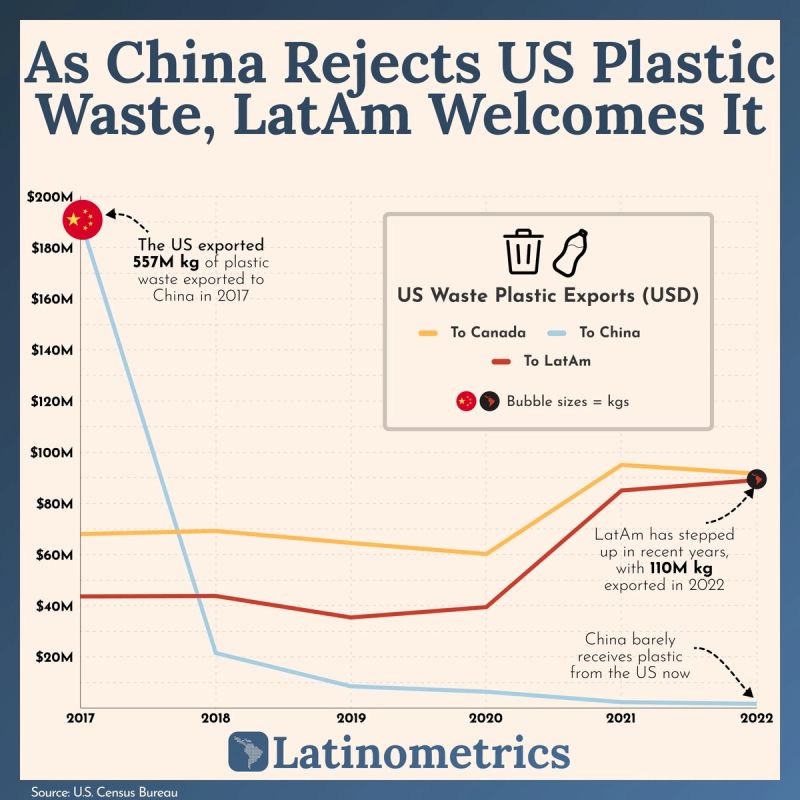
While some considered the ONS a strategic international relation move against the West, the official justifications for the policy were economic and environmental. Rising labor costs, poor quality of plastic waste, and the contamination of China's environment due to the industry were all cited as reasons to begin accepting a mere fraction of the yearly waste.
What happened to all the plastic? The world certainly didn't stop producing it, so almost every piece of plastic had two new fates: it was either no longer recycled or went to another country willing to take it. Judging from US numbers, the former fate has been the most probable — plastic exports dropped 74% from 1.7B in 2017 to 436M last year.
Operation National Sword cut a large hole in the industry. The US no longer ships all the plastic waste across the Pacific Ocean. Latin America (primarily Mexico) and Canada have stepped up to fill the hole to some extent. But can the massive plastic problem ever be solved? 11M metric tons of waste is estimated to contaminate the oceans yearly. Highlighting this issue, an Our Planet episode on Netflix depicts albatrosses on a remote Hawaiian island perishing from plastic contamination.
As the industry recalibrates, the value of exporting has been going up yearly — from $0.38 to $0.66 per kilogram in the same period of our chart. But almost everyone agrees that the world needs better incentives and creative solutions to tackle the problem.


