
Brazil’s top asset managers
The largest asset manager in Brazil is a 1808-founded state bank.

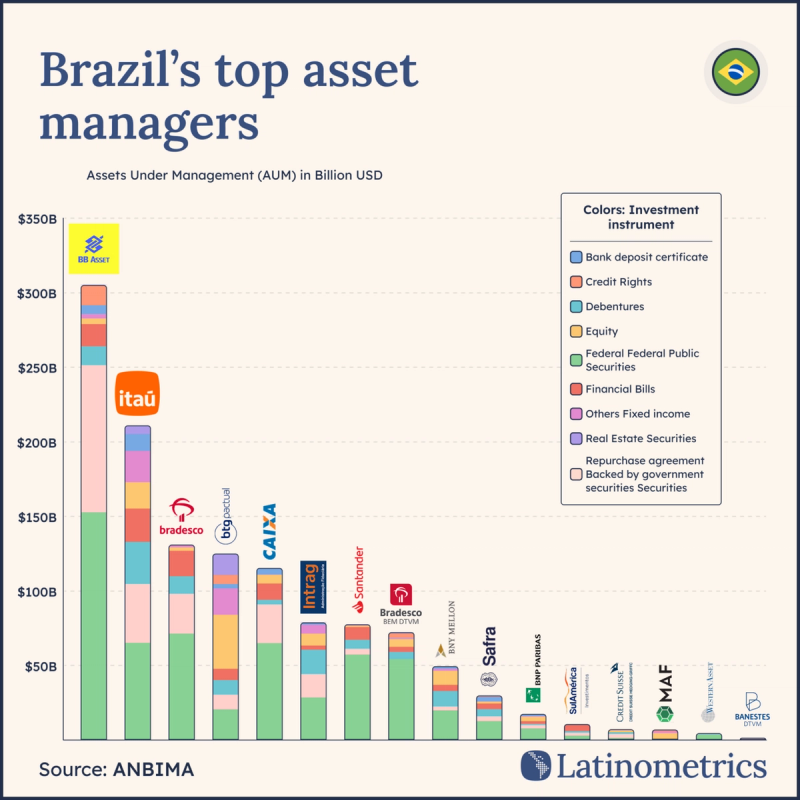
In 1808, King João VI founded Brazil’s first bank, the aptly-named Banco do Brasil. Thirteen years later, it went bankrupt when the monarch returned to his native Portugal, taking with him some of the bank’s assets.
Luckily, two centuries later the bank is in much better shape. Today, this state-controlled bank is the second-largest banking institution in all of Latin America—as well as the largest asset manager in Brazil.
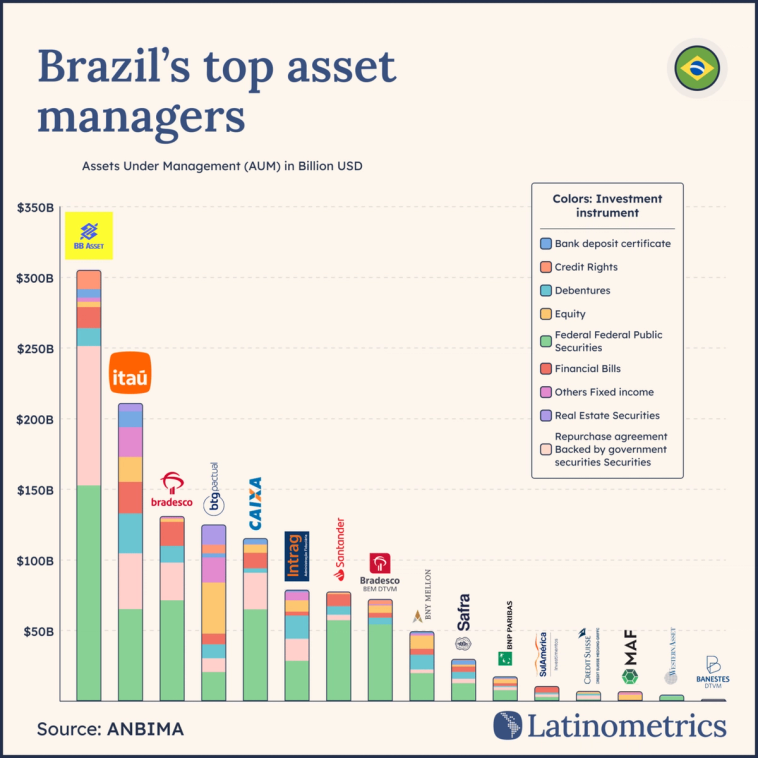
Despite having less in total assets than Itau Unibanco, Banco do Brasil has nearly $100B more in assets under management (AUM). As a state-affiliated bank, it handles large volumes of public-sector pensions, insurance, and investment capital. It also manages Previ, one of Latin America’s largest pension funds.
As the bank of choice for most municipal and state governments across the country, Banco do Brasil is in an enviable position. The federal government is a 50% shareholder, so the bank holds the monopoly of a number of government funding programs, such as Pronaf (National Subsistence Farming Support), Fome Zero (zero hunger), PASEP, and more.
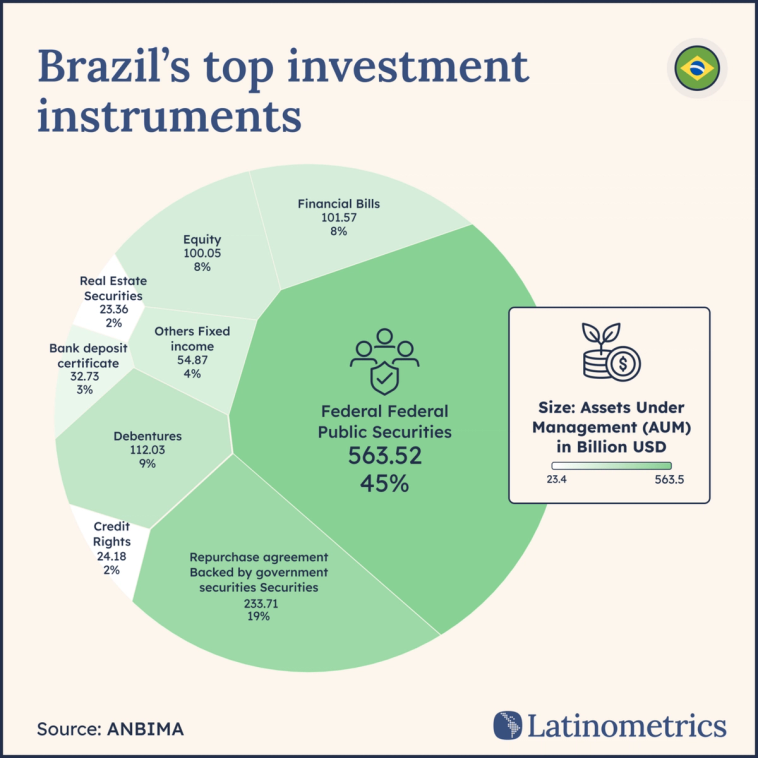
Federal public securities all in all make up $565B, or 45% of all AUM in the country. Owing in large part to their reputation as low-risk, high-yield debt instruments, in a country with a large state presence in the financial sector, these government bonds remain unusually prevalent in terms of AUM.
How unusual? Well, in the US only roughly 10-20% of AUM are in sovereign bonds (i.e. treasuries. In Germany less than 20% is standard, while in the United Kingdom roughly 15-25% of AUM are in gilts for pensions and insurance.


