
Brazil's Exports to China & The US: How They Compare
Brazil's exports to China are over double those to the US, thanks to one critical crop.


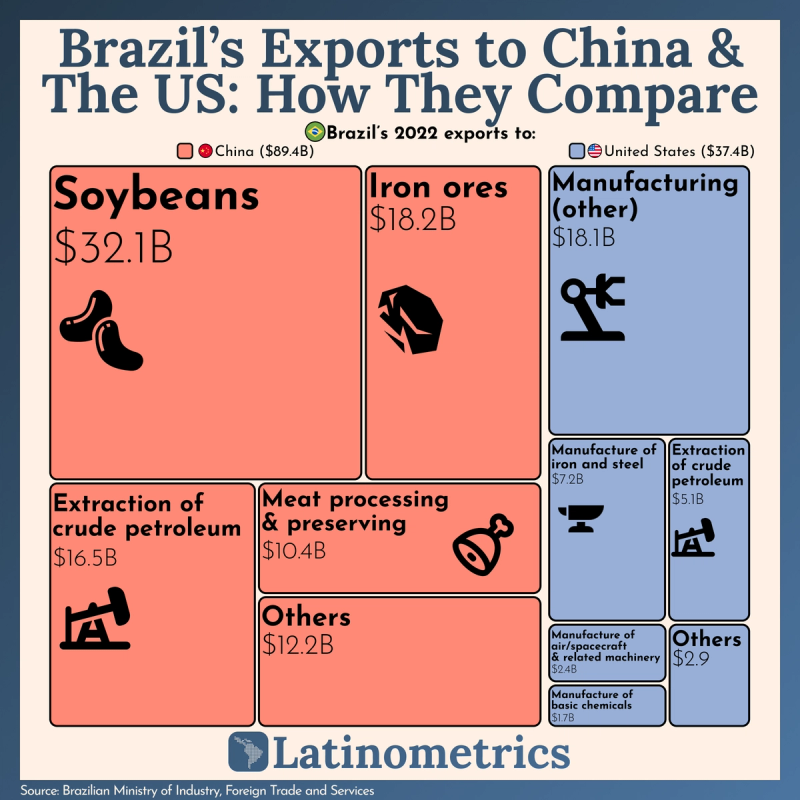
Here’s something that may boggle your mind. Brazil exports more to China than it does to the United States and European Union—combined. Even crazier? The role one single crop plays in all that trade.
China has been Brazil’s largest trade partner since 2009, and today the two countries enjoy one of the largest commercial relationships worldwide. Last year, Brazil exported $89.4B worth of goods to its BRICS partner—making up over a quarter of total exports. Brazilian exports to the United States, meanwhile, totaled just under half of that at $37.4B.
In fact, Brazil earns nearly as much in just exports of soybeans to China, $32.1B, as it does in all its exports up north to the States. Soy is a versatile crop that can be used for everything from tofu to biofuels to livestock feed, and China’s massive demand for the commodity has powered economic growth in South America – especially Brazil, Argentina, and Paraguay – for decades.
So clearly, soy is critical to Brazil’s economy, alongside other major exports such as iron ore, oil, and beef. But these are all primary goods, and the country has seen over the last decade the perils of being at the mercy of global commodity prices. Development comes from moving up the production line, creating industries and products that won’t be taken out by a drought or outbreak of mad-cow disease.
Consider again Brazilian exports to the US—far smaller in overall value, yes, but also more diversified. Brazil exports manufactured goods across a variety of sectors, in the process driving industrialization and creating better-paying long-term jobs. Brazil may not feed the States the way it helps to feed China, but it does fit into global supply chains at a higher, more productive level. And oil may factor into trade, but it’s closer to 10% of the total than 20%—definitely relevant in times where oil prices collapse as they did in 2014.
China’s insatiable demand for Brazilian exports is good for local farmers, investors, and citizens, and today Brazil is one of just a few countries worldwide to have a sizable trade surplus with the world’s 2nd-largest economy.
We just hope to see some much-needed diversification in this important commercial relationship.


