
Investors in Latin America now bet big on services
Tracking the shifting tides of global capital as BYD's controversial Brazil factory spotlights changing investment patterns

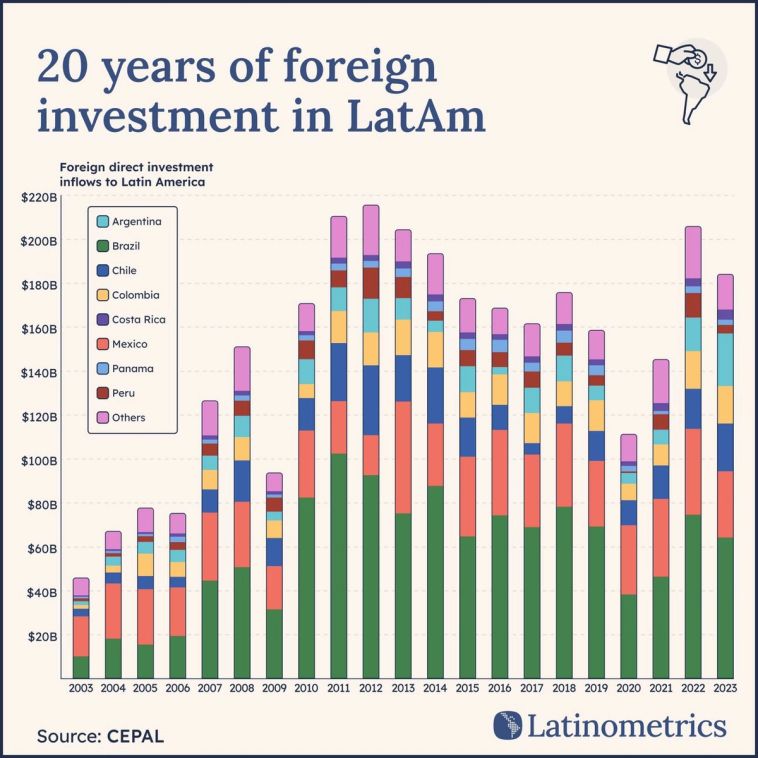
In fact, the commodities boom which kicked off the 21st century served to attract growing investment inflows to large regional economies like Brazil and Argentina.
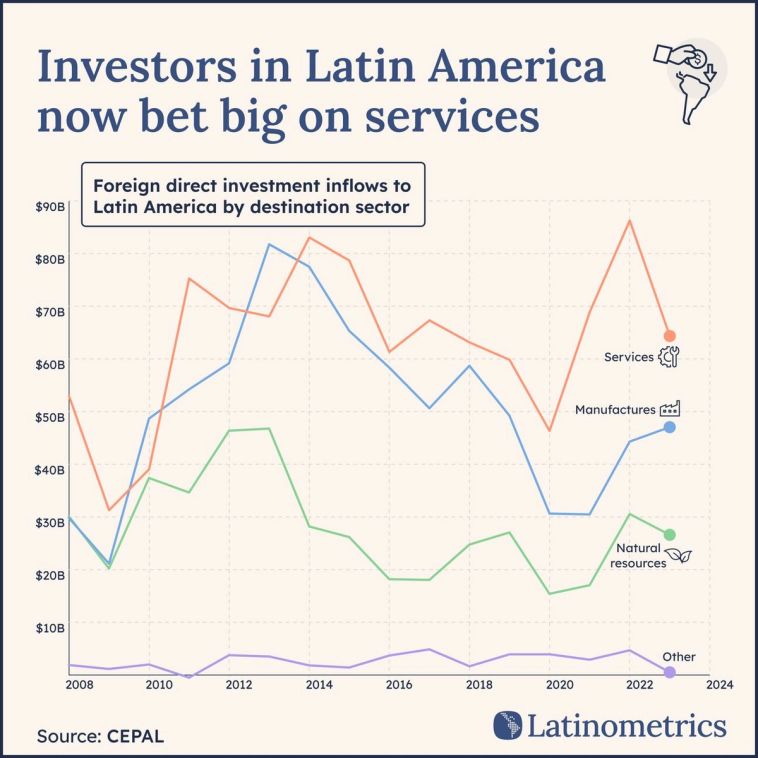
Foreign companies can use investment to boost productivity and economic growth, contribute to technological spillovers, and even reduce unemployment through the creation of both direct and indirect jobs. All the while, this investment can allow for greater participation by recipient countries in global value chains.
The Economic Commission for Latin America and the Caribbean (ECLAC) produces an annual report on FDI within Latin America. Despite a 9% year-on-year decrease in total FDI inflows to the region, some countries saw growth over the previous year. Argentina and Chile received respective increases of 57% and 19%. Meanwhile, Costa Rica’s impressive 28% growth is worth applauding, as the country’s investment promotion agency PROCOMER managed to attract record-breaking figures of over $3B.
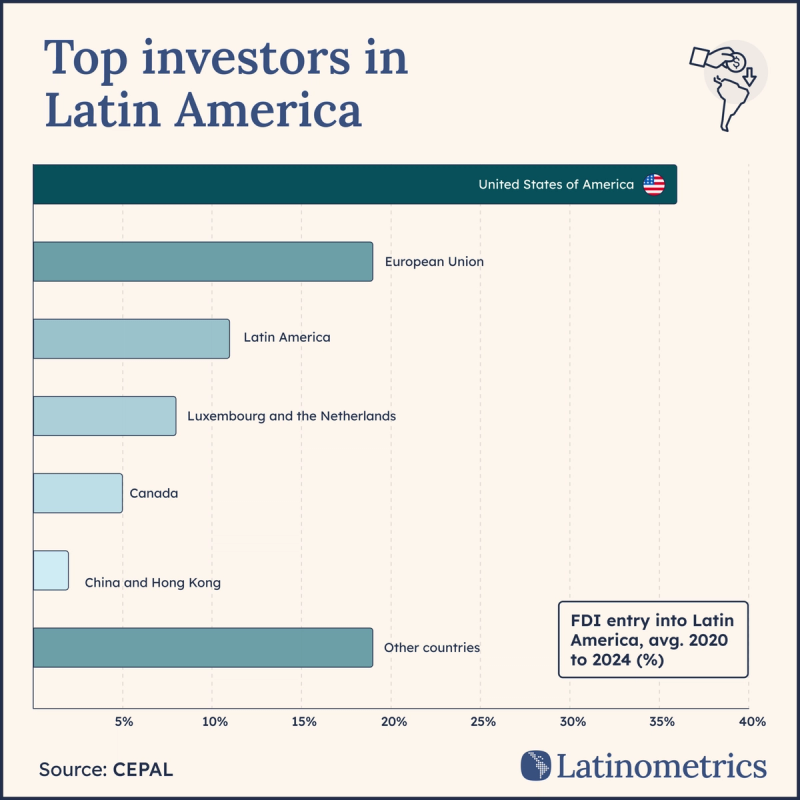
In 2023, the largest foreign investors in Latin America remain the United States and European Union, which are responsible for 33% and 22% of total inflows respectively. Despite the headlines, China’s investment has actually shrunk as of late, though it’s too early to know if this would become a lasting trend.
Nonetheless, both ECLAC and the International Monetary Fund (IMF) have expressed concern about Latin America’s slow growth in recent years. The region seems marked by socioeconomic tensions, inflation, and underemployment, issues which require long-term thinking to address.
Foreign investment can be one tool for Latin America’s development. Given the region’s natural resource endowments and cheap labor costs, local governments should focus on industrial promotion policies and other strategies to move up in global value chains.


