
The fastest growing economies of the 21st century
Oil transformed Guyana from zero petroleum exports in 2019 to 86% of its $16B exports by 2022.


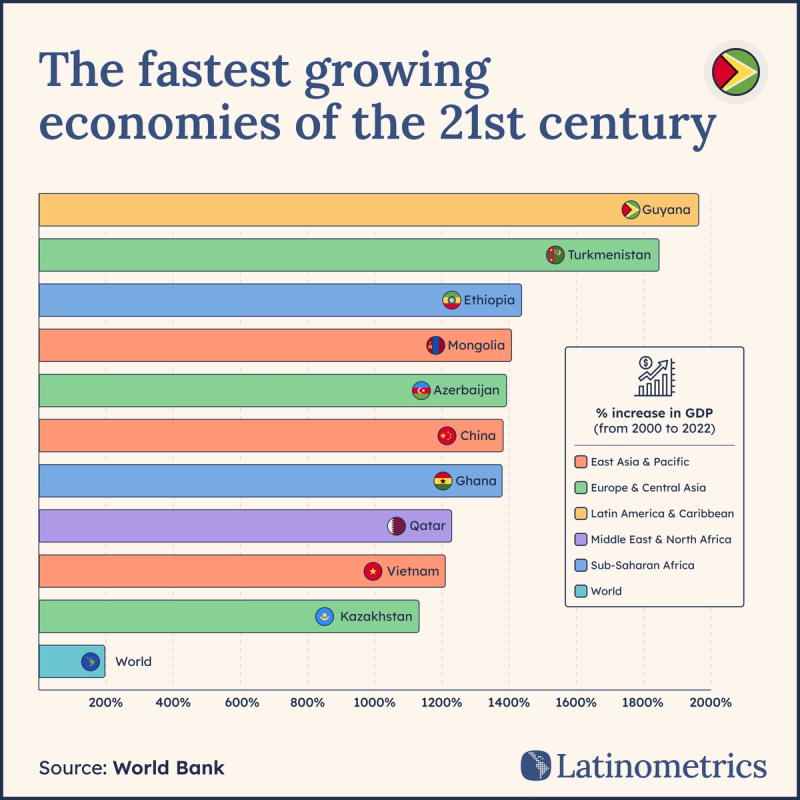
A discovery of massive oil reserves has transformed the country in just a few years.
Guyana has had the fastest economic growth in the 21st century.
The small South American country, which officially speaks English and has less than a million inhabitants, has experienced explosive growth only in the last few years.
What caused such an explosion?
A discovery of gigantic oil reserves off its coast. To illustrate the drastic change, consider its exports: In 2019, Guyana exported zero petroleum products. Its most significant export product was gold, which accounted for 53% of its $1.7B export economy. By 2022, oil represented 86% of all exports and alone was worth $16B in export value.
This year, the Texan company Exxon, which operates there, announced that it is producing 645K barrels per day. Now, California's Chevron wants a piece of the oily pie and is bidding to compete with Exxon.
Guyana's president Irfaan Ali, who enjoys high approval ratings, has welcomed Chevron's interest, suggesting it could enhance competition and bring additional investment to the country's burgeoning oil sector.
GDP per capita doesn't tell us whether a country's citizens are becoming wealthy. But it's still worth pointing out that in this measure, Guyana now does better than Panama and Chile and, in fact, has doubled Latin America and the Caribbean's number.
Despite these gains, challenges remain. The country's high unemployment rate, while at its lowest in over 30 years, still exceeded 10% in 2023. Moreover, the economic windfall from oil must be carefully managed to ensure long-term prosperity and avoid the pitfalls of resource dependency.
Guyana's future hinges not just on its oil wealth but also on its ability to diversify its economy, maintain transparent governance, and ensure that the benefits of growth reach all its citizens.


