
IMF Loans in LatAm: Who Has Drawn the Most?
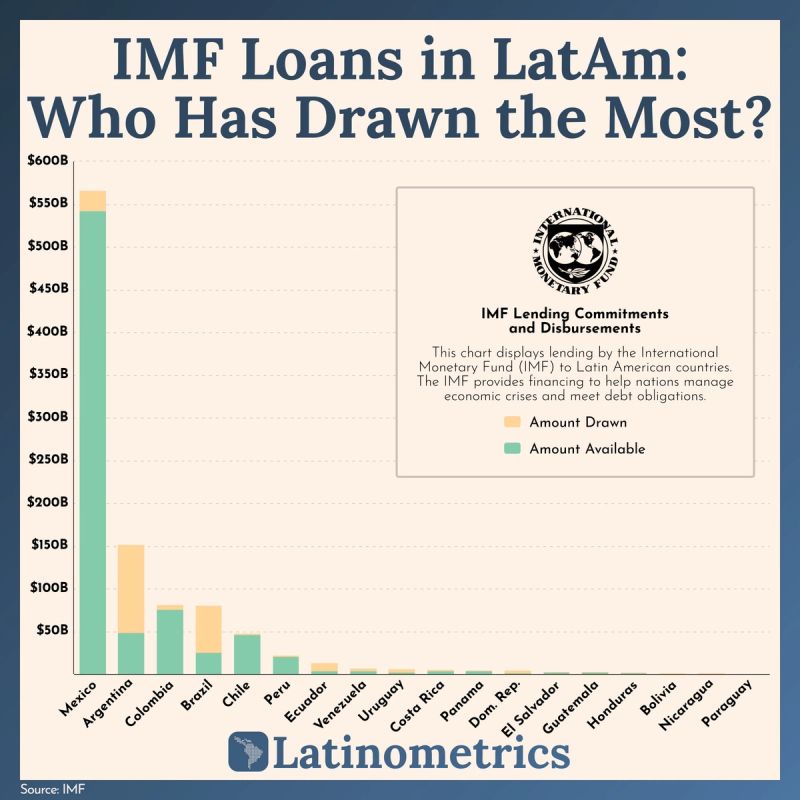
Mexico's massive IMF commitments dwarf all others, yet Argentina remains the Fund's biggest debtor.

Go ahead and Google Argentina news sometime this week. Skim over the first 3 article which come up. We’re willing to bet at least one of them will mention the International Monetary Fund (IMF).
The IMF is an international financial institution headquartered in Washington D.C. that is tasked with fostering global trade and economic development through loans to developing countries. It’s also the subject of intense criticism by many across the world, including in Latin America, for the severe conditionalities that can accompany these loans.
Argentina is one such example. The country is infamously trying to repay its roughly $45B debt to the IMF each month, though with significant difficulties in the face of high inflation, low foreign reserves, and a crippling drought. Buenos Aires is actually the IMF’s largest debtor worldwide today, and has a long history of trying to restructure what it owes to the Fund.
Other countries, such as Ecuador, have also had to rely heavily on IMF financing to manage economic crises. Quito has drawn roughly 75% of the financing it’s been approved, the highest proportion of any country in the region. While these loans can certainly be put towards important infrastructure and economic development, there is always the risk that Ecuador will reach the maximum amount it is allowed and find itself in a worse economic position.
And then, there’s Mexico, which you may have noticed towers far above all of its regional peers in terms of the amount of funding available to it. Latin America’s 2nd-largest country has over half a trillion dollars available to it at the current exchange rate between the US dollar and the IMF’s lending currency, SDRs. No other country in the region comes close.
Interestingly, Mexico has also tapped into less of its available financing, as a proportion, than any Latin American debtor except Paraguay. And that which it’s borrowed, it’s already paid back.
Now, politics certainly plays a role in this story, as it does in any story involving international institutions and money. There’s little surprise that certain countries, such as Colombia and indeed Mexico, have had greater financing opportunities allotted to them from a more Western, US-dominated institution such as the IMF. After all, the President of Argentina even recently asked his American counterpart for support in Argentina’s bid to restructure its debt.
Development finance will continue to be controversial and necessary throughout Latin America. And the IMF will continue to be a major player in this finance.


