
Mexican investors grew 32x in the past decade
Mexicans are pouring into investments, with 13% now holding accounts—up from <1% in 2015.

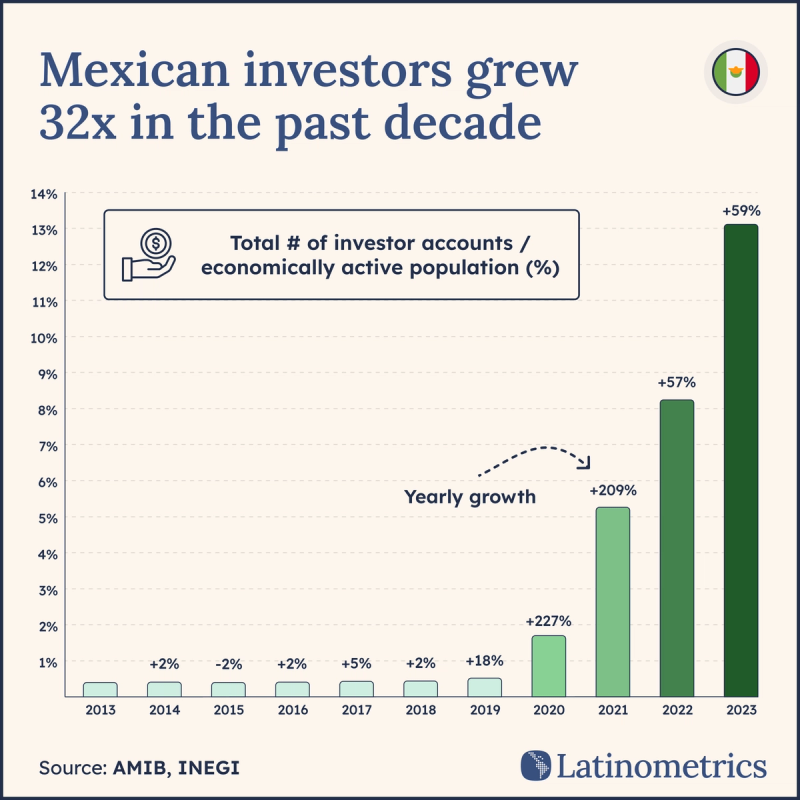
Mexicans are joining the investor class en masse -- but where are they putting their pesos?
What’s the secret to building long-term wealth?
A pension? Climbing the corporate ladder? Scouring the globe for a rich bride or groom who will serve as your ticket into the rich life?
Try investing.
Like many of their peers in other emerging markets, Mexicans are becoming increasingly active investors. The citizens of Latin America’s second-largest economy have seen skyrocketing rates of investment activity in recent years.
This has been particularly the case since the pandemic, as more and more economically active people – those who either currently contribute to the economy or are available to do so – try to grow their wealth through investing.
In 2015, less than 1% of Mexicans held an investor account; fast forward less than a decade and you see over 13%, reflecting a massive shift in just a few short years.
So what are Mexicans putting their hard-earned cash into?
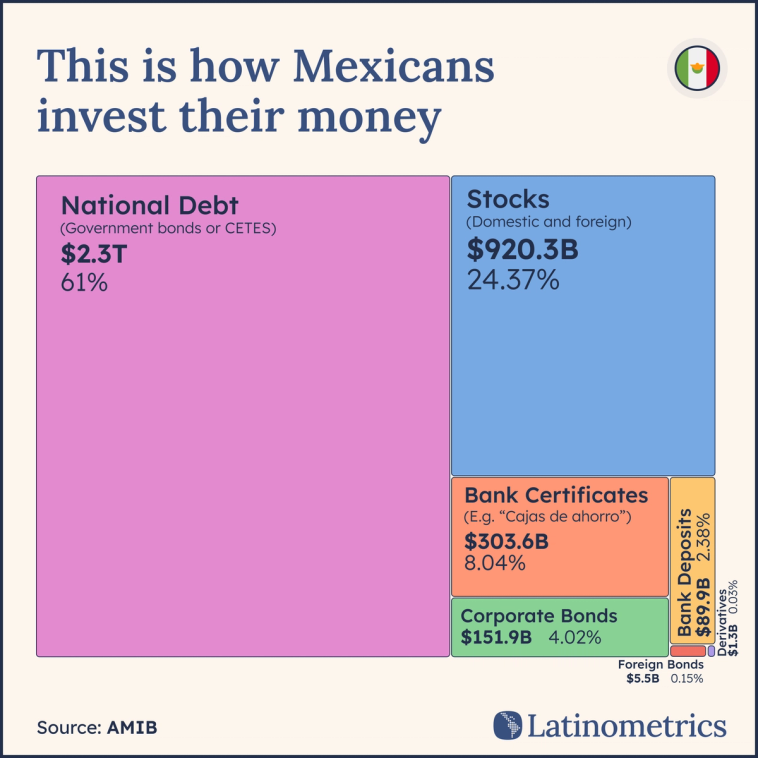
First off, the elephant in the room: CETES (Certificados de la Tesorería de la Federación), which are treasury bonds issued by the Mexican federal government. These government bonds represent a comfortable majority of total investments, and the total amount currently issued ($2.3T) is well above the total Mexican gross domestic product for last year.
Now, why is everyone turning to CETES? Well, much like their US counterparts, Mexican treasury bonds are considered the safest investments in the country. The Mexican government has never defaulted on them in the country’s modern history, meaning they’re seen as a stable means of keeping ahead of inflation and make some gains over time.
Not to mention, sky-high interest rates of up to 11% in Mexico means that CETES are currently providing a massive yield, higher than anything seen in the last decade and roughly double that of US treasuries (though not too far off from Brazil’s own government bond yield rate). So if passive income, insulation from inflation, or long-term wealth-building is the idea, then CETES seem to provide a relatively safe option.
Before we go, we should also look to other big components in the average Mexican’s investment portfolio. Stocks make up roughly a quarter of all investments in the country, and recent growth in the sector has been driven in part by the rise of independent Robinhood-type brokerage services such as Grupo Bursatil Mexicano (GBM) and Actinver.
Let’s at last look to bank deposits and the nearly $90B currently in that market. An ongoing yield war has seen some of Latin America’s most impressive fintech companies battling it out to have Mexicans depositing their money with them. Mercado Pago, Nubank, Stori, and Ualá have all introduced high-yield rates for savings accounts ranging from 10-15%, providing investors with options that perform even better than CETES.
Whether it's treasury bonds, the stock market, or a purple savings account offering 15%, Mexicans are building financial autonomy at a pace the rest of the region will need to match.


