
Is El Salvador Finally on the Path of Salvation?
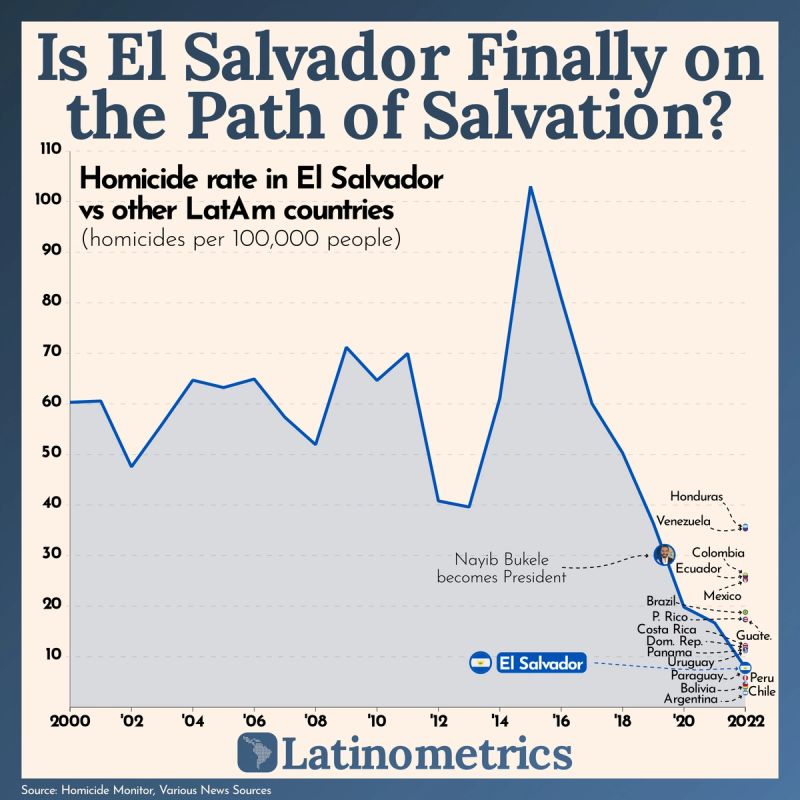
El Salvador's homicides dropped 92% since 2015, but at what cost to human rights?


Two politicians arguing on Twitter is nothing new. What you might find noteworthy is when the two are presidents of entirely different countries. Nayib Bukele (president of El Salvador) and Gustavo Petro (president of Colombia) got into it a few weeks ago.
The gist of the argument goes back to the old dilemma: "does the end justify the means?" Petro criticized Bukele for the mass incarceration and poor jail conditions in what he called "concentration camps" of El Salvador's youth to tackle crime.
The country has risen to the highest incarceration rate in the world, and both the prison conditions and methods for arrest have been criticized by, among many others, the UN and Human Rights Watch.
The criticism doesn't stop there. The US government and the EU have each voiced their concerns about Bukele's increasingly autocratic rule with moves like weakening the judicial system and constitutional changes that enable his reelection.
However, we would be remiss if we didn't talk about Bukele's results. Just three years ago, El Salvador had the highest homicide rate in Latin America. Since its peak in 2015, the rate has decreased an incredible 92%.
Criticizing Bukele's methods becomes more complicated, considering that such a drop represents nearly 6K fewer total homicides annually — do 6K spared lives justify the means?


