
Is LatAm’s Political Right Wave Ending?
LatAm's left wave makes it a mostly left-wing region again, as inequality drives voters to populists.

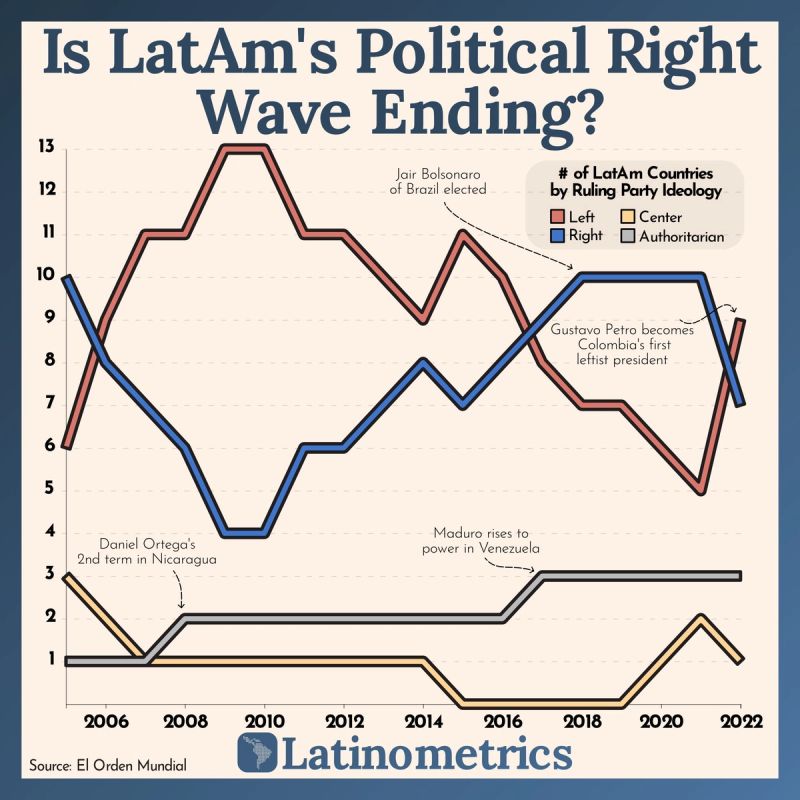
Colombia elected its first-ever leftist president, Gustavo Petro, last week. His victory officially makes Latin America a mostly left-wing region again, according to data gathered by El Orden Mundial. Several presidents on the right rose to power in the past six years, like Jair Bolsonaro in Brazil and Pedro Pablo Kuczynski in Peru. But lately, voters are turning to left-leaning, often populist candidates as inequality increases across Latin America.
On the other hand, many in the center or right fear a rise of authoritarianism that started with Fidel Castro in Cuba and is now painfully present in Venezuela and Nicaragua. All three of the presidents that El Orden Mundial categorizes as authoritarian started with a left-wing, populist movement claiming to be fighting against inequality or corruption.
Gustavo Petro represents that split between Latin Americans. Most voting Colombians view him as a voice for change and a chance to be lifted out of long-term poverty. However, not all the country is thrilled with the result. During the elections, Petro was forced to size up his security detail as he received death threats.
With the recent shift in power away from right-leaning leaders, many are declaring that Latin America's right wave has passed, and the region has gone left.


