
Latino Presence in US Congress Almost Tripled in 20 Years
Hispanic representation in Congress has nearly tripled, but still lags their 19% US population share.

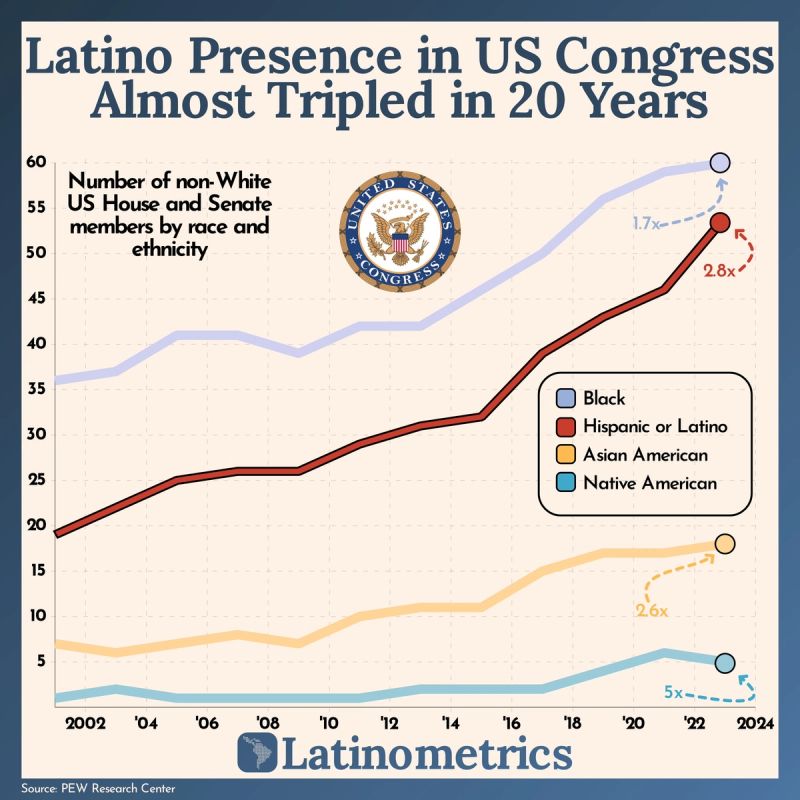
The current Congress of the US is the most racially and ethnically diverse ever, according to a Pew Research study. This year, there are 54 Hispanic representatives between the House and Senate, almost three times the amount back in 2001, with Hispanics now accounting for 11% of all members of Congress.
As Pew Research pointed out, the percentage is still lower than the population of Hispanics in the country — 19%. But make no mistake; there's been extraordinary progress in this demographic's representation.
In 2001, the US's share of Hispanics or Latinos was 12.5%, while their representation in Congress was a meager 3.5%. And Black members in Congress prove that reaching full representation is possible; their 13% share is roughly equal to the US's Black population share.
Over the last few years, several Latino politicians have risen to prominence and influence, most notably Ted Cruz and Marco Rubio from the Republican Party and Alexandria Ocasio-Cortez on the Democratic side. Cruz and Rubio have both served as senators for 10+ years. Making it to the Senate as a minority is much more challenging than the House of Representatives; the Senate is only 6% Hispanic and 88% White.
Aside from political representation, the “Latino vote” is increasingly important in elections nationwide, including the presidential race. Arizona, Florida, and Texas are key “battleground states,” and each is over a quarter Hispanic.
To successfully win their vote, however, it's critical not to think about Latinos in the US as a monolithic group of people. Florida is home to many Cubans and Venezuelans that often go red, turning their backs on much of the Democratic Party's agenda. Many of them escaped dictatorships and are in favor of limited government control. On the other hand, Latinos in states like Arizona and Texas are predominantly Mexican and are much more likely to side with immigration-friendly policies and the Democratic Party.
When we look beyond individual states, Latinos tend to align more with the Democratic Party and believe it better represents their interests compared to the Republican Party. This notion is reinforced by the fact that 80% of all minority members of Congress are Democrats.


