
Mexico Gets a Record Surge of US Migrants
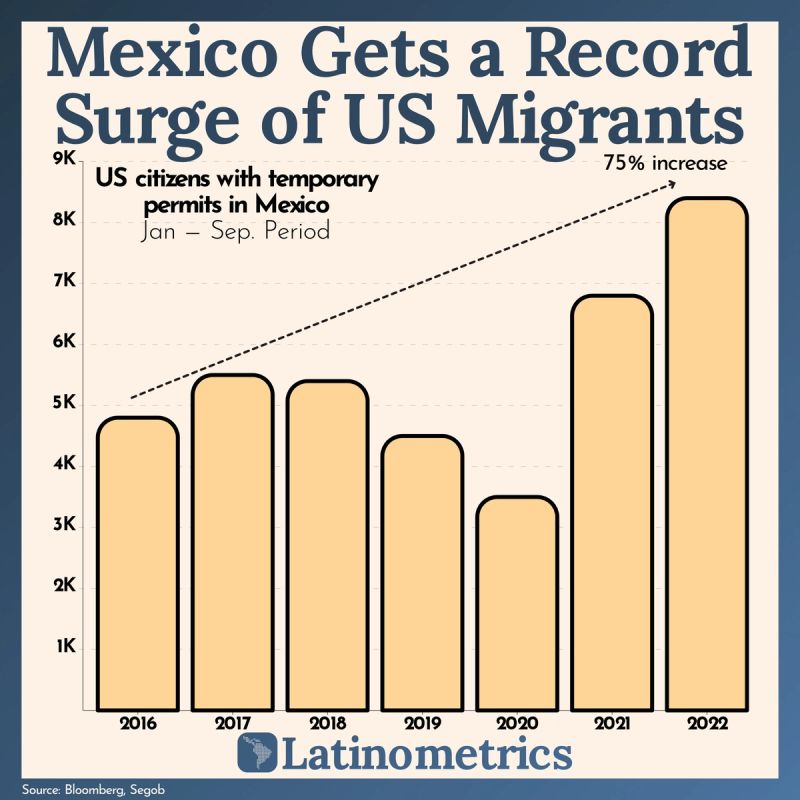
US temporary residents in Mexico surged 75% in 6 years, sparking gentrification.


Citizens of wealthy countries that move to poorer ones often get the privilege of being called ex-pats instead of migrants. We think it's fair to call anyone who leaves their home country for another a migrant.
European, American, and Canadian citizens have taken advantage of their dollars and euros and migrated to comparatively cheaper (and warmer) countries for decades. With the rise of remote work and rampant global inflation, which makes it more difficult to make ends meet (or live the abundant life that the average US citizen is accustomed to), the trend is accelerating. In Mexico, yearly US temporary residents have gone up by 75% in 6 years, the country is now home to 1.6M US citizens.
A new form of migrant, the “digital nomad,” has sparked some resentment and pushback, as migration frequently does. In Mexico City, some locals claim that the influx of digital nomads and accompanying rent increases push them out to less desirable areas, and “taco stands are being replaced with yoga studios.” The process of new, wealthy residents displacing existing, poorer ones is called gentrification, and its effects (both negative and positive) are well-studied.
It's easy to see the immediate economic impacts of these migrants and be critical of them. But it's undeniable that their presence boosts the economy with an inflow of capital, reducing crime and attracting further investment. Research by Prithwiraj Choudhury at Harvard Business School proposes that digital nomads may also be useful for fostering entrepreneurship, exchanging ideas, and advancing innovation.
Many countries are awakening to the economic boost and offering competitive “digital nomad visas.” This website by Pieter Levels ranks the leading cities for digital nomads worldwide, and Mexico City is currently #7.


