
Argentina's changing flow of migrants
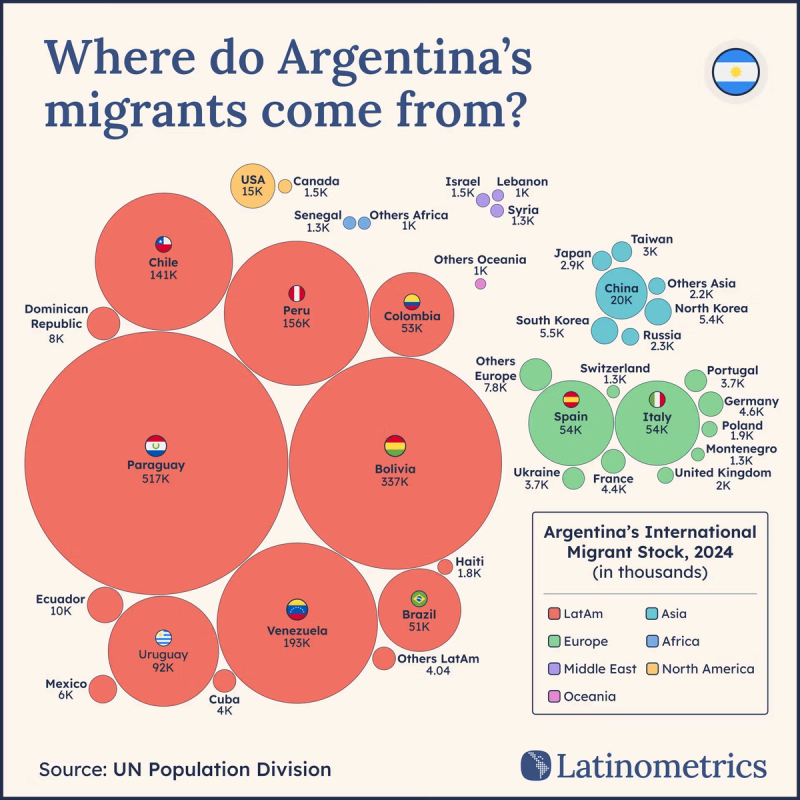
Paraguayans are now Argentina's top immigrant group, numbering over 500,000.


A walk through contemporary Buenos Aires would showcase Argentina’s rich immigration history for you.
Look to the classical European architecture evocative of Madrid or Paris rather than Mexico City or São Paulo. Look to the Argentinean take on the pizza, which many locals would tell you has surpassed its Italian ancestor. Look even to the descendants of Arab immigrants such as former president Carlos Menem.
Argentina’s history is in many ways the history of the immigrant, to an extent that rivals even other melting-pot countries like Brazil or the United States.
Yet immigration has changed over the years, reflecting the country’s appeal for certain nearby national groups.
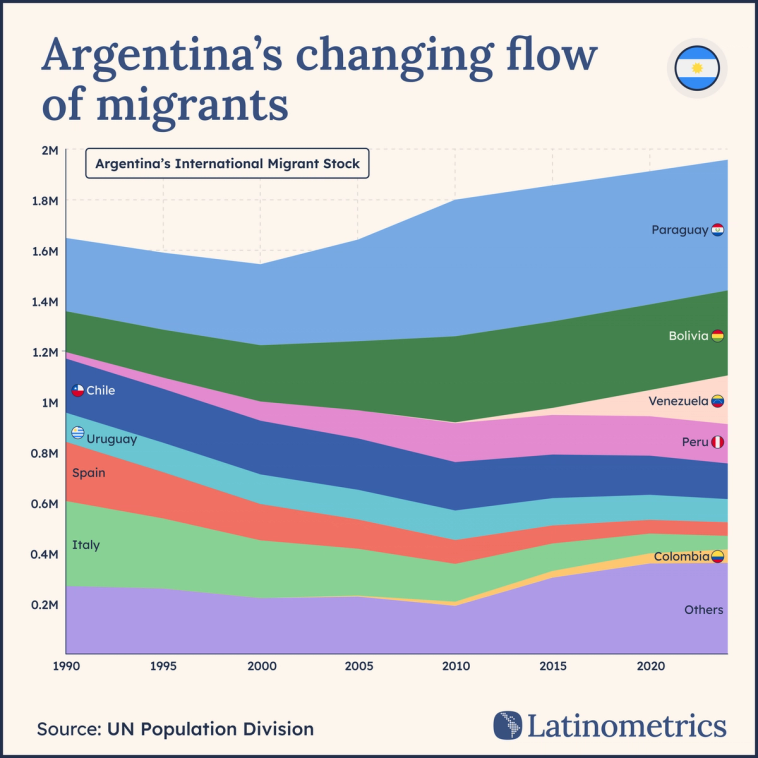
Paraguayans have risen to become the top immigrant group in Argentina, numbering over half a million last year.
Despite Argentina’s economic uncertainty, the country’s more dynamic and diversified economy provides opportunities for many working-class Paraguayans seeking a better life. Similar language and a short transit back to home cities like Asunción or Ciudad del Este only sweetens the pot.
Other Andean and Southern Cone countries such as Bolivia, Peru, Chile, and Uruguay also serve as significant sources of Latin American immigrants to Argentina. Meanwhile, Spaniards and Italians, historically the largest immigrant populations in the country, have over the generations become a relatively small share of the total immigrant stock.
Let’s take a look at where all of them come from.
Perhaps most surprising is Brazil’s relatively small position within the equation. Latin America’s largest country, which shares a large border with Argentina, has only provided roughly 50K documented immigrants as of the end of 2024.
Despite strong commercial integration within both trade and entrepreneurial presence, as well as a strong bidirectional tourism industry, there remains much to be done in convincing Brazilians to settle in neighboring Argentina over stabler destinations such as Portugal or Japan.
But who knows—this may well change if Argentina successfully lifts itself out of its present economic crisis.


