
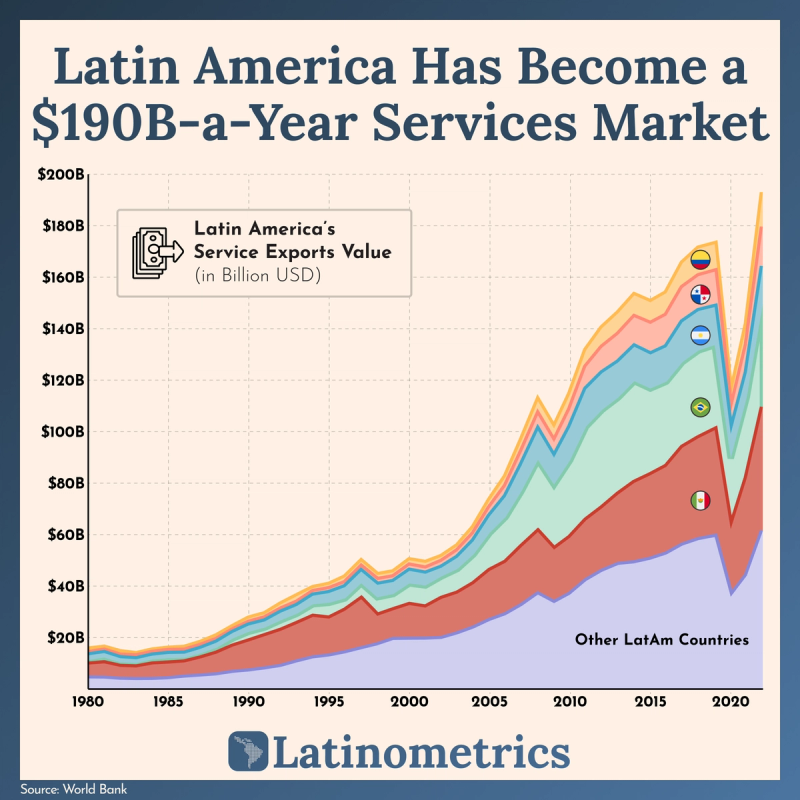
Latin America Has Become a $190B-a-Year Services Market
Panama leads globally in service exports per capita, fueling Latin America's shift from raw materials.

By now, we all know that there’s not any single one-size-fits-all approach to development.
Some countries make their wealth in high-tech machinery and manufacturing. Some in the diffusion of gains from key energy commodities. Others as financial hubs.
However, generally speaking there’s an orthodox view to development which sees countries following along a certain path, a certain three-sector economic cycle.
First there are primary exports—raw materials that take little education or productivity to exploit, but also are finite and subject to global prices. Think of soy in the Southern Cone, oil in Venezuela, or copper in Chile. Great when prices are up, bad when prices are down.
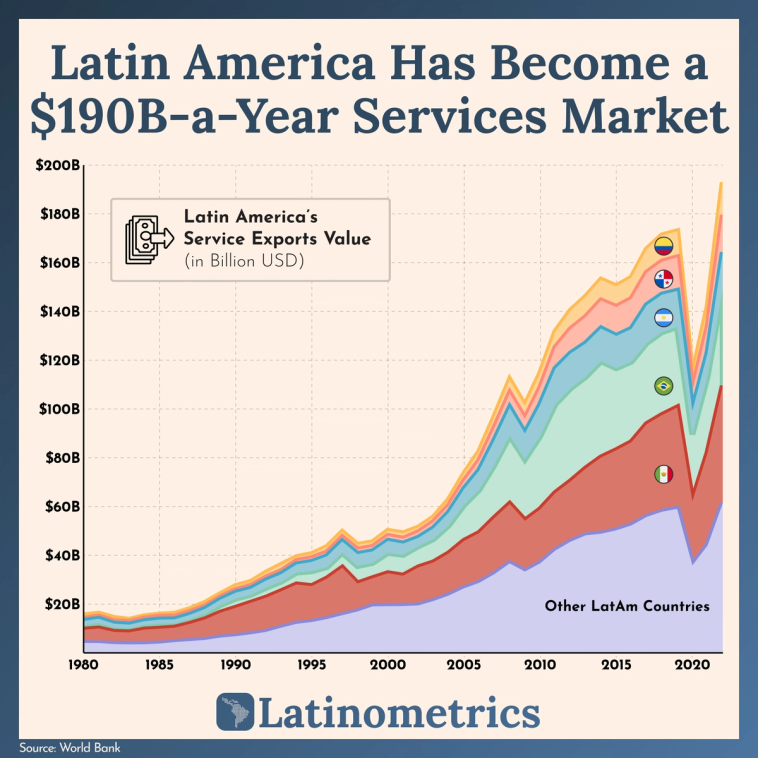
And then, there’s services. Tourism, finance, hospitality, IT, education, etc. This is what much of the US economy is based on, what has powered European growth in recent decades.
Having a service-based economy is not indisputable proof you’re developed, especially if it’s internalized and just has people performing services for each other within the domestic market. However, growing service exports can help with diversification and lead to better-paying jobs that, say, aren’t just tied to drilling a mineral out of the Earth.
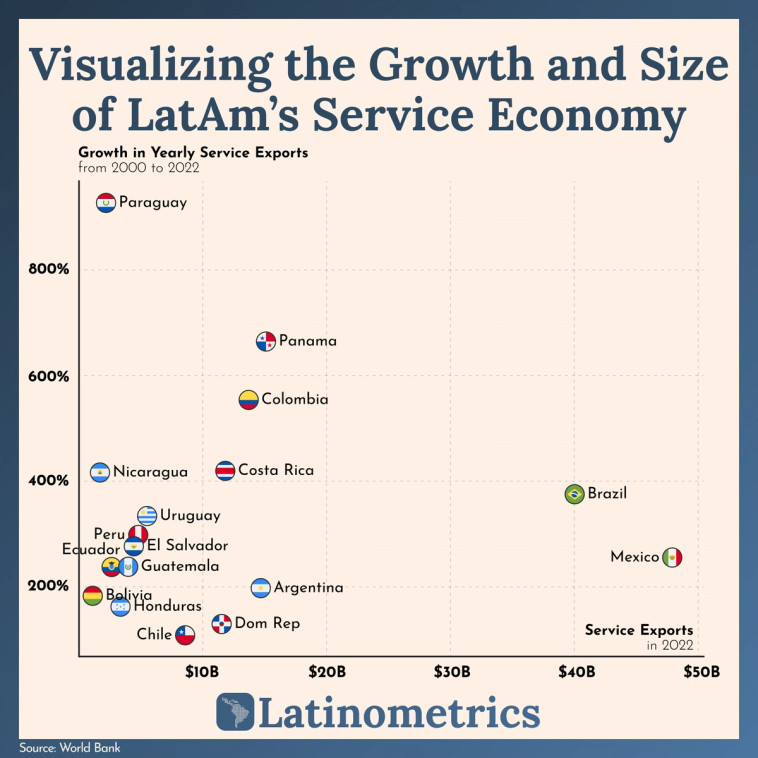
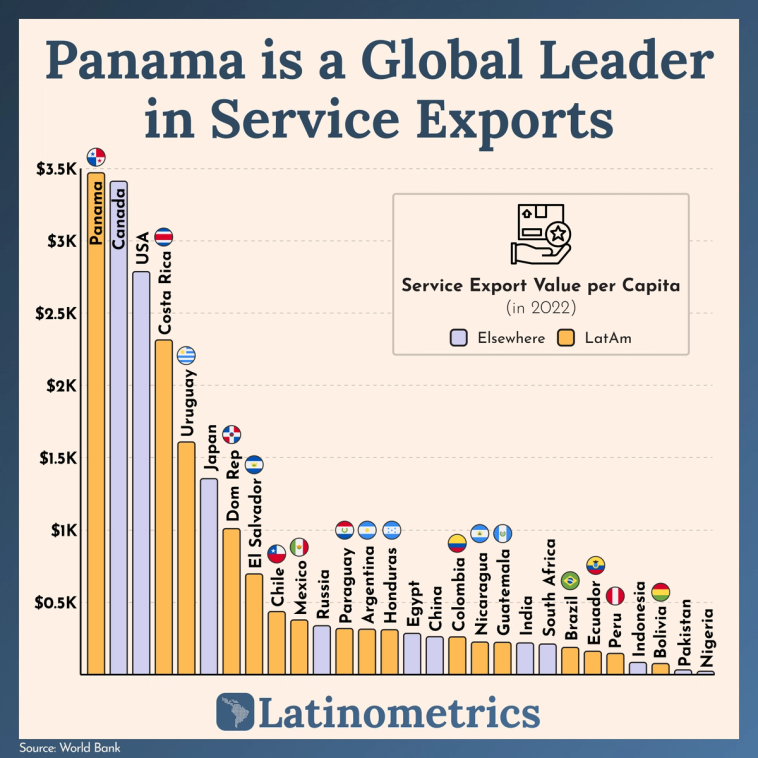
But if these countries seem impressive, just consider Panama, which has become one of the world’s most impressive exporters of services by total value per capita. The small Central American country has leveraged its strategic position and general stability to become a world-renowned hub of both banking and tourism.
Whether Panama or one of its far larger peers around the region, though, don’t count out Latin America on the economic cycle. Some countries in the region have been able to shake off primary-good dependence and move towards more sustainable industries such as services. In the process, they’re seeing better jobs with less exposure to global risks.


