
Six LatAm Countries Produce Over Half the World's Coffee
Six LatAm nations churn out half the world's coffee, yet Europeans drink the most.

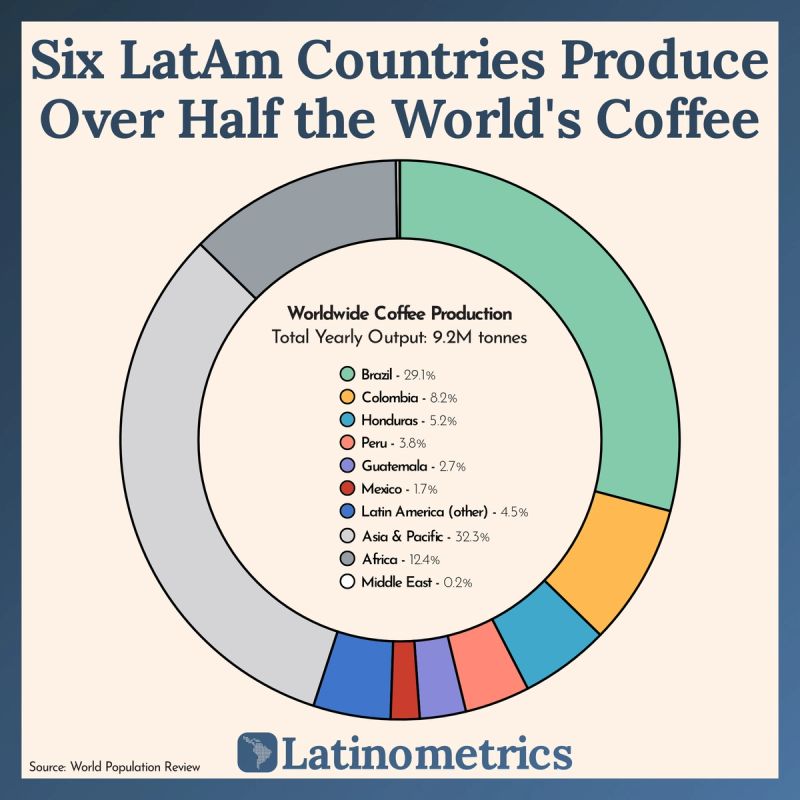
Did you know that Brazil is the world’s biggest coffee producer? Even more surprising, only 6 Latin American countries produce half of the world’s coffee. Latin Americans are not big coffee drinkers, however. That title is held by Europeans, which, funny enough, produce no coffee at all.
Cold climates might help explain coffee consumption a little better — Finland, Norway, Iceland, and Denmark consume the most coffee per capita globally.
Coffee consumption began in the 15th century after merchants started exporting it for the first time out of Ethiopia. Since then, human beings couldn’t put their cups down, and coffee plantations reached all corners of the world to meet growing demand. Latin America was late to the game, however: It wasn’t until 1720 —almost 300 years later— that French naval officer Gabriel de Clieu brought the first beans to the tiny Caribbean island of Martinique.
From there, the coffee rush became unstoppable. Coffee plantations spread across Latin America. It was meant to be: Coffee can only grow in tropical climates. Today, the region continues to increase its production to meet the modern demands of coffee drinkers worldwide. To illustrate, Starbucks consumes about 363K tonnes of coffee each year, more than Peru’s entire coffee output.


