
The Greer Energy Transition: How LatAm Countries Are Doing
Nicaragua tripled its clean energy share to 70% in 20 years, outpacing Norway and Sweden.


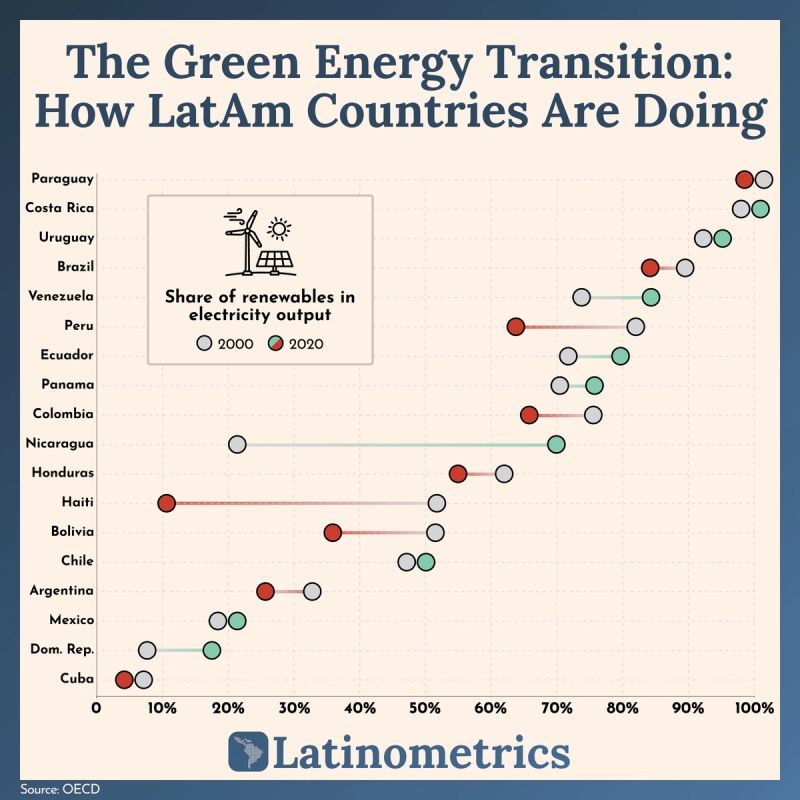
We've explored the impressive share of renewable energy that some countries in Latin America, like Paraguay, Costa Rica, Uruguay, and Brazil, output every year. They quite literally lead most of the world in clean energy.
What we have yet to talk about, because we only knew once we looked at the numbers from a different perspective, is the commendable growth that Nicaragua had from 2000 to 2020 in its share of electricity that comes from clean sources.
In a span of two decades, Nicaragua more than tripled the above number from 21% to 70%. It now ranks higher than countries like Norway and Sweden and has joined the list of LatAm countries, with over half of their electricity coming from renewables. It may sound like an exception rather than a rule in our region, but look at the chart closer, and you'll notice something remarkable — most countries surpass that threshold.
So, how did Nicaragua make so much progress?
According to the World Bank, Nicaragua is a renewable energy paradise due to its rich geothermal resources, abundant wind and sun, and diverse water sources. Despite these natural assets, the country paradoxically used to rely heavily on oil-based products for energy. In 2006, recognizing this contradiction, the Nicaraguan government initiated efforts to transform its electrical grid, aiming to tap into its vast potential for renewable energy.
Of course, not every country is as geographically gifted to achieve such impressive figures in their clean energy generation efforts. One thing is clear: much potential must be recognized and fully realized to make our region and world cleaner and more sustainable.


