
The Panama Canal Sinks in Trade Volume
Global trade routes are in chaos, with Panama Canal traffic down 24% and Suez down 72% since last year.

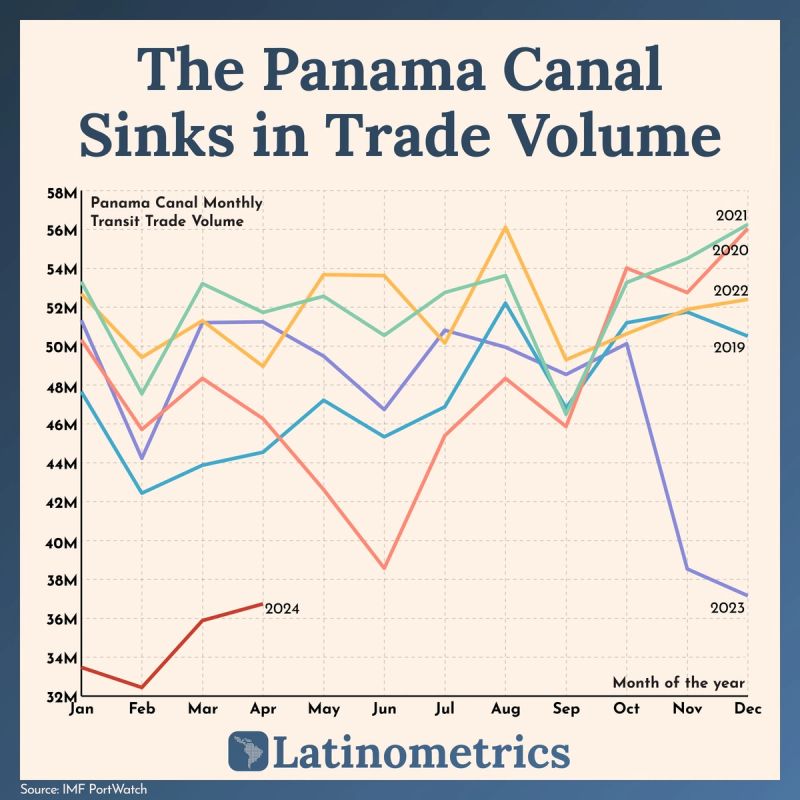
What's happening with this staple of world trade?
The Panama Canal is essential for the Americas’ trade landscape. According to UNCTAD, nearly a quarter of Ecuador's, Chile's, and Peru's trade volume goes through it. 12% of US trade, worth $5T, also passes through the canal.
But the canal is pivotal for the world, not just the Americas. Everything from computers to vehicles to mangoes crosses this route to facilitate a shorter route between mainly Asia, Europe, and the Americas.
A severe drought in Panama started early last year, and low water levels have limited the canal's capacity to move ships. The Panama Canal's authority reduced the number of ships crossing daily from roughly 37 to 31. Five or six fewer ships per day can cause huge disruptions in supply chains as time goes on.
Ships have been forced to seek alternative, longer routes, increasing shipment costs and, ultimately, the cost of goods.
As if that wasn't bad enough for the trade and logistics industries, the Suez Canal, which historically has seen the most maritime traffic worldwide and is key for Europe-Asia trade, is being avoided due to the "Red Sea Crisis." Many ships have faced militant attacks due to instability in the Middle East.
This has left many cargo ships with only one option: circumnavigate the entire African continent. By the end of April, traffic through the Cape of Good Hope, off the coast of South Africa, was up 61% compared to the previous year, while the canals in Panama and Suez suffered drops of 24% and 72%, respectively.
The global trade network is increasingly vulnerable to environmental and geopolitical challenges, underscoring the need for diversified and resilient supply chain strategies, as seen in supply chain strategies such as nearshoring. As traditional routes falter, the Cape of Good Hope's resurgence can remind us of the evolving nature of global trade.


