
US Inflation Shoots Up Above Mexico's
US inflation hits a 40-year high at 9.1% as Mexico keeps rates lower with a gas tax cut.

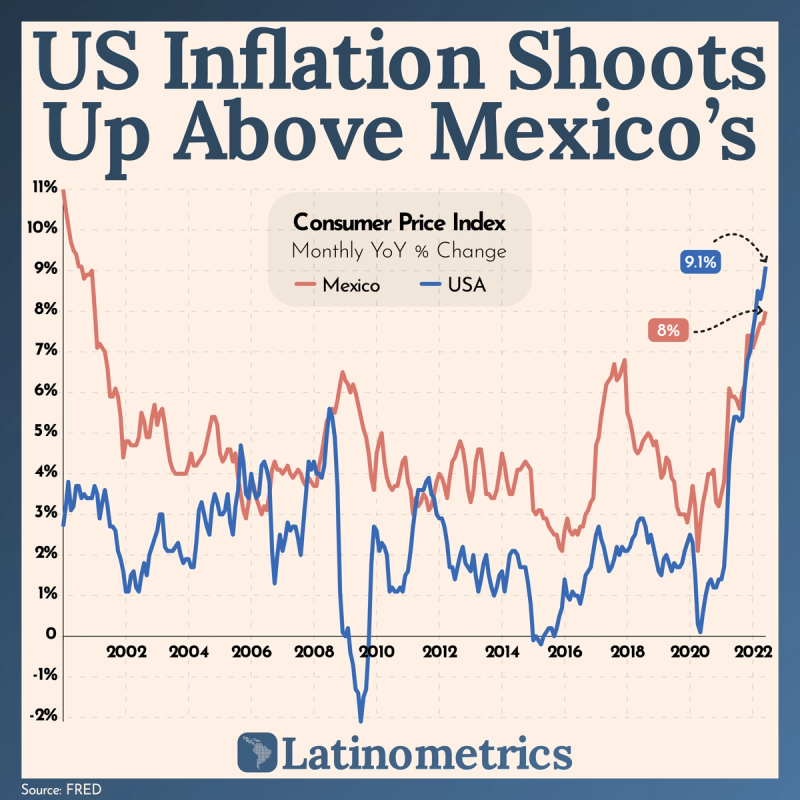
The Consumer Price Index (CPI) measures the average price change over time of a basic basket of consumer goods and services, otherwise known as inflation.
During the pandemic, central banks across the world lowered their interest rates and printed large sums of cash to stimulate the economy. Interest rates neared 0%, and governments distributed stimulus checks across developed countries. Since people were at home and not spending much, their savings increased significantly. All these factors caused the supply of money to grow and its value to decline.
Additionally, as factories closed down and trade slowed, the supply of goods was affected, which caused an increase in prices. To top it all off, the invasion of Ukraine and the West's response to impose tariffs on Russia caused a spike in oil prices and other commodities. Although not one thing can be blamed for causing inflation, a combination of all these circumstances has likely contributed to it. According to the most recent data, inflation in the US reached 9.1% in June, a figure not seen in four decades.
So, what are most countries doing to battle inflation? The universally preferred mechanism to control it is raising interest rates via central banks, which almost every country is currently doing. When rates increase, borrowing becomes more expensive (which can lead to an economic slowdown). However, this is a way to tighten the money supply and increase the purchasing power of a currency again. Additionally, Mexico's government stopped charging consumers the "IEPS tax" on gas, which has worked similarly to a subsidy and has helped the country's inflation to stay lower.
The FED will announce new interest rate metrics today, and Mexico's Banxico is scheduled to follow up on Aug 11.


