
Access to Capital: Panama & Chile Top LatAm's Scoreboard
Panama's dollarization and Swiss-style banking fuel its financial leadership, alongside Chile.

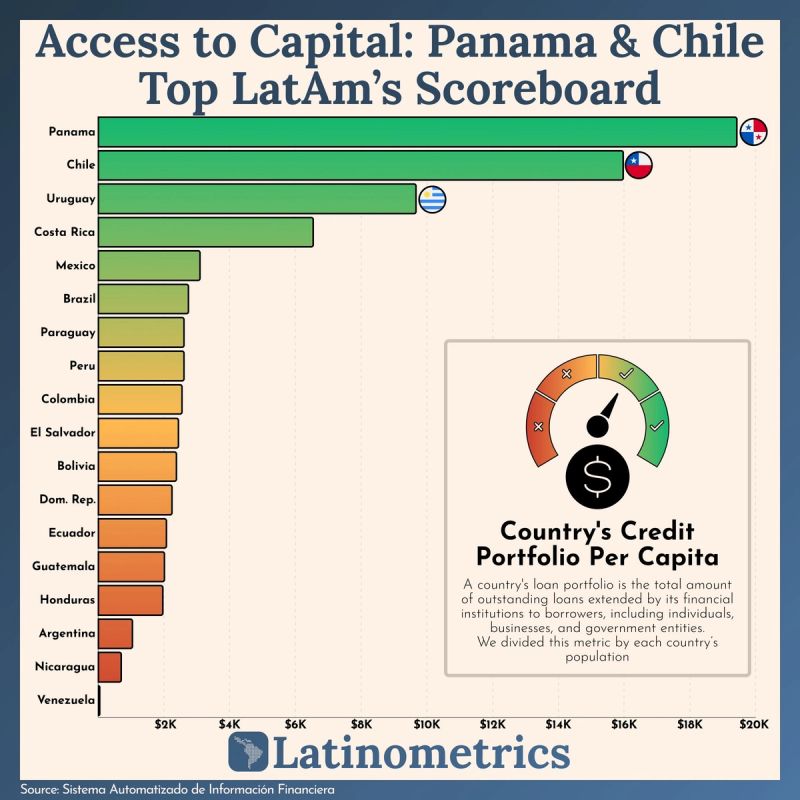
First, Singapore. Just as Singapore sits at the crossroads of major trade routes in Asia, Panama's location between the Atlantic and Pacific oceans, and its hosting of the Panama Canal, has made it a crucial cog in international trade. This advantage has allowed it to build and grow a bustling banking industry.
Up next is the sometimes more controversial side of its banking industry — Switzerland. In international finance, Switzerland has been the gold standard for banking privacy and advantageous tax laws. Panama, in many ways, borrowed a page from the Swiss playbook.
In 2016, we got a glimpse of the global extent of tax havens in stunning detail with the release of the Panama Papers. Although the name 'Panama Papers' can be somewhat misleading — it's named after the Panama-based law firm from which the documents were leaked — the fallout was a global phenomenon. Among the torrent of leaked documents, notable figures such as Messi, Shakira, Vladimir Putin, and even Jackie Chan were revealed to have established offshore companies, usually to avoid tax obligations in their home countries.
Last but not least is the US. Panama has used the US dollar as its official currency for over a century, a unique arrangement that started with Panama granting the United States rights to the canal zone in exchange for monetary compensation and military protection.
Panama's dollarization effectively eliminates any currency exchange risk for investors, providing the same stability and familiarity that US financial markets offer. This move, akin to the dollar's status as the world's primary reserve currency, anchors Panama's financial system and solidifies its standing as a robust banking hub.


