
Brazil and India Battle for 2nd Place in Tobacco Production
The US left a tobacco void, and global production surged—now India and Brazil battle for second.

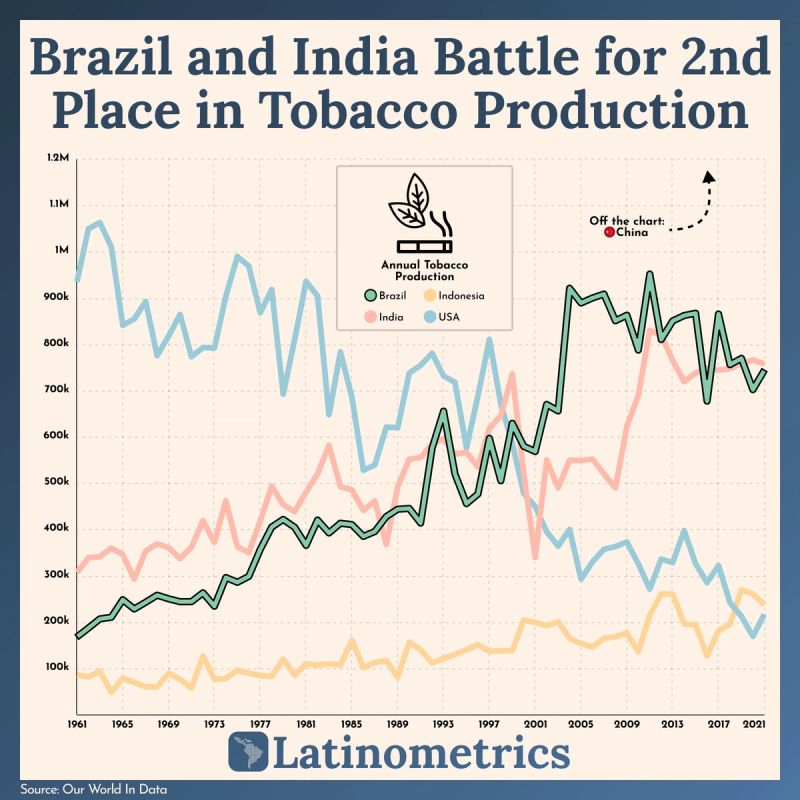
More than 300 years later, armed with the power of properly-applied science between the 1940s and 1960s, US-based researchers published a series of studies linking the habit to cancer. Our chart, which starts in the early 1960s, shows the virtual collapse of tobacco production in the US, now less than a quarter of its 1961 figure.
But that didn't result in the collapse of the tobacco industry as a whole. It's alive and well today; the three biggest tobacco companies — British American Tobacco, Altria, and Philip Morris International, are worth a combined $300B+.
As the growth in developed nations dried up for the industry, it turned its attention to Asia. Central and South Asia started this century with half of their population consuming tobacco. That number has since dropped to about 26%, about the same as North America and Europe's averages.
Despite this drop, the industry continues to find a market — global production has increased in the same period. China has led the way in filling the hole that the US left through a series of regulations that disincentivized production through taxes and limits on farming.
Brazil has been fighting India for second place in tobacco production, putting its vast farmable land to work. Surprisingly, Brazil and Latin America consume significantly less tobacco than North America and Europe.
The meteoric rise of e-cigarettes has further transformed what was once Big Tobacco into what maybe one day will be called "Big Nicotine." All three companies mentioned above have shifted their strategy and invested billions in marketing vapor-based products with nicotine. Whether these are less harmful than traditional cigarettes and the extent of their adverse health effects are still uncertain.


