
Where corporate and property taxes hit hardest
Examining corporate & property taxes.

If you’re ever wondering why people seem extra moody in the month of April, allow us to offer a possible answer.
Based off our research, the date by which individuals and businesses must file taxes falls in this month in just about all of the biggest countries in the Americas: Argentina, Brazil, Chile, Mexico, and even Canada and the United States. The only notable exception for this appears to be Colombia, where taxes must be filed by August for whichever reason.
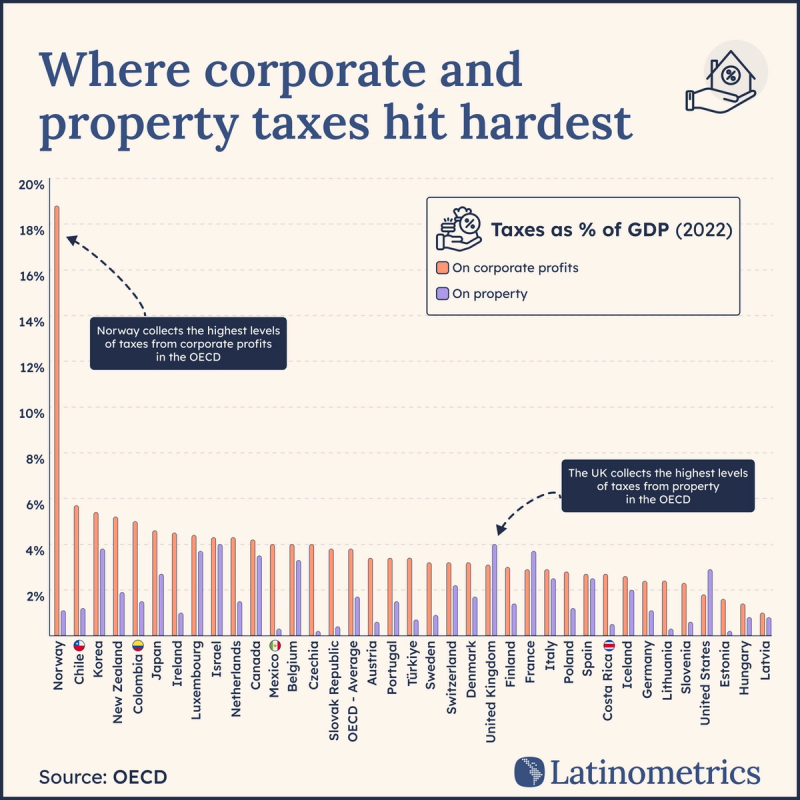
Looking purely at the (usually developed) member countries of the Organisation for Economic Co-operation and Development (OECD), we see there are no rules for Latin American placements. Chile, for example, is second only to Norway for corporate tax, which is interesting given the former is not quite known for the sort of Nordic welfare state we associate with Scandinavia.
On the flip side, both Costa Rica and Mexico levy below-average taxes on property, something no doubt contributing to their high popularity among foreigners – especially tax-weary Americans, Brits, and Frenchmen – seeking a second home in the sun.
Now, the lack of coherence between tax burdens in different jurisdictions can quickly become a race to the bottom. And unfortunately, developing Latin American countries need tax revenues more than many of their OECD peers.
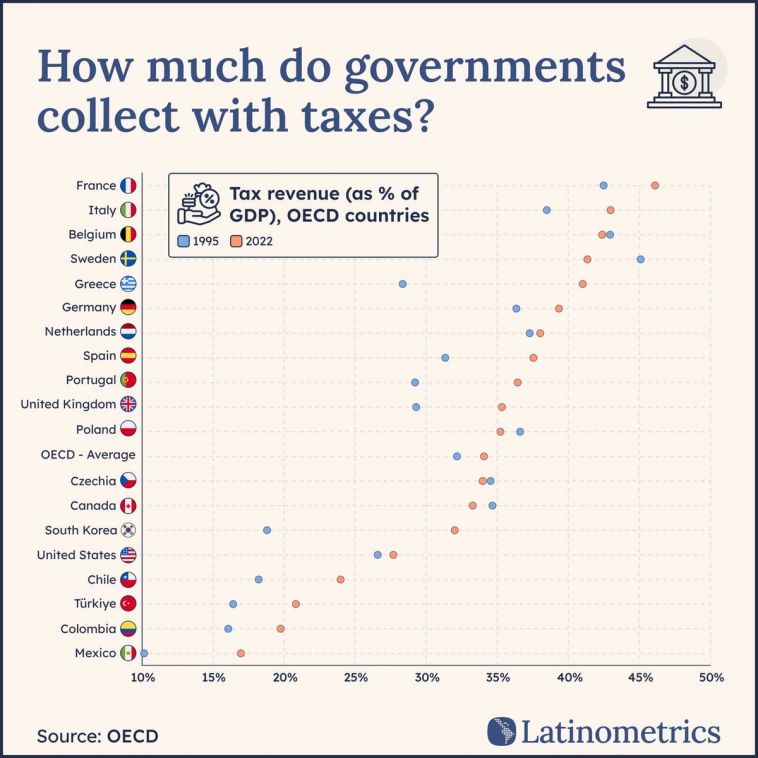
Latin America’s member countries in fact collect the lowest amounts of taxes of any country in the OECD. While there has been a jump in the tax collection rates since the turn of the century, issues like tax evasion and the informal economy no doubt limit the ability of countries like Colombia and Mexico to keep up with wealthier European counterparts.
Making progress on this won’t make tax season any more enjoyable in April. But it may go a long way towards addressing the region’s most dire issues.


