
Ecuadorian Border Detentions Surged By Nearly 5x in 2023
Ecuador's border apprehensions surged 400% in 2023, driven by a domestic crime wave.

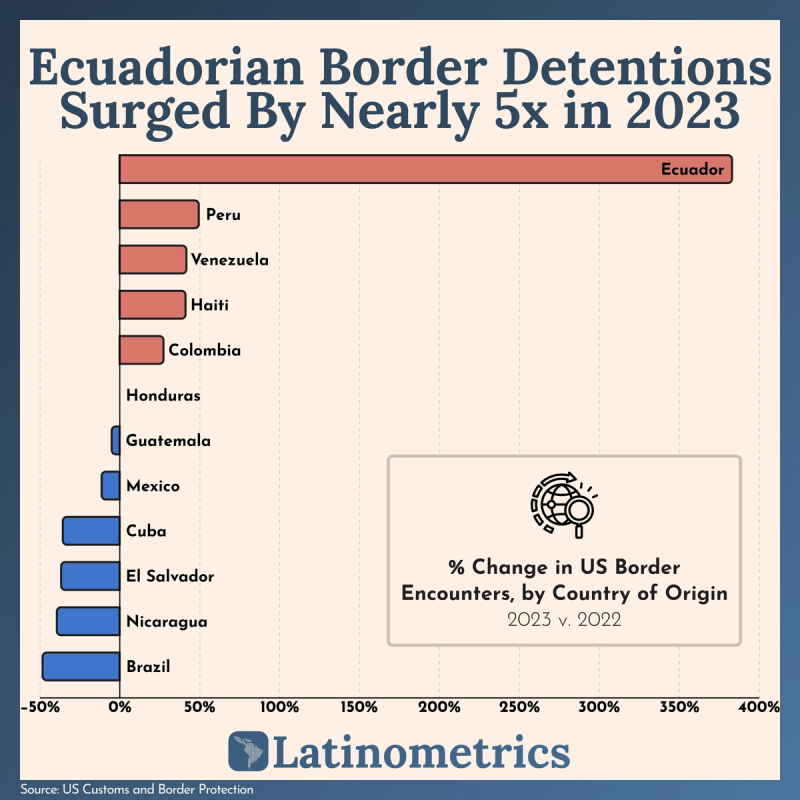
What's behind a nearly five-fold increase? Where does the rest of LatAm stand?
Our first story of 2024 was on the record number of migrants at the border between Mexico and the United States, some 250K in the 2023 fiscal year. We looked at some surprising trends, such as the decline of Mexicans from making up basically all arrivals to the border to just about a third.
The border remains a salient and heated topic in at least US political discourse, as it tends to every election cycle. The two likely presidential candidates have traded insults over each other’s approach to immigration, while a congressional bill to step up border enforcement was killed last month. Politicians in the US have maintained a strong focus on criminals coming from abroad, even if it’s well-established that immigrants commit significantly fewer crimes than their US-born peers.
But if 2023 saw the biggest number of undocumented migrants apprehended at the border (and not at official ports of entry, mind you), it’s Ecuador who’s gone through the most explosive change.
The small Andean country of just under 18M people saw a nearly 400% year-over-year increase in its citizens being apprehended by US Border Patrol in 2023.
What’s driving this change? Unfortunately, crime back home. Ecuador has seen a massive crime wave in recent years, with its major port city of Guayaquil becoming especially dangerous.
Local criminal outfits have allied with Mexican, Colombian, and Albanian cartels and gangs and struggled for control, with everyday Ecuadorians bearing the burden—hence the skyrocketing rates of people fleeing north.
Is there any good news in sight?
Perhaps. President Daniel Noboa has now declared over 60 days of state of emergency in the country, and has tasked the security forces with overcoming the threat. Early results have been good both in dealing with the 22 Ecuadorian gangs he’s deemed terrorist organizations and with challenging the international criminal network in the country—though of course it remains to be seen how sustainable this effort will be.
Outside of Ecuador, the situation for Latin Americans is about what you might expect. Rapidly deteriorating conditions in Haiti and Venezuela, and to a lesser degree Colombia and Peru, have led to spikes in people from those countries trying to reach the US. In contrast, a number of factors, such as change in governance and economic conditions, may be behind the decrease seen by Latin America’s giants and the traditional migrant sources in the Northern Triangle.
There’s no easy answer with immigration, particularly when it comes to dealing with asylum seekers and undocumented migrants. However, it’s always worth contextualizing the realities facing Latin Americans, at the border and in their home countries, when trying to find effective and humanist approaches to migration.


