
How Much Does it Cost Migrants to Send Money Abroad?
Remittance fees remain high, with LatAm migrants paying 5.6% on average, costing billions.

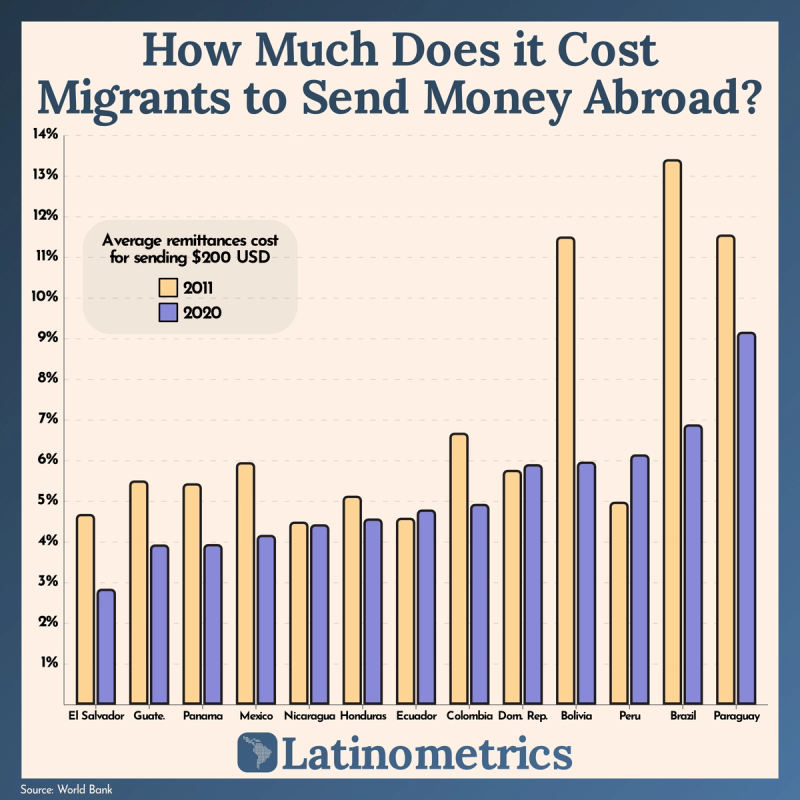
If you are a migrant worker and need to send money overseas, then you know how expensive it can be. In 2021, global remittance flows reached $589B; in 2022, they are expected to reach $630B (partly due to a record increase from Ukraine). So, how much are people paying for this service? Even though overall, they have decreased in the last 10 years, fees are still high. Globally, sending remittances cost today an average of 6.01% of the amount sent. And in LatAm? The average fee is 5.6%. Some companies dominating the market include Citibank, Remitly, Walmart2World, MoneyGram, Ria, MoneyGram, and Wise.
Remittances sent to Latin America increased 25% between 2020 and 2021, mainly due to the improved employment situation for foreign-born workers in the United States. The World Bank reported double-digit growth rates in Guatemala (35%), Ecuador (31%), Honduras (29%), Mexico (25%), El Salvador (26%), Dominican Rep. (26%), Colombia (24%), Haiti (21%), and Nicaragua (16%).
These payments are vital for smaller countries such as El Salvador, Honduras, Jamaica, and Haiti—where remittances make up at least 20% of their GDP. However, not all of that money is destined for residents. For example, transit migrants from Central America receive a significant part of the flows to Mexico during their journey north.


