
From triple-digit inflation to single-digit in 30 years
The region's messes get most of the attention. But much of Latin America has all but conquered hyperinflation.

Brazil saw 0.02% deflation, driven by a drop in housing, electricity, and food costs, bringing 12-month annual inflation to just 4.4%. For reference, most orthodox economists say that central banks should aim for a target inflation of 2% (to allow room for wages to grow over time).
So Brazil is not too far off. But here’s the good news: most of Latin America is also doing quite well on inflation.
Yes yes, we know: you’re thinking about two of Brazil’s neighbors, to the north and south. Argentina and Venezuela have unfortunately made headlines over the last decade owing to their repeated cycles of hyperinflation.
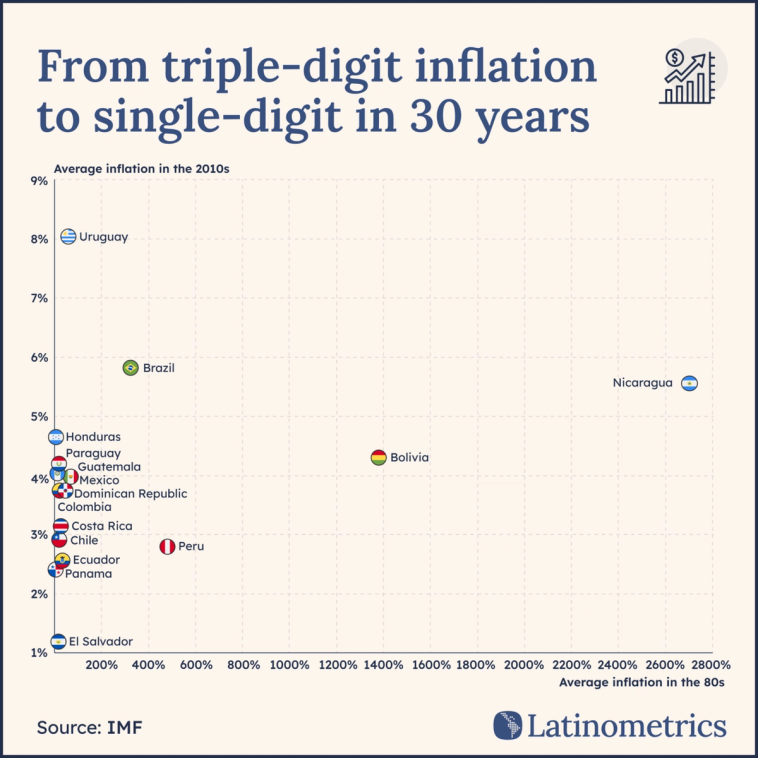
The 1980s were infamously known as the lost decade in Latin America for the hyperinflation and currency crises which gripped much of the region. Just about every local economy cratered in that time, with some suffering more than others.
Nicaragua, which spent much of the 1980s witnessing a civil war between the Sandinista government and Contra rebels, saw over 2700% inflation. Bolivia saw nearly 1400%, while neighboring commodity-rich Brazil and Peru each saw over 300%.
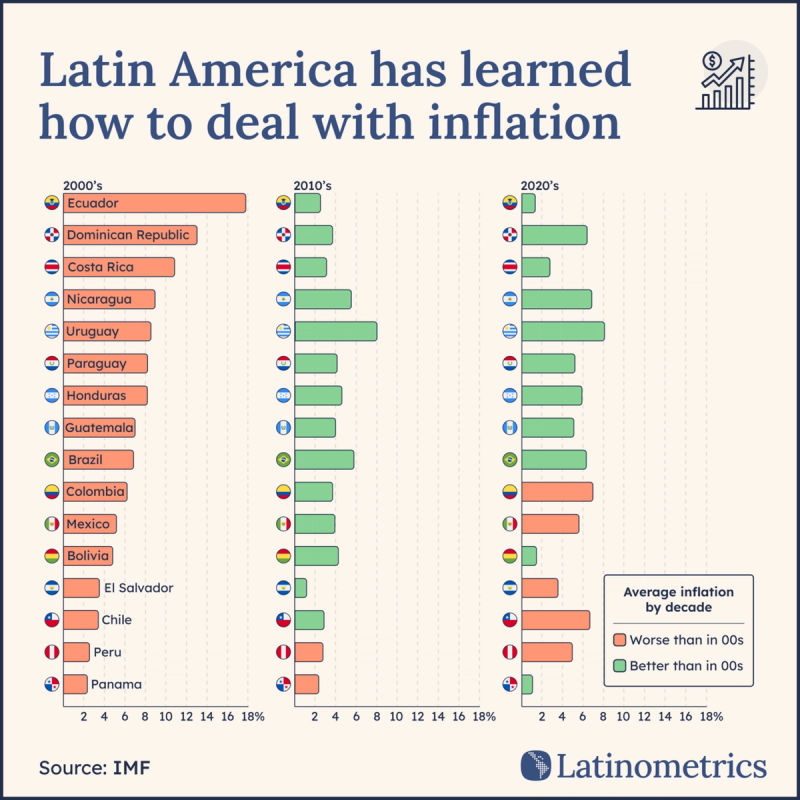
As central banks have gained autonomy in recent years, they’ve learned from the lost decade and actually pursued more conservative fiscal policies, hiking interest rates even while their counterparts at the US Federal Reserve or European Central Bank were trying to stimulate their economies.
What’s the result? The 2010s saw improvements by most Latin American countries over the previous decade, while even the 2020s saw inflation held back by high interest rates.
So sure, Latin America’s inflationary history isn’t always great—but its present is certainly better.


