
LatAm's Fertility Rate Has Dropped 66% in 70 Years
Latin American women are predicted to have fewer children than Europeans by 2055.

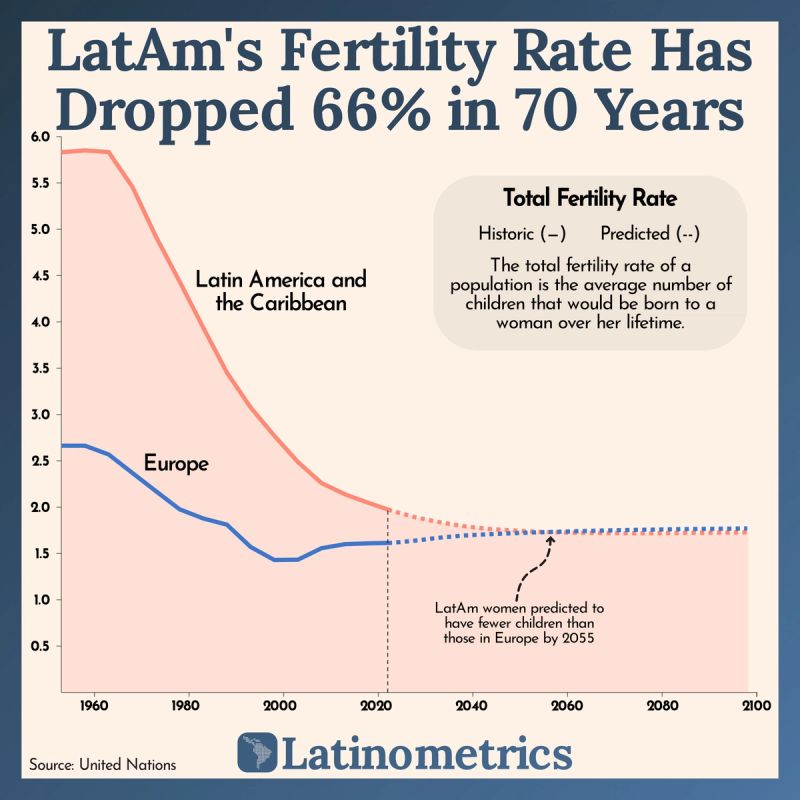
According to data from the United Nations, Latin American women are predicted to have fewer children than European women in 2055. The United Nations predicts that birth rates will reach 1.72 in Latin America, compared to 1.73 in Western and Northern Europe. A rate below 2 generally means that a population is no longer growing, and Latin America is predicted to reach that point in the next five years.
There are several possible explanations for why this change is occurring. As Latin American countries become more developed, their citizens use more contraception, and women choose to have fewer children overall. Another possible explanation is that women in the region are choosing to have children later in life. This may be because more women pursue higher education and favor starting families later. In addition, improvements in health care have led to longer life spans and a lower infant mortality rate, which has reduced the number of children people have.
This change is significant because it represents a reversal of historical trends. Since the earliest data available, Latin America has had higher birth rates than Europe. Many European countries offer long paid maternity leaves (sometimes for both parents), incentivizing women to bear children. Bulgaria has the highest incentive, with 59 weeks of paid leave for mothers. These government programs might help explain why LatAm is expected to fall behind Europe and perhaps will become more prevalent in our region soon.


