
Mexico Has a Huge Water Problem
Mexico's water crisis: 57% lack safe access, stagnating for 20 years, even behind Congo.

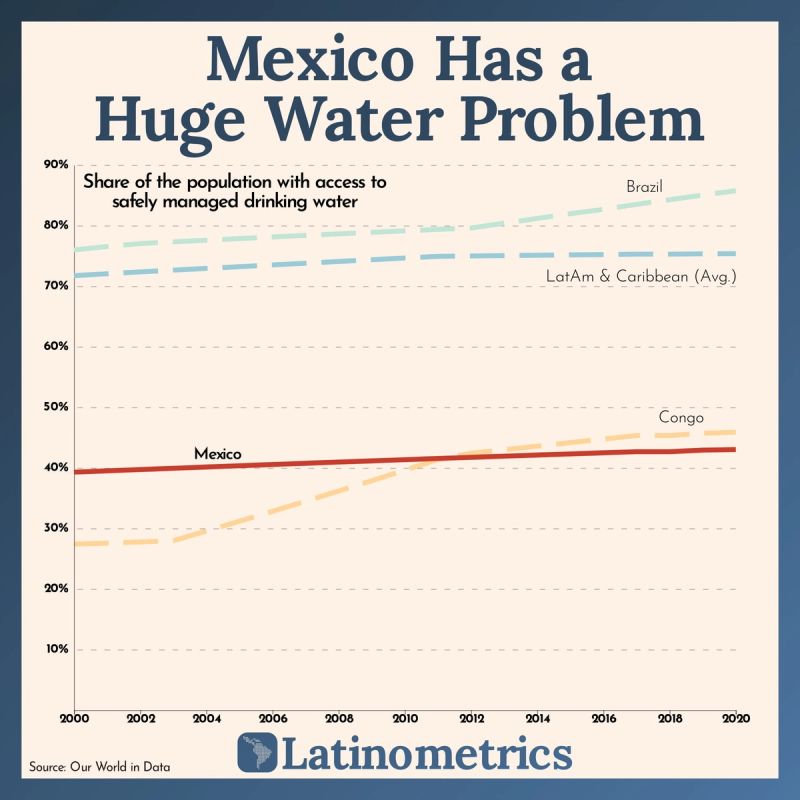
Mexico has found itself in a shocking sanitation crisis for at least 20 years as 57% of its population doesn’t have access to safely managed drinking water. This figure is nearly the same as when the UN began tracking water accessibility, meaning that efforts to address the issue have been unsuccessful or nonexistent.
Perhaps even more surprising is the inexplicable gap between some developing nations and Mexico when it comes to this same metric: Congo, a country with a GDP per capita of about 1/20th of Mexico’s, has managed to provide better access to safe drinking water since 2012.
Why is this the case? Besides likely poor prioritization by the country’s institutions, there are various forces that affect the water supply negatively:
The country has an aging pipe system, and around 35% of clean water is lost due to its poor distribution.
Approximately 70% of lakes, rivers, and dams are polluted to some degree, posing availability issues and health risks.
The country has an insufficient water supply as droughts have become a common year-over-year occurrence, especially in the northern part of the country.
At least on paper, the Mexican government is not entirely ignoring the issue. However, this problem can also be seen as an opportunity for innovation by private companies and entrepreneurs that are determined to make Mexico a better place.


