
Latin America lost more wildlife than any region, despite hosting the world's most biodiverse countries.

Let’s be honest—Latin America is one of the most beautiful regions in the world. Just look outside.
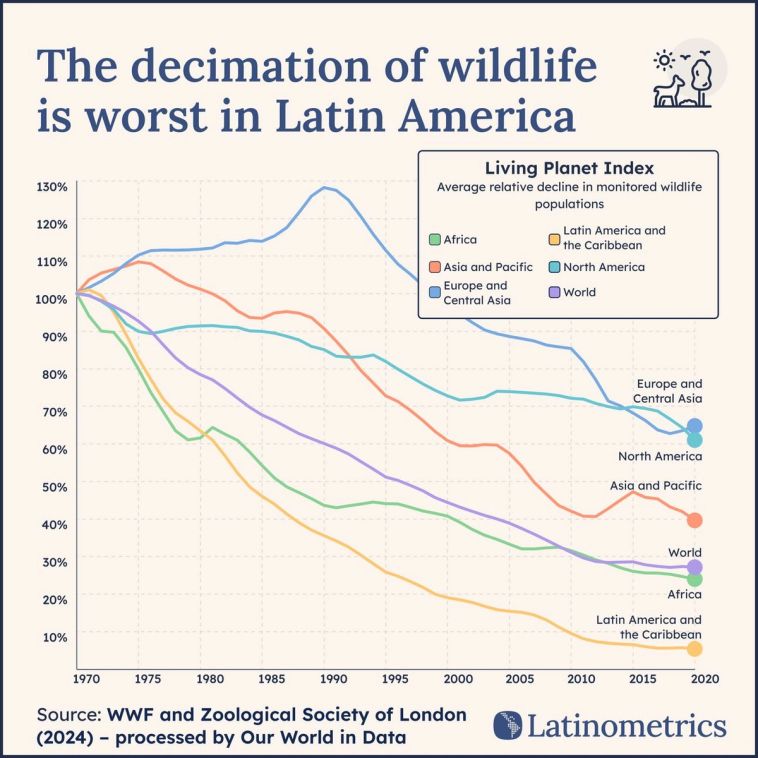
Now the bad news: much of that natural beauty is under threat today and has been for decades. And you can see this in the average change in animal population size since 1970.
The decimation of wildlife is worst in Latin America
Latin America has lost more wildlife than any other world region over the last half-century. This is despite the fact that the region contains some of the most biodiverse countries in the world: namely, Brazil, Colombia, Mexico, Ecuador, Venezuela, and Bolivia.
Thousands of animal species inhabit the lands and waters of these six countries, yet in many cases they’re under threat, whether owing to the effects of oil exploration and drilling, overfishing, or illegal poaching.
A big part of this is obviously tied to deforestation, which some governments have tried hard to fight in recent years.
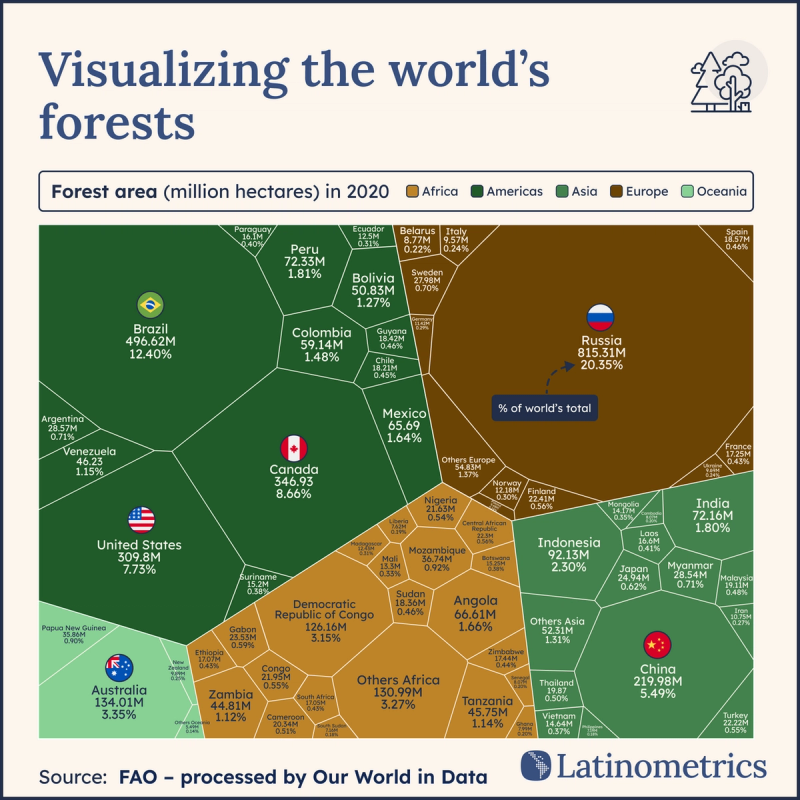
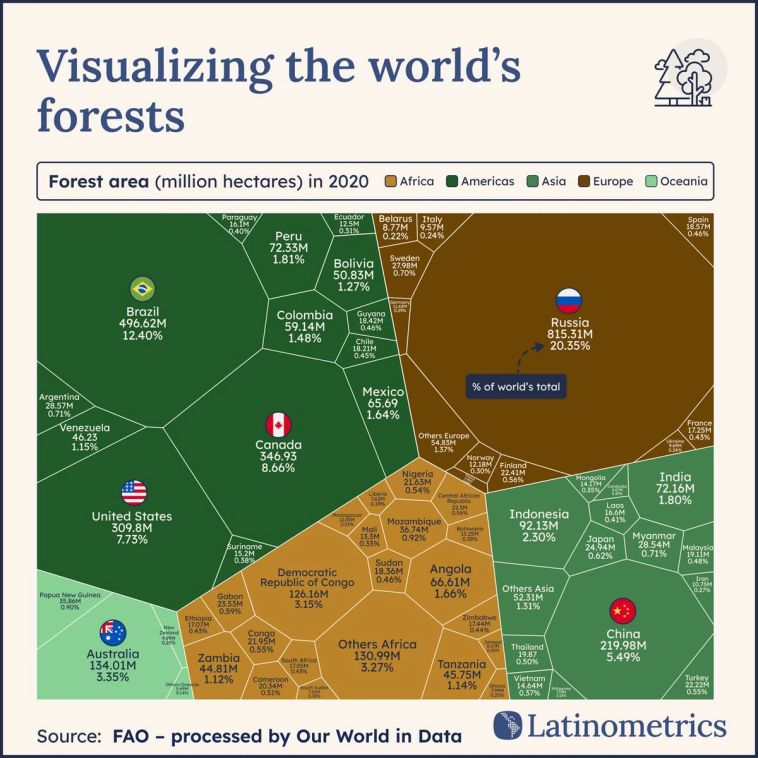
Visualizing the world's forests
Brazil, for example, contains over 12% of the world’s total forest area (second only to Russia). The country’s current administration has sought to fight the heavy deforestation, much of it manmade, which has been seen as of late throughout the Amazon, but other regions such as the Cerrado and Pantanal are also suffering.
In any case, whether to preserve natural beauty or save countless animal species, Latin Americans from across the region must act to restore their natural forestry—and slow the decimation of local wildlife in the process.


