
Latin America's debt in dollar vs local currencies
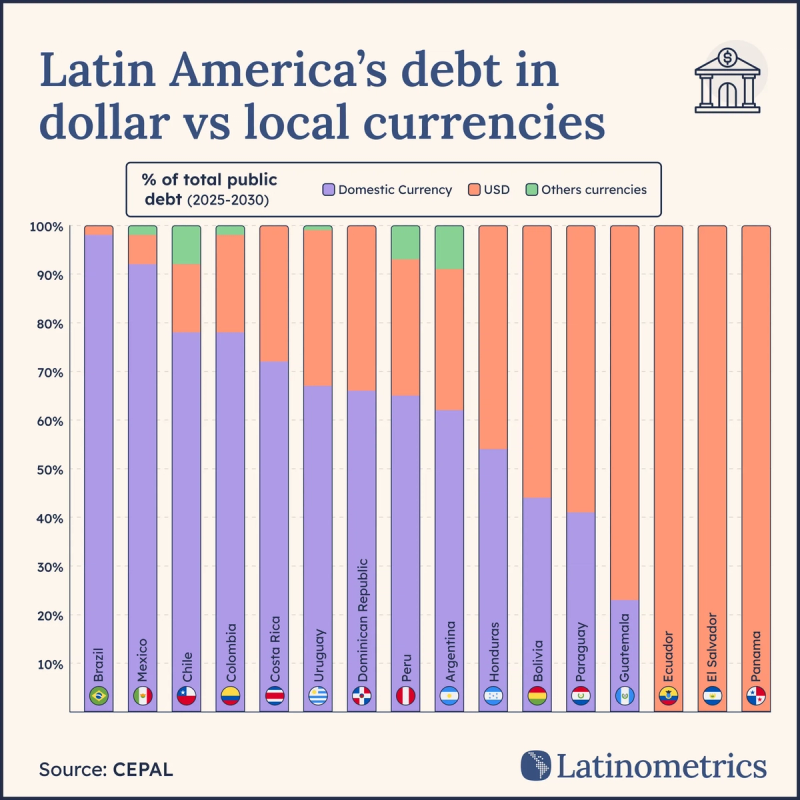
Brazil issues debt in local currency, but 75% of Guatemala's debt is in greenbacks.


To what extent does your country rely on the USD to service its debt?
From France’s budget debacle to the multi-trillion-dollar hole blown into the US debt by the so-called Big Beautiful Bill, it seems that we’re in a rare moment where people are actually interested in what their governments are spending money on.
Many countries, even traditionally austere ones like Germany or South Korea, are today spending above their means as they seek to stimulate economic activity, rebuild defense or manufacturing bases, or simply – in the case of the US – pay for massive tax cuts and increases to the budgets of both immigration enforcement and border security.
Now, most of Latin America’s largest economies are running a fiscal deficit this year, meaning they’re spending more than they’ve collected in taxes and revenue. Brazil has been tapped as a particularly egregious offender, with a projected deficit of over 7% in 2025, which is even worse than last year’s end result.
To service this debt, most Latin American governments turn to the capital markets, borrowing from investors (either their own citizens or foreigners) to finance today’s costs with tomorrow’s money, so to speak. And depending on their capital markets, they’re more or less vulnerable to external shocks and speculation.
Many Latin American nations face high vulnerability to exchange rate fluctuations because a large majority of their external public debt is denominated in dollars. For example, the Guatemalan quetzal weakening against the dollar would be disastrous, given that three-quarters of the country’s debt is issued in greenbacks.
Brazil, in comparison, has a robust domestic capital market, having made a concerted effort in recent years to issue debt in its own currency. Most Brazilian debt is held by national financial institutions and even citizens, rather than foreign investors.
Finally, it’s worth looking to three oddballs in this conversation: Ecuador, El Salvador, and Panama. These three countries’ dollarized economies (or long-standing use of the dollar as legal tender) explains their exclusive reliance on U.S. dollar-denominated public debt.


