
Latin America's Mineral Wealth
LatAm holds 50%+ of global lithium, 20% of copper, and 15% of silver — but managing wealth is key.

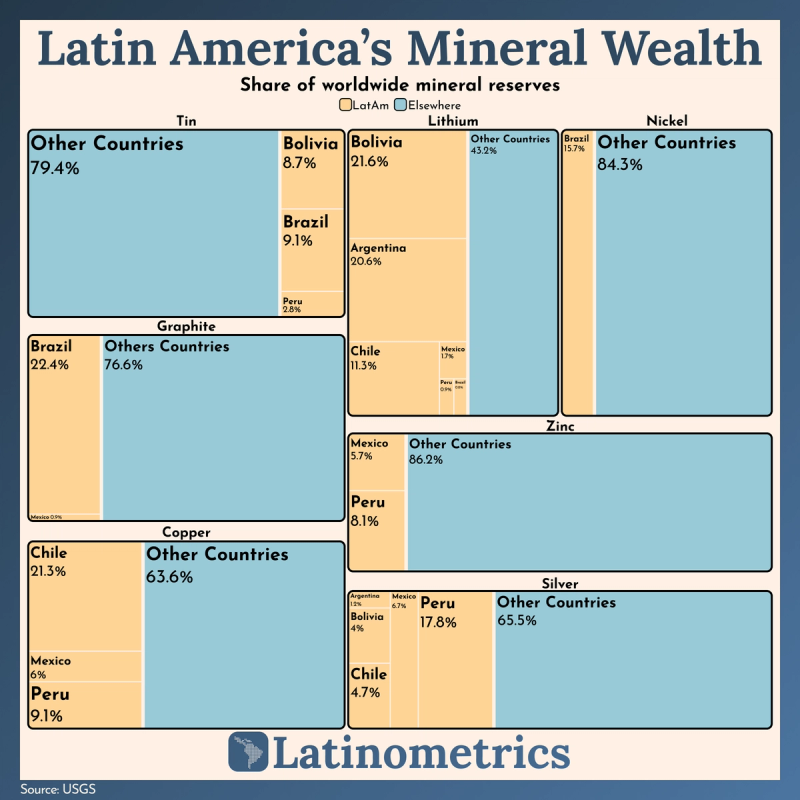
There’s a lot of reasons nowadays to feel bullish about Latin America. From the nearshoring craze bringing in new factories to northern Mexico to major infrastructure projects across South America and the Caribbean to record exports in Brazil powering higher-than-forecasted annual growth, the region is seeing a lot of promise in some sectors today.
But do you know where Latin America has basically always been blessed? Natural resources.
Everyone’s talking about lithium, given that three South American countries (Argentina, Bolivia, & Chile) hold over half of global reserves. However, there’s so much more than just the Lithium Triangle.
Chile has been doubly blessed, given it’s sitting on over a fifth of the world’s copper reserves. The country has long been one of the major sources of copper worldwide, with the mineral even powering Chile’s few decades of economic boom.
Peru may also have its own fair share of copper, but silver is what it is known for. The Andean country, which once produced so much silver it caused runaway inflation across the Spanish Empire and Europe, holds over 15% of global reserves. Other countries in the area also have their own deposits, including Argentina, which may just explain the name Rio de la Plata we’ve been hearing so much about.
Finally, there’s Brazil. Perhaps the world’s most naturally blessed country owing to its high amounts of fresh water, petroleum, and arable land, Brazil can also boast the highest reserves of nickel, graphite, and tin in the region. Not bad for a country that could otherwise just rely on agricultural and iron ore exports.
Now, as the ongoing lithium debate demonstrates, with natural resource wealth comes a responsibility to develop it properly. Venezuela reflects an obvious example of a country squandering its potential, but Latin America at large is full of classic stories of countries either selling out their resource rights to foreign multinational firms or just not developing in a responsible way that protects the environment.


